
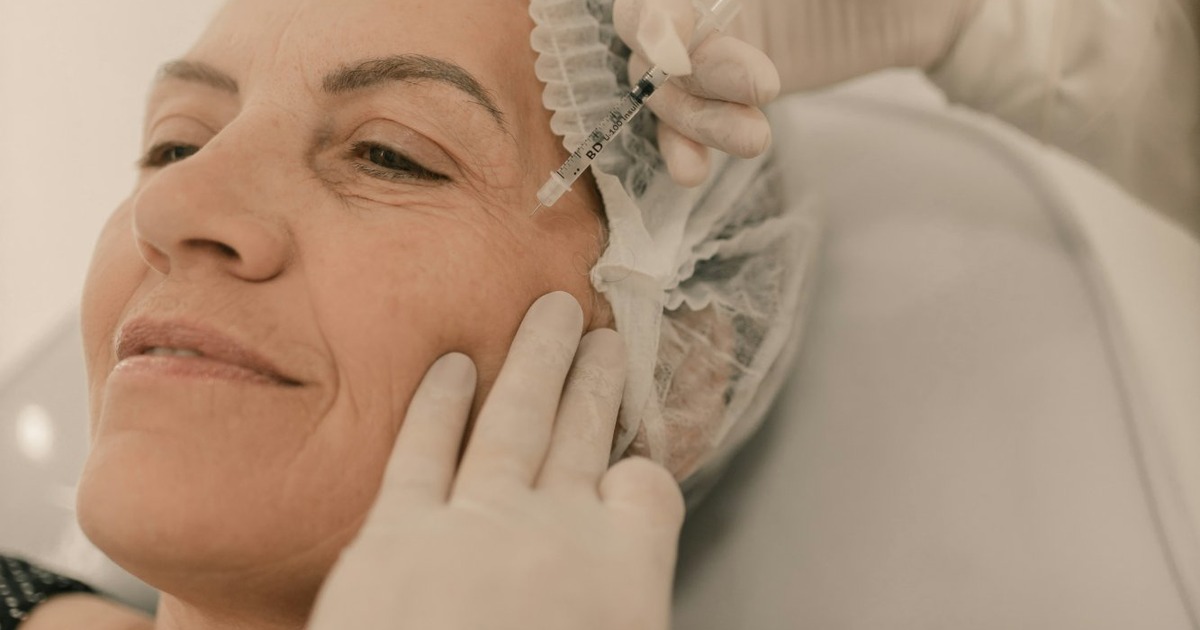
Ireland's aesthetic treatment industry is growing rapidly, but the regulatory framework that governs it has not kept pace.
Whether you are considering a treatment or you are a practitioner delivering one, understanding where the rules stand is essential for making safe, informed decisions.
This is not a campaigning piece, and SafeSkin was not set up to tell people what to do. We simply want to help people make informed choices when it comes to aesthetics.
With that in mind, this piece intends to serve as a factual overview of the current regulatory landscape in Ireland, based on legislation, official guidance from the Medical Council, the HPRA, the Dental Council, and the NMBI.
Our aim is to help you understand what is regulated, what is not, and what that means for you.
What is regulated: anti-wrinkle injections
Products containing botulinum toxin, commonly referred to by the brand name Botox, are prescription-only medicines in Ireland.
Their supply and administration are governed by the Medicinal Products (Prescription and Control of Supply) Regulations 2003 to 2021 (S.I. No. 540 of 2003, as amended).
Under these regulations, botulinum toxin may only be prescribed by a registered medical practitioner or registered dentist. It may be administered by a registered doctor, a registered dentist, or a registered nurse acting in accordance with the directions of a doctor or dentist. The sale, supply, or administration of botulinum toxin by anyone outside of these categories is illegal.
In November 2025, the Medical Council published a formal statement reinforcing these obligations. The statement made clear that doctors remain accountable for all treatment outcomes, even when administration is delegated to a nurse.
It advised that doctors must not delegate the administration of botulinum toxin unless they are satisfied that the nurse has the necessary knowledge, skills, and competence. The Council described the administration of these products by unqualified or unregistered individuals as "illegal, unsafe and unacceptable," warning that patients treated outside regulated clinical environments face risks including "infection, paralysis or life-threatening complications."
The HPRA (Health Products Regulatory Authority), which regulates medicines and medical devices in Ireland, has also stated that it has ongoing concerns about the illegal supply and administration of botulinum toxin by people who are not authorised to do so.
The HPRA monitors for illegal supply both online and in physical settings, and has taken enforcement action in a number of cases, including prosecutions in the District Court.
Despite these protections, there remains a lack of clarity around what "in accordance with the directions of a doctor or dentist" means in practice.
The Irish College of Aesthetic Medicine (ICAM) has called for clearer guidance, noting that the phrase is open to interpretation. Some practitioners argue that a doctor must be physically present during administration; others maintain that nurses routinely administer prescription medicines across the health service without a doctor on-site.
This ambiguity persists, and the regulatory bodies have acknowledged it. In July 2025, RTÉ reported that the Medical Council, the HPRA, and the NMBI were working together to approach these issues collaboratively, though no definitive clarification has yet been published.
What is not regulated: dermal fillers
This is where the gap in Ireland's regulatory framework becomes most significant.
Dermal fillers - injectable gels typically made from hyaluronic acid, used to smooth wrinkles, add volume, or reshape facial features - are classified as medical devices under EU legislation (the EU Medical Devices Regulation 2017/745, which became fully applicable in May 2021).
The HPRA regulates the products themselves: it monitors their safety after they are placed on the market and carries out market surveillance. However, there is currently no regulation in Ireland governing who can administer dermal fillers. Unlike botulinum toxin, dermal fillers are not prescription-only medicines.
This means that, as the law stands, anyone can legally inject dermal fillers into another person regardless of whether they have any medical training, clinical qualifications, or relevant experience.
The HPRA has been explicit about the boundaries of its role. On its consumer guidance page for dermal fillers, it states: "We do not have a role in regulating the administration of dermal fillers or in clinical practice/qualifications. Similarly we do not have a role in the licensing of facilities or users that are administering dermal fillers."
This gap has been raised repeatedly by medical professionals, industry bodies, and in the Oireachtas. In February 2026, the Irish Times reported that the Irish College of Aesthetic Medicine warned that unregulated dermal filler procedures "pose a serious threat to health."
Dr Caitríona Kieran, ICAM's vice-president, noted that while dermal fillers are regulated as medical devices, "there is no definition currently in Irish legislation as to who that appropriately trained individual is." She observed that there is "nothing to stop" a person buying filler online and setting up to inject people.
The risks are not theoretical. Complications from improperly administered dermal fillers can include infection, scarring, tissue death, nerve damage, and in rare but documented cases, blindness caused by vascular occlusion - where filler is inadvertently injected into a blood vessel that supplies the eye.
A qualified practitioner with knowledge of facial anatomy can recognise and manage these complications; an unqualified one may not even recognise that something has gone wrong.
The regulatory gap: what has been attempted
The absence of regulation for dermal filler administration has not gone unnoticed by legislators. In 2018, a bill that would have introduced licensing requirements for certain non-surgical cosmetic procedures was scrutinised by the Oireachtas Health Committee and referred to the Office of the Attorney General for drafting. As of 2026, that legislation has still not been enacted.
In September 2023, the Minister for Health responded to parliamentary questions confirming that botulinum toxin is regulated as a prescription-only medicine and that dermal fillers fall under EU medical device regulation, but acknowledged that the administration of dermal fillers is not covered by existing Irish law.
The response noted that the HPRA had submitted a policy paper to the Department of Health describing possible options to strengthen controls for dermal fillers on the Irish market.
The current programme for government includes a commitment to examine the administration of dermal fillers and to ensure they are only administered by trained healthcare professionals. The Health Research Board has been tasked with carrying out a review. However, the timeline for any resulting legislation remains unclear.
The Dental Council has taken its own steps within its remit. In May 2023, it published a revised Code of Practice regarding Non-Surgical Cosmetic Procedures, setting out the obligations of registered dentists when administering anti-wrinkle injections or dermal fillers. Failure to comply with this guidance may result in Fitness to Practise proceedings.
What this means for consumers
If you are considering an aesthetic treatment in Ireland, the regulatory landscape means that the responsibility for verifying your practitioner's qualifications falls largely on you.
For anti-wrinkle injections, the law is clear: they must be prescribed and administered by a registered doctor, registered dentist, or a registered nurse working under the direction of a doctor or dentist. You can now verify whether a practitioner is registered by checking SafeSkin.ie.
Note: If your clinic has staff on the Medical Council register, the Dental Council register, or the NMBI register but has not been listed, please contact us here.
For dermal fillers and other non-prescription treatments, there is no legal requirement for the person administering them to hold any specific qualification. This makes it especially important to check independently. The HPRA recommends going to a qualified healthcare professional who is experienced in administering dermal fillers and who is able to manage side effects.
Questions worth asking before any aesthetic treatment include: Are you registered with the Medical Council, Dental Council, or NMBI? What training have you completed in this specific treatment? What products are you using, and where do you source them? What is your protocol if a complication occurs? Do you carry professional indemnity insurance?
A qualified, experienced practitioner will welcome these questions. If a provider is reluctant to answer them, that is a significant red flag.
What this means for practitioners
For practitioners operating within Ireland's regulated framework, the current situation creates both a challenge and an opportunity.
The challenge is competing with unregulated providers who may offer lower prices because they do not carry the costs of proper training, insurance, clinical governance, and registered premises.
The opportunity is that informed consumers increasingly seek verified, qualified practitioners, and that demand is likely to grow as awareness of the risks associated with unregulated treatments increases.
Practitioners should ensure they are familiar with the Medical Council's 2025 statement on botulinum toxin, the Dental Council's 2023 Code of Practice on cosmetic procedures, and any relevant NMBI guidance. Maintaining clear documentation, transparent pricing, and a visible commitment to patient safety are not just professional obligations, they are competitive advantages.
Looking ahead
Until regulation is introduced, the current framework leaves a gap that SafeSkin exists to help fill. We cannot change the law, but we can make it easier for consumers to find practitioners who are verified on the Irish medical, dental, or nursing register. Every clinic in the SafeSkin directory has been checked against these registers. It is not a substitute for regulation, but it is a practical step that consumers can take today.
You can search for a verified aesthetic practitioner near you on SafeSkin, or learn more about how we verify practitioners here.
Medically reviewed by Dr Stephen Creedon
All SafeSkin editorial content is reviewed by a registered medical professional before publication.