
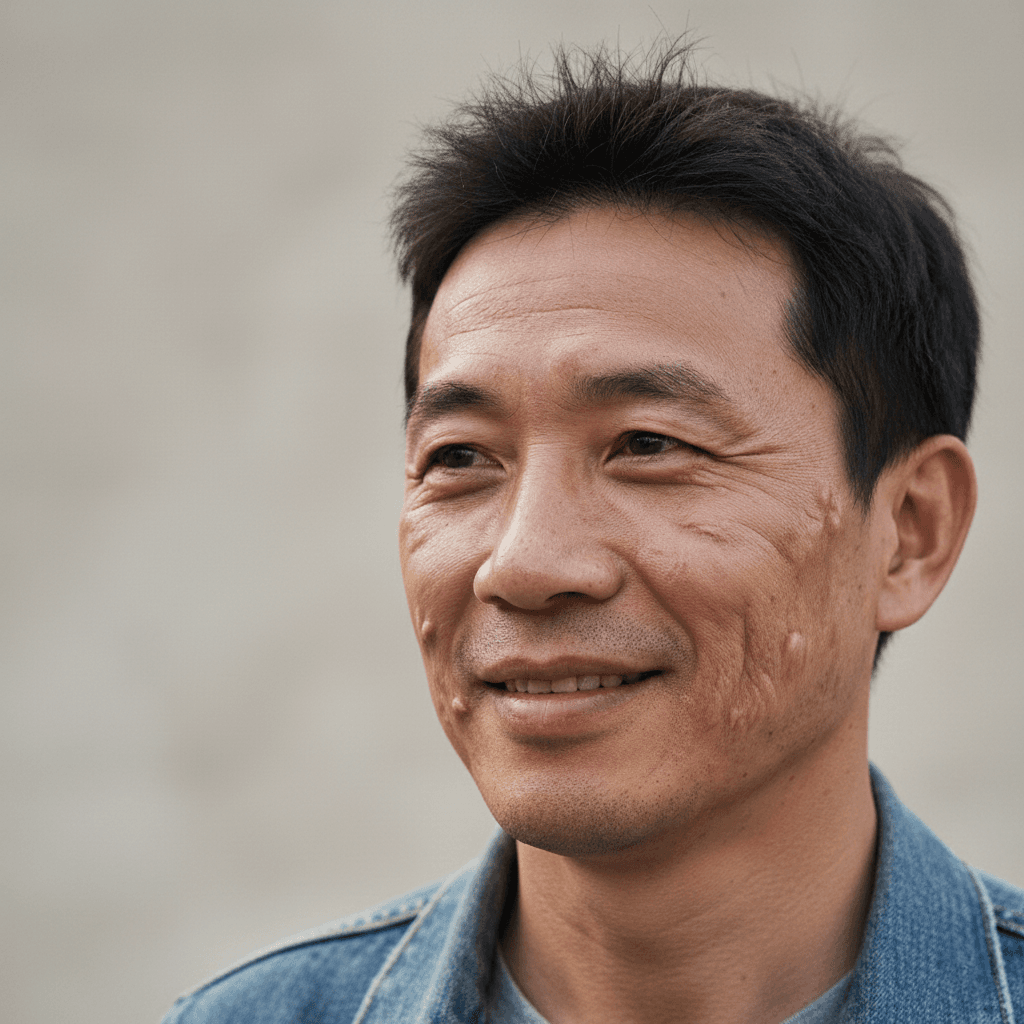
Understanding Acne Scarring
Acne scarring is one of the most psychologically distressing skin concerns that practitioners encounter in Irish clinics. While acne itself is a temporary condition that can be controlled with appropriate treatment, the scars it leaves behind can persist for decades if untreated. For many people in Ireland, acne scarring serves as a lasting reminder of a condition that may have caused significant distress during adolescence or adulthood.
Acne scars form through a process of abnormal wound healing. When acne causes significant inflammation — particularly in the case of papules, pustules, nodules, and cysts — the inflammatory process damages the collagen framework in the dermis. As the body attempts to repair this damage, the healing response can go in one of two directions: insufficient collagen production (leading to depressed or atrophic scars) or excessive collagen production (leading to raised or hypertrophic scars). In the majority of acne scarring cases, the body produces too little collagen, resulting in the characteristic pitted, indented scars that most people associate with acne scarring.
It is important to distinguish true acne scars from the temporary marks that acne leaves behind. Post-inflammatory hyperpigmentation (PIH) — the dark marks left after a spot heals — and post-inflammatory erythema (PIE) — the red or purple marks — are colour changes, not textural scars. While they can persist for months and cause significant concern, they are not permanent and will gradually fade, a process that can be accelerated with appropriate treatment. True acne scars, by contrast, involve a physical change in the skin's texture and structure.
The prevalence of acne scarring is significant. Research suggests that up to 95 per cent of people who experience acne develop some degree of scarring, though severity varies enormously. In Ireland, where fair Celtic skin types are prevalent, acne scars can be particularly noticeable due to the contrast between scar tissue and the surrounding skin.
The good news is that acne scar treatment has advanced dramatically in recent years. Irish clinics now offer a sophisticated range of technologies and techniques that can produce meaningful improvements in even severe scarring. While no treatment can make scars completely invisible, modern approaches can improve their appearance by 50 to 80 per cent, with ongoing research and innovation continuing to push these boundaries.
What Causes Acne Scarring?
Understanding why some people scar while others do not — and what factors increase scarring risk — helps explain the mechanisms behind scar formation and underscores the importance of early acne treatment.
The severity of inflammation is the primary determinant. The more intense and prolonged the inflammatory response within and around the acne lesion, the greater the damage to the surrounding collagen and the higher the risk of scarring. Nodular and cystic acne carry the highest scarring risk because they involve deep, severe inflammation. Mild comedonal acne (blackheads and whiteheads) rarely causes true scarring.
Delayed treatment significantly increases scarring risk. Every day that severe inflammatory acne goes untreated is a day that inflammation continues to damage the dermal collagen. This is why dermatologists and aesthetic practitioners consistently emphasise the importance of early, effective acne treatment — not just for comfort and confidence, but specifically to prevent permanent scarring.
Picking, squeezing, and manipulating spots is one of the most controllable risk factors for scarring. When you squeeze a spot, you rupture the follicle wall, driving bacteria and inflammatory debris deeper into the surrounding tissue. This dramatically amplifies the inflammatory response and the resulting damage. The temptation to pick is understandable, but the consequences can be permanent.
Genetics play a significant role. Some people are inherently more prone to scarring due to genetic variations in their wound-healing response. If your parents or siblings have acne scarring, your risk is higher. Genetic factors also influence whether you develop atrophic (depressed) or hypertrophic (raised) scars.
Age and skin type influence outcomes. Younger skin generally heals better, but the inflammatory acne that occurs during adolescence can still cause significant scarring. Certain skin types (particularly Fitzpatrick types IV to VI) are more prone to hypertrophic and keloid scarring, while lighter skin types more commonly develop atrophic scars.
Hormonal and systemic factors also play a role. Conditions that impair wound healing — poor nutrition, smoking, chronic stress, and certain medications — can increase the likelihood of scarring after acne.
Types and Severity Levels
Accurate classification of acne scar types is essential for selecting the most effective treatment. Most patients have a combination of scar types, requiring a multimodal treatment approach.
Atrophic (depressed) scars are the most common type, accounting for approximately 80 to 90 per cent of acne scars. They result from insufficient collagen production during healing:
-
Ice pick scars are narrow, deep, sharply defined pits that extend into the dermis or even the subcutaneous tissue. They resemble puncture wounds made by an ice pick and are the most difficult type to treat because of their depth and narrow diameter. They are most common on the cheeks.
-
Boxcar scars are wider, round or oval depressions with sharply defined vertical edges. They can be shallow (0.1 to 0.5mm) or deep (over 0.5mm). Shallow boxcar scars respond well to many treatments; deep boxcar scars are more challenging but still treatable.
-
Rolling scars are broad depressions with gently sloped, undulating edges that give the skin a wave-like appearance. They are caused by fibrous bands (tethering) between the dermis and the underlying subcutaneous tissue that pull the skin surface downward. When the skin is stretched, rolling scars often flatten — this is a useful clinical test.
Hypertrophic and keloid scars result from excessive collagen production:
-
Hypertrophic scars are raised, firm scars that remain within the boundaries of the original acne lesion. They are more common on the chest, back, and jawline.
-
Keloid scars extend beyond the boundaries of the original lesion and can continue growing over time. They are more common in certain ethnic groups and in people with a family history of keloid formation.
Post-inflammatory changes (not true scars but commonly grouped with scarring):
- Post-inflammatory hyperpigmentation (PIH) — flat dark brown marks at the sites of healed acne lesions. More common in darker skin types but affects all skin types. Gradually fades over 3 to 12 months, accelerated by treatment.
- Post-inflammatory erythema (PIE) — flat red or purple marks at healed acne sites. More common in lighter skin types (very common in Irish skin). Can persist for months. Fades gradually, helped by treatments targeting redness.
Severity grading considers the number, type, depth, and distribution of scars:
- Mild — Scattered shallow scars, predominantly boxcar or rolling, that are visible on close inspection. PIH or PIE present.
- Moderate — Multiple scars including a mix of ice pick, boxcar, and rolling types. Visible in normal lighting. May have some dermal tethering.
- Severe — Widespread, deep scars with significant textural distortion. Multiple scar types including deep ice picks and tethered rolling scars. Substantially affects facial appearance and may impact confidence significantly.
Treatment Options Available in Ireland
Irish aesthetic clinics offer a comprehensive and sophisticated range of acne scar treatments. The most effective outcomes are achieved through combination protocols that address different scar types simultaneously. All treatments should be performed by practitioners registered with the Medical Council of Ireland, the Dental Council, or the Nursing and Midwifery Board of Ireland (NMBI).
Medical microneedling is one of the most versatile and effective acne scar treatments available. Using a device studded with fine needles, controlled micro-injuries are created in the scarred skin, triggering a wound-healing response that produces new collagen and elastin. Microneedling is particularly effective for rolling and shallow boxcar scars. Radiofrequency microneedling (such as Morpheus8) adds heat energy to enhance collagen stimulation at deeper levels. A course of 3 to 6 sessions spaced 4 to 6 weeks apart is typically recommended. Learn more about microneedling.
Fractional laser resurfacing creates columns of controlled thermal injury in the skin, stimulating collagen remodelling and new skin formation. Ablative fractional lasers (such as CO2 and erbium) produce more dramatic results with longer downtime (5 to 10 days), while non-ablative fractional lasers offer more moderate improvement with shorter recovery. Fractional lasers are effective for a wide range of scar types and depths. Learn more about laser treatments.
TCA cross (trichloroacetic acid chemical reconstruction of skin scars) is a targeted technique specifically designed for ice pick scars. A high concentration of TCA (70 to 100 per cent) is carefully applied to the base of individual ice pick scars using a fine applicator. This causes a controlled chemical injury that stimulates collagen production from the base of the scar upward, gradually raising the depressed scar to the level of the surrounding skin. Multiple sessions are typically needed. Learn more about chemical peels.
Subcision is a minor surgical technique used for tethered rolling scars. A fine needle or cannula is inserted beneath the scar to physically release the fibrous bands that are pulling the skin surface downward. This allows the skin to lift and also creates a pocket of blood beneath the scar that stimulates collagen formation as it heals. Subcision is often combined with microneedling or filler for optimal results.
Dermal fillers can provide immediate improvement for deep boxcar and rolling scars by adding volume beneath the depressed area. Hyaluronic acid fillers offer temporary correction (lasting 6 to 12 months), while biostimulatory fillers like poly-L-lactic acid promote collagen production for more gradual but longer-lasting results. Learn more about dermal fillers.
Chemical peels using glycolic acid, salicylic acid, or medium-depth TCA formulations can improve superficial scarring, skin texture, and post-inflammatory pigmentation. They are often used as part of a combination protocol or as maintenance between more intensive treatments. Learn more about chemical peels.
Radiofrequency skin tightening devices can improve acne scarring by stimulating collagen remodelling in the dermis. Monopolar and bipolar RF devices tighten the skin and improve texture over a course of treatments. Learn more about radiofrequency.
PRP (platelet-rich plasma) can be used alongside microneedling or fractional laser to enhance the healing response and collagen production. Your own blood is drawn, processed to concentrate the platelets, and applied to the skin during or after treatment. Learn more about PRP.
Polynucleotides are an emerging treatment option that can support skin regeneration and improve the quality of scarred skin. Learn more about polynucleotides.