
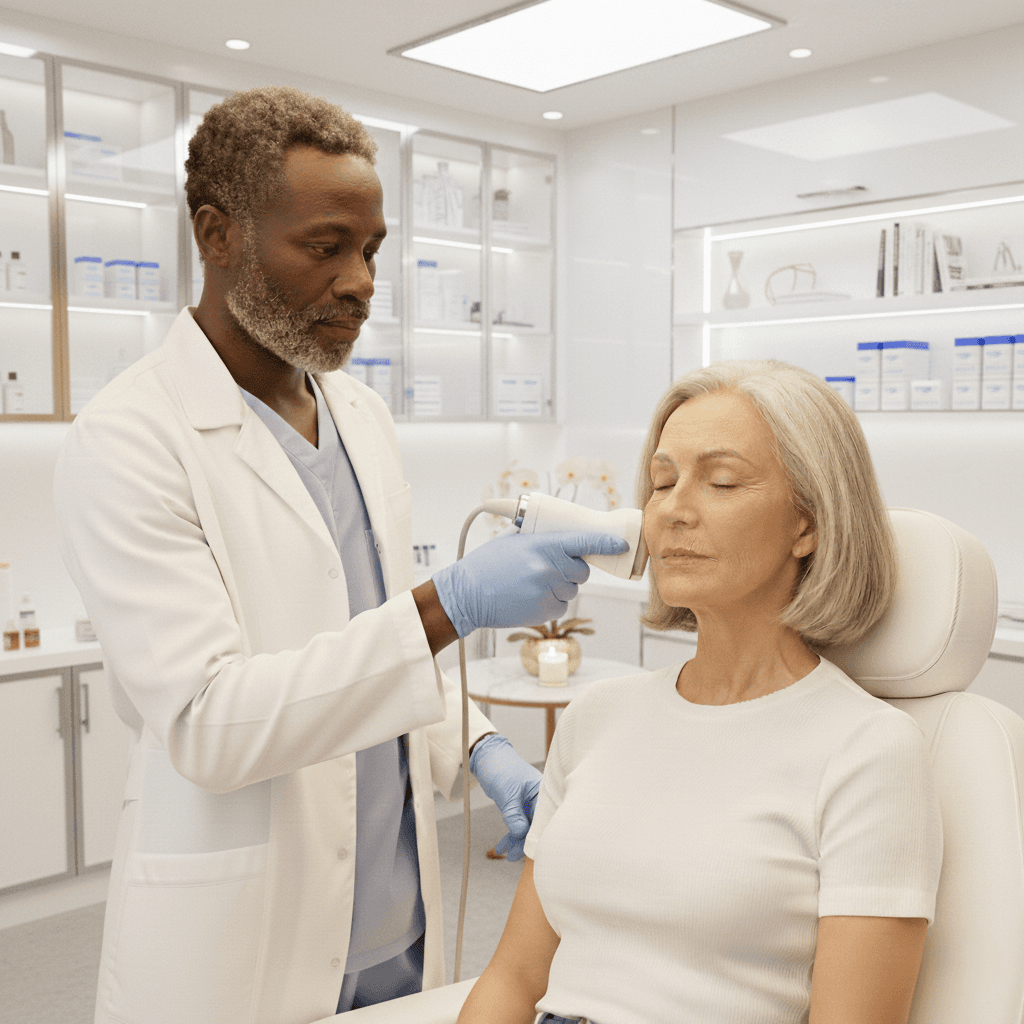
What Is RF Microneedling?
RF (radiofrequency) microneedling is an advanced skin rejuvenation treatment that combines the collagen-stimulating benefits of traditional microneedling with the tissue-tightening power of radiofrequency energy. The result is a treatment that can address a remarkably wide range of skin concerns, from fine lines and wrinkles to acne scars, enlarged pores, skin laxity, and uneven texture.
This guide covers RF microneedling specifically, the needle-based delivery of radiofrequency energy into the dermis. Non-needle RF skin tightening (monopolar and bipolar devices such as Thermage, Exilis, and Venus Legacy) is a separate treatment category with different mechanisms, outcomes, and price points, and is not covered here.
In Ireland, RF microneedling has rapidly grown in popularity over the past several years, becoming one of the most in-demand clinic-based skin treatments. Its appeal lies in the fact that it delivers meaningful results for many skin concerns with less downtime than ablative laser treatments, though for the most severe scarring or deep wrinkles, ablative laser may still deliver superior outcomes. It is also considered one of the safer energy-based treatments for darker skin types (Fitzpatrick IV to VI), though careful parameter selection remains important.
The treatment works by creating controlled micro-injuries with fine needles that penetrate the skin to a precise depth. Once the needles are in position, radiofrequency energy is delivered through the needle tips directly into the dermis, the deeper layer of the skin where collagen and elastin are produced. This combined mechanism triggers a wound-healing and remodelling response, stimulating the production of new collagen and elastin fibres over the following weeks and months.
Popular RF microneedling platforms available in Irish clinics include Morpheus8, Virtue RF, Secret RF, Vivace, and Genius. While each has its own proprietary technology and marketing, the core principle is similar across devices. Your practitioner will recommend the most appropriate device and settings based on your individual skin concerns.
How Does RF Microneedling Work?
RF microneedling combines two proven technologies, microneedling and radiofrequency, to create a synergistic skin remodelling effect that is greater than either treatment could achieve alone.
Here is how a typical RF microneedling session works, step by step:
-
Consultation and preparation, Your practitioner assesses your skin, discusses your goals, and plans the treatment. Topical anaesthetic cream is applied to the treatment area 20 to 45 minutes before the procedure, depending on the depth and area being treated. For deeper treatments or more sensitive areas, nerve blocks or dental blocks may be offered alongside topical anaesthesia.
-
Cleansing, The numbing cream is removed and the skin is thoroughly cleansed and dried.
-
Device calibration, Your practitioner selects the appropriate needle depth (typically 0.5mm to 2.0mm for facial treatments and up to 3.0mm for body treatments, depending on the device and area), radiofrequency energy level, and pulse duration. These settings are tailored to your skin type, the area being treated, and the specific concerns being addressed.
-
Treatment delivery, The handpiece is pressed against the skin, and fine needles (typically 12 to 40 per tip depending on the device and treatment cartridge, often gold-plated for conductivity, with insulated shafts on many tips to confine RF energy to the needle tips) penetrate to the predetermined depth. Once the needles are in position, a precisely controlled burst of radiofrequency energy is emitted from the needle tips. The insulation on insulated tips helps focus the RF energy at the needle tip, deep within the dermis, protecting the epidermal surface from thermal damage.
-
Systematic coverage, The practitioner moves the handpiece across the entire treatment area in a grid pattern, ensuring even coverage. Multiple passes may be made over areas of particular concern, such as acne scars or areas of significant laxity.
-
Post-treatment care, A soothing serum, growth factor, or hyaluronic acid is applied to the treated skin. Some practitioners apply PRP (platelet-rich plasma) at this stage to further enhance the healing response.
The entire treatment typically takes 45 to 60 minutes, including preparation time. The RF energy creates zones of controlled thermal injury in the deep dermis, with peak tip temperatures typically in the 55 to 70 degrees Celsius range, sufficient to trigger collagen contraction and initiate remodelling. Some subtle immediate tightening may be noticeable from this collagen contraction, though the most significant results develop over the following months as new collagen and elastin fibres mature.