
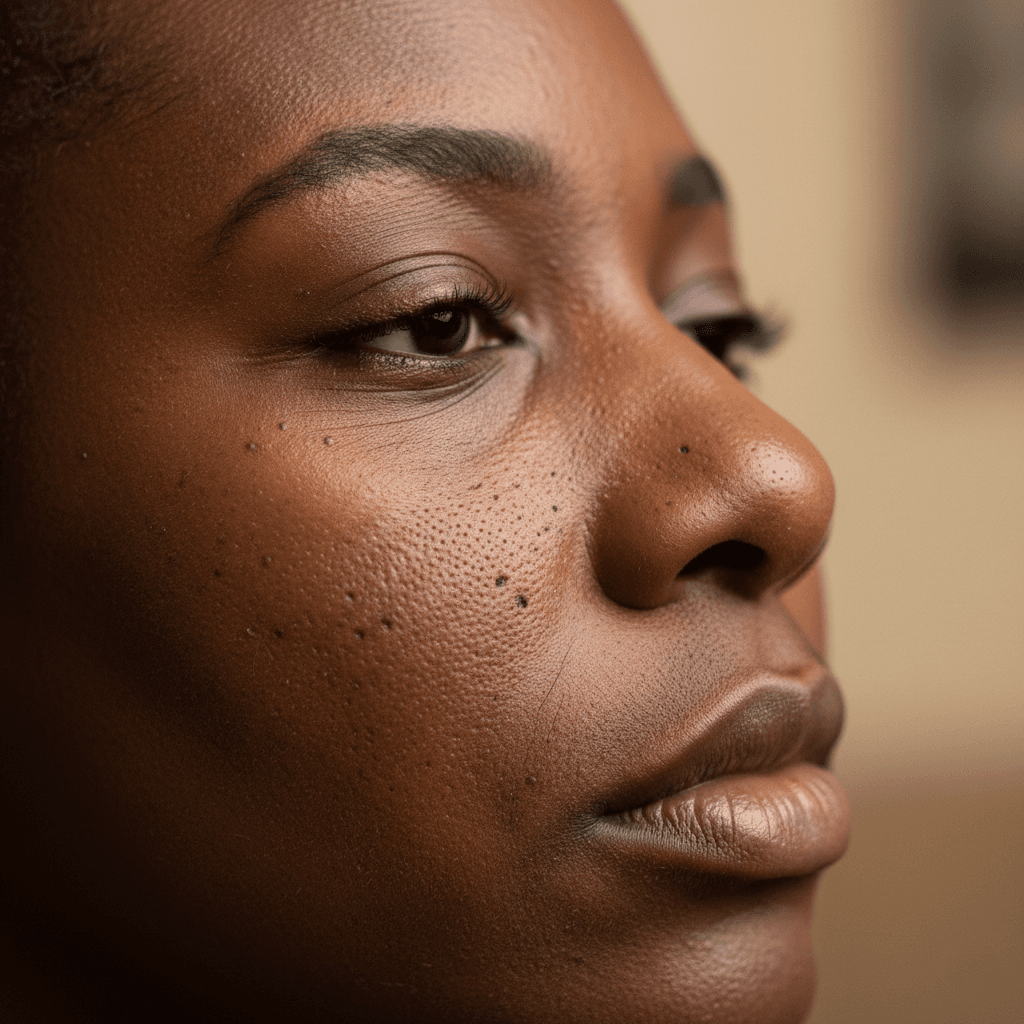
Understanding Enlarged Pores and Texture
Pores are the tiny openings on the skin's surface through which sebum (oil) and sweat reach the surface. Every person has approximately 300,000 pores on their face alone. They are a normal and essential part of healthy skin function — but when they become visibly enlarged, congested, or surrounded by rough, uneven texture, they can become a significant cosmetic concern.
Enlarged pores and uneven skin texture are among the most commonly cited skin complaints in aesthetic clinics across Ireland. While these concerns are not medically harmful, they affect skin appearance and can influence how well makeup applies, how the skin catches light, and how smooth and refined the complexion appears overall.
Pore size is primarily determined by genetics — if your parents have visible pores, you are likely to as well. However, several factors can make pores appear larger or more prominent than their genetic baseline: excess sebum production stretches pores, accumulated congestion (dead skin cells, oil, and debris) dilates them, loss of collagen with ageing reduces the structural support around each pore, and cumulative sun damage thickens the outer skin layers while degrading the underlying support structures.
Skin texture refers to the overall surface quality of the skin — how smooth, even, and refined it appears and feels. Rough, bumpy, or uneven texture can result from the same factors that contribute to enlarged pores, as well as dehydration, impaired skin barrier function, post-inflammatory changes from acne, and inadequate exfoliation.
The good news is that both enlarged pores and textural irregularity respond extremely well to a combination of professional treatments and consistent, targeted skincare. While you cannot permanently change the physical size of a pore (despite what many products claim), you can dramatically reduce their visual prominence and achieve significantly smoother, more refined skin.
What Causes Enlarged Pores and Uneven Texture?
Understanding the underlying causes of your specific pore and texture concerns is essential for selecting the most effective treatment approach.
Excess sebum production is the most common cause of visibly enlarged pores. When the sebaceous glands produce more oil than the pore can efficiently transport to the surface, the pore stretches to accommodate the excess. This is why people with oily skin types tend to have more prominent pores, particularly in the T-zone (forehead, nose, and chin). Sebum production is influenced by genetics, hormones, diet, and certain medications.
Congestion and clogged pores compound the problem. When dead skin cells, sebum, and environmental debris accumulate within a pore, they form a plug (comedone) that physically expands the pore opening. If the plug is exposed to air and oxidises, it appears as a blackhead; if it remains beneath the surface, it forms a whitehead. Chronic congestion keeps pores stretched and prevents them from returning to their normal size.
Ageing and collagen loss cause pores to become more prominent over time. Collagen and elastin provide the structural scaffolding around each pore, keeping it taut and compact. As these proteins naturally decline from the mid-twenties onwards, pores lose their structural support and appear to widen. This effect is most noticeable in the cheek area, where pores that were once round may take on a teardrop or elongated shape.
Sun damage is a major contributor to both pore enlargement and textural roughness. UV radiation degrades collagen and elastin (the same proteins that support pore structure), thickens the stratum corneum (the outermost skin layer, leading to rougher texture), impairs the skin's natural exfoliation process, and damages the underlying dermal structures. In Ireland, cumulative sun damage is a significant factor even though the climate is temperate — UVA rays, which drive photoageing, penetrate clouds and are present year-round.
Genetics determine your baseline pore size, skin type, sebum production levels, and how your skin ages. While you cannot change your genetic predisposition, understanding it helps you and your practitioner select the most appropriate preventive and corrective strategies.
Dehydration and barrier impairment can make the skin surface appear rougher and pores more prominent. When the skin is dehydrated (lacking water, as opposed to dry skin which lacks oil), the texture becomes uneven, fine lines appear more prominent, and the overall complexion looks dull and tired. This is particularly relevant in Ireland, where central heating, wind exposure, and inadequate water intake can all contribute to skin dehydration.
Hormonal fluctuations — during puberty, the menstrual cycle, pregnancy, perimenopause, and menopause — can increase sebum production and affect pore appearance. Hormonal acne, which commonly presents along the jawline and chin, often involves enlarged, congested pores in these areas.
Types and Severity Levels
Pore and texture concerns present in several distinct patterns, each with different underlying mechanisms and optimal treatment approaches.
Sebaceous (oily) pore enlargement is characterised by visibly enlarged pores in the T-zone, often with visible sebum within the pore opening. The skin appears shiny, pores are round and open, and congestion (blackheads) is common. This type is most prevalent in teens and young adults but can persist into later life.
Age-related pore enlargement typically appears from the late thirties onwards, particularly on the cheeks. Pores take on an oval or teardrop shape as the surrounding skin loses its firmness. The skin may appear crepey or slightly loose, and fine lines often accompany the enlarged pores. This type is driven primarily by collagen loss and cumulative sun damage.
Congestion-related textural roughness presents as a bumpy, uneven surface, often with small closed comedones (tiny flesh-coloured bumps) scattered across the forehead, cheeks, or chin. The skin may feel rough to the touch and makeup may not apply smoothly. This can coexist with either of the above pore types.
Post-inflammatory textural changes occur following acne, where healed breakouts leave behind areas of uneven texture — sometimes flat but discoloured, sometimes slightly raised or indented. Significant post-acne textural irregularity crosses into acne scarring territory and may require more intensive treatment.
Sun-damage-related texture involves a generalised roughness, thickening, and coarsening of the skin surface, sometimes accompanied by pigmentation changes and a leathery quality. This is most pronounced on areas of chronic sun exposure (face, neck, decolletage, and hands).
Severity is typically graded as:
- Mild: Pores visible at arm's length only in the T-zone; slight textural unevenness; easily managed with skincare
- Moderate: Pores visible across multiple facial zones; noticeable roughness; makeup settles into pores; partially responsive to skincare alone
- Significant: Prominently enlarged pores across the face; pronounced textural irregularity; makeup application is difficult; professional treatment recommended for meaningful improvement
Treatment Options Available in Ireland
A wide range of effective treatments for enlarged pores and uneven texture is available through verified clinics across Ireland.
Medical-grade skincare is the foundation of any pore and texture treatment plan. Key active ingredients include retinoids (the gold standard for pore refinement and texture improvement), niacinamide (reduces sebum production and improves skin texture), salicylic acid (BHA — oil-soluble, penetrates into pores to clear congestion), glycolic acid (AHA — exfoliates the skin surface for smoother texture), and vitamin C (antioxidant that supports collagen production and brightens). Medical-grade skincare products available through Irish clinics deliver these ingredients at effective concentrations with optimised formulations that outperform over-the-counter alternatives.
Chemical peels are highly effective for both pore refinement and texture improvement. Chemical peels use controlled concentrations of acids to exfoliate the skin surface, clear pore congestion, stimulate cell turnover, and promote collagen production. Superficial peels (glycolic, salicylic, lactic acid) are excellent for regular maintenance, while medium-depth peels (TCA) provide more dramatic textural improvement. Most practitioners recommend a course of 4 to 6 peels spaced 2 to 4 weeks apart.
Medical microneedling is one of the most effective treatments for overall skin texture improvement and pore refinement. Medical microneedling creates thousands of controlled micro-channels in the skin, triggering a wound-healing response that produces new collagen and elastin. As the new collagen forms around pores, they appear tighter and more refined. The treatment also improves overall skin smoothness, firmness, and radiance.
Laser skin treatments offer powerful options for texture refinement. Fractional lasers (ablative and non-ablative) create microscopic columns of controlled thermal injury that stimulate significant collagen remodelling. Laser skin treatments can deliver dramatic improvement in skin texture, pore size, and overall skin quality. Ablative fractional lasers (such as fractional CO2) offer the most dramatic results but require more downtime, while non-ablative options provide gradual improvement with minimal recovery.
Radiofrequency treatments use controlled heat energy to stimulate collagen contraction and new collagen production in the deeper layers of the skin. Radiofrequency skin tightening is particularly effective for age-related pore enlargement, where the primary issue is loss of structural support around the pores. The treatment tightens the skin and improves firmness, resulting in a more refined pore appearance.
Skin boosters and bio-remodelling such as Profhilo and skin boosters improve overall skin quality, hydration, and texture from within. While they do not directly target pores, the improvement in skin quality, hydration, and collagen stimulation can contribute to a smoother, more refined complexion.