
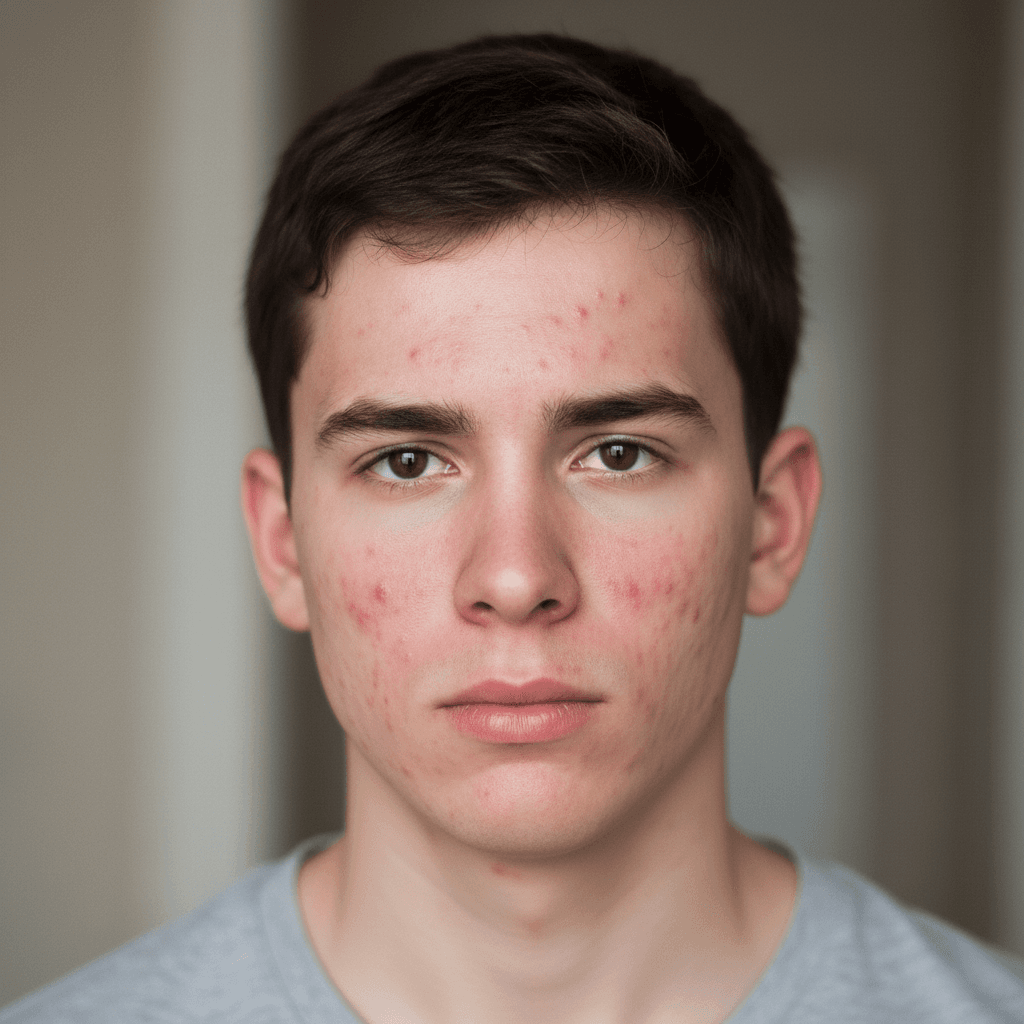
Understanding Acne
Acne vulgaris is the most common skin condition in the world, and Ireland is no exception. It is estimated that up to 85 per cent of people between the ages of 12 and 24 experience some degree of acne, and a growing number of adults — particularly women — continue to deal with breakouts well into their 30s, 40s, and beyond. Despite its prevalence, acne remains widely misunderstood, and many people suffer in silence or rely on ineffective over-the-counter remedies when evidence-based treatments could make a significant difference.
Acne is a chronic inflammatory condition of the pilosebaceous unit — the structure comprising a hair follicle and its associated sebaceous (oil) gland. These units are most concentrated on the face, chest, and back, which is why these are the areas most commonly affected by acne. The condition develops through a well-understood sequence of events: excess sebum production, abnormal shedding of skin cells within the follicle, proliferation of Cutibacterium acnes (C. acnes) bacteria, and an inflammatory response from the immune system.
It is crucial to understand that acne is not caused by poor hygiene, and over-washing the face can actually worsen the condition by stripping the skin's barrier and triggering increased oil production. Similarly, while stress and diet may influence acne, they are contributing factors rather than root causes. Acne is fundamentally a medical condition with a strong genetic and hormonal basis.
In Ireland, access to acne treatment has improved significantly in recent years. GPs can prescribe effective topical and oral treatments, dermatologists provide specialist care for severe cases, and aesthetic clinics offer an expanding range of in-clinic treatments and medical-grade skincare programmes. The challenge for many patients is knowing where to start and understanding which combination of treatments is most appropriate for their specific type and severity of acne.
The psychological impact of acne should not be underestimated. Research consistently shows that acne can significantly affect self-esteem, social confidence, and mental health. Studies conducted in Ireland have confirmed that acne-related distress is common across all age groups. Seeking treatment for acne is not vanity — it is a legitimate health concern that deserves professional attention.
What Causes Acne?
Acne develops through the interplay of four key factors, all of which occur within the pilosebaceous unit.
Excess sebum production is the starting point. Sebaceous glands produce an oily substance called sebum that normally lubricates and protects the skin. When sebum production increases — most commonly due to hormonal stimulation — the glands become overactive, flooding the follicle with oil. Androgens (male hormones present in both sexes) are the primary hormonal driver, which is why acne typically begins at puberty when androgen levels surge.
Abnormal follicular keratinisation occurs when the skin cells lining the hair follicle shed too rapidly and clump together, forming a plug (called a microcomedone) that blocks the follicle opening. This trapping of sebum within the follicle creates the initial acne lesion. On the skin surface, this appears as a blackhead (open comedone) or whitehead (closed comedone).
Bacterial proliferation follows. C. acnes bacteria naturally reside on the skin and within follicles. When a follicle becomes blocked and fills with sebum, C. acnes thrives in this oxygen-poor, nutrient-rich environment, multiplying rapidly and producing inflammatory substances.
Inflammation is the immune system's response to the bacterial overgrowth and follicular disruption. The resulting inflammatory cascade produces the red, swollen, painful lesions characteristic of inflammatory acne — papules, pustules, nodules, and cysts. The severity of the inflammatory response is largely genetically determined, which is why some people develop only mild comedonal acne while others with similar triggers develop severe cystic acne.
Beyond these core mechanisms, several contributing factors influence acne in Ireland:
-
Hormonal fluctuations — Puberty, menstrual cycles, pregnancy, polycystic ovary syndrome (PCOS), perimenopause, and hormonal medications (including oral contraceptives and hormone replacement therapy) all affect sebum production and acne activity.
-
Genetics — If your parents had acne, you are significantly more likely to develop it. Genetic factors influence sebum production rates, inflammatory response intensity, and susceptibility to scarring.
-
Stress — Chronic stress increases cortisol and androgen levels, which can stimulate sebum production and worsen acne. The demanding pace of modern life in Ireland contributes to stress-related breakouts in many adults.
-
Medications — Corticosteroids, lithium, some anti-epileptic drugs, and anabolic steroids can cause or worsen acne. Certain hormonal contraceptives can either improve or worsen acne depending on their formulation.
-
Diet — Emerging research links high-glycaemic index foods and dairy consumption with acne flares in some individuals, though the evidence is not yet conclusive enough to make blanket dietary recommendations.
-
Environmental factors — Humidity, pollution, and occlusive products (heavy makeup, oily sunscreens) can contribute to follicular blockage. Wearing masks during respiratory illness has also been associated with perioral acne ("maskne").
Types and Severity Levels
Acne presents in various forms, and accurate classification guides treatment decisions. Most people have a mix of different lesion types.
Non-inflammatory (comedonal) acne includes:
- Open comedones (blackheads) — Follicles clogged with sebum and dead cells that remain open at the surface. The dark colour is oxidised melanin, not dirt.
- Closed comedones (whiteheads) — Follicles clogged beneath the skin surface, appearing as small, flesh-coloured bumps.
Inflammatory acne includes:
- Papules — Small, red, raised bumps that are tender to touch. They indicate inflammation within and around the clogged follicle.
- Pustules — Similar to papules but with a visible white or yellow centre of pus. These are what most people think of as "spots."
- Nodules — Large, solid, painful lumps deep beneath the skin surface. They result from severe inflammation and rupture of the follicle wall deep in the dermis.
- Cysts — Large, deep, pus-filled lesions that are painful and carry the highest risk of scarring. Cystic acne requires prompt medical treatment.
Severity grading:
- Mild — Primarily comedonal with occasional papules or pustules. Fewer than 20 comedones or 15 inflammatory lesions. Usually manageable with topical treatments and good skincare.
- Moderate — A mix of comedones and inflammatory lesions (20 to 100 comedones or 15 to 50 inflammatory lesions). May include some nodules. Benefits from a combination of topical and possibly oral treatments.
- Severe — Widespread inflammatory lesions including nodules and cysts. More than 5 nodules. Significant risk of scarring. Requires prompt medical treatment, often including oral medications.
- Very severe (nodulocystic) — Extensive, interconnected nodules and cysts covering large areas of the face and often the back and chest. Urgent dermatological referral is recommended.
Special acne subtypes:
- Hormonal acne — Characterised by deep, inflammatory lesions along the jawline, chin, and lower face, often flaring cyclically with menstruation.
- Adult-onset acne — Acne appearing for the first time in adulthood, most common in women aged 25 to 45.
- Acne mechanica — Caused by friction, pressure, or occlusion (helmets, chin straps, masks).
Treatment Options Available in Ireland
Ireland offers a comprehensive range of acne treatments, from pharmacy-accessible products to specialist medical care and advanced in-clinic procedures. The most effective approach is often a combination tailored to the specific type and severity of acne.
Medical-grade skincare forms the foundation of most acne treatment plans. Key active ingredients include:
- Retinoids (tretinoin, adapalene) — normalise follicular keratinisation, reduce comedones, and promote cell turnover. Adapalene (Differin) is available over the counter in Ireland, while tretinoin requires a prescription.
- Benzoyl peroxide — kills C. acnes bacteria and reduces inflammation. Available in concentrations from 2.5 to 10 per cent.
- Salicylic acid — a beta-hydroxy acid that exfoliates within the pore, dissolving the sebum-and-cell plug.
- Niacinamide — reduces sebum production, inflammation, and post-inflammatory pigmentation.
- Azelaic acid — antibacterial, anti-inflammatory, and pigment-reducing properties.
Learn more about medical-grade skincare.
Chemical peels are highly effective for acne. Salicylic acid peels penetrate into the pores to dissolve blockages. Glycolic acid peels accelerate cell turnover and improve skin texture. Mandelic acid peels suit sensitive skin. A course of 4 to 6 peels, spaced 2 to 4 weeks apart, can significantly reduce active acne and improve skin texture. Learn more about chemical peels.
Medical microneedling stimulates collagen production and can improve acne scarring, enlarged pores, and overall skin quality. It is typically used once active acne is controlled rather than during active breakouts. Learn more about microneedling.
IPL and light-based treatments target the bacteria and inflammation associated with acne. Blue light specifically kills C. acnes bacteria, while red light reduces inflammation. IPL can also address the redness and post-inflammatory pigmentation that acne leaves behind. Learn more about IPL treatments.
Laser skin treatments including fractional lasers can treat both active acne and acne scarring. They work by reducing sebaceous gland activity and stimulating skin remodelling. Learn more about laser treatments.
Prescription medications available through GPs and dermatologists in Ireland include:
- Topical antibiotics (clindamycin, erythromycin) — usually combined with benzoyl peroxide to prevent antibiotic resistance
- Oral antibiotics (lymecycline, doxycycline) — for moderate inflammatory acne, typically prescribed for 3-month courses
- Combined oral contraceptives — certain formulations (e.g., those containing cyproterone acetate or drospirenone) can be highly effective for hormonal acne in women
- Spironolactone — an anti-androgen used off-label for hormonal acne in women, available through GPs and dermatologists
- Isotretinoin (Roaccutane) — the most powerful acne treatment, reserved for severe or treatment-resistant acne. It is prescribed by dermatologists in Ireland and requires careful monitoring with regular blood tests and pregnancy prevention measures