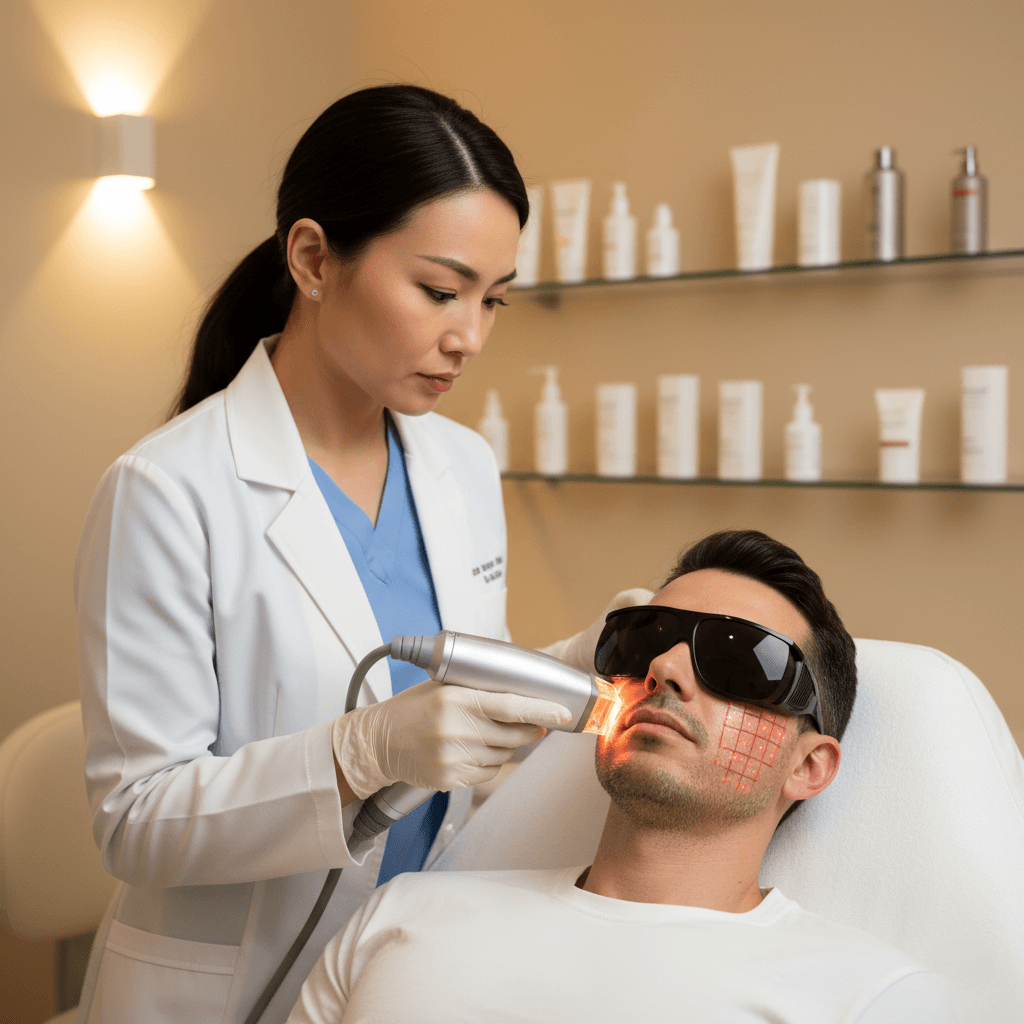
#What Is IPL Photofacial?
An IPL (Intense Pulsed Light) photofacial is a non-invasive skin rejuvenation treatment that uses broad-spectrum light energy to target pigmentation, redness, sun damage, and other skin irregularities. Unlike laser treatments, which use a single wavelength of light, IPL delivers multiple wavelengths simultaneously, making it versatile enough to address several skin concerns in a single session.
In Ireland, IPL photofacials have become one of the most popular light-based aesthetic treatments. Particularly among patients seeking to reverse the effects of sun damage, something many Irish people experience from cumulative sun exposure over the years, whether from holidays abroad or incidental daily UV exposure, which occurs even on cloudy days. The treatment is widely available across clinics in Dublin, Cork, Galway, and throughout the country.
IPL photofacials are sometimes referred to as "photorejuvenation" or "fotofacial" treatments. They are suitable for treating the face, neck, chest (decolletage), and hands, essentially any area where sun damage, age spots, or vascular concerns are visible. The treatment works primarily on pigmented and vascular targets within the skin without the extensive surface disruption caused by ablative resurfacing procedures, which means recovery is relatively quick compared to more aggressive treatments.
If you are considering an IPL photofacial. It is important to understand that this is a gradual treatment. A single session will produce some improvement, but a course of 3 to 6 sessions delivers the most significant and lasting results. Many patients describe the cumulative effect as giving their skin a clearer, more even, and more youthful appearance.
#How Does IPL Photofacial Work?
IPL technology works on the principle of selective photothermolysis, a process where specific wavelengths of light are absorbed by particular chromophores (colour targets) in the skin. The two main targets are melanin (the pigment responsible for brown spots and freckles) and haemoglobin (the pigment in red blood cells that gives visible blood vessels their colour).
Here is what happens during a typical IPL photofacial session:
-
Consultation and skin assessment, Your practitioner examines your skin, identifies the concerns to be treated, and selects the appropriate IPL settings (wavelength filters, pulse duration, and energy levels) for your skin type and condition.
-
Preparation, The treatment area is cleansed and a cool ultrasound gel is applied to the skin. This gel helps the light transmit evenly and protects the skin's surface. Protective goggles must be worn throughout the treatment, as IPL flashes can cause retinal damage if viewed directly, never look at the flashes.
-
Light delivery, The practitioner places the IPL handpiece against your skin and delivers pulses of light. Each pulse covers a rectangular area, typically around 1cm x 3cm depending on the device. The handpiece is moved systematically across the treatment area. Most devices have integrated cooling systems that blow chilled air or use a cooled sapphire crystal to keep the skin comfortable.
-
Chromophore absorption, The light energy is absorbed by melanin in pigmented lesions or haemoglobin in blood vessels. This absorption converts the light to heat, which damages the targeted pigment and vessels without harming surrounding tissue.
-
Natural elimination, Over the following days and weeks, the body's natural processes clear away the damaged pigment, which rises to the skin surface and flakes away, and resolve the broken-down blood vessels. Pigmented spots typically darken within hours and flake away over 7 to 14 days; vascular improvements develop over several weeks.
A full-face session typically takes 20 to 45 minutes, depending on the size of the area and the number of concerns being addressed.
#How Much Does IPL Photofacial Cost in Ireland?
In Ireland. A single IPL photofacial session typically costs between €150 and €400. The exact price depends on several factors:
- Treatment area, A full-face treatment costs more than treating a single area such as the cheeks or nose. Treating the neck, chest, or hands as additional areas increases the overall cost.
- Clinic location, Clinics in Dublin city centre tend to charge at the higher end of the range, while clinics in smaller towns may offer more competitive pricing.
- Practitioner experience, Treatments performed by highly experienced doctors or advanced nurse practitioners may carry a premium.
- Technology, Newer IPL platforms with advanced cooling and precision features may command higher prices.
Most patients require 3 to 6 sessions for optimal results, typically spaced 4 to 6 weeks apart, so the total investment for a full course typically ranges from €450 to €2,000. Many clinics offer course packages with discounts of 15 to 25 per cent when you book multiple sessions upfront. Ask about these during your consultation.
Payment plans, A growing number of Irish clinics offer interest-free payment plans or monthly instalment options, making it easier to spread the cost of treatment.
You can search for verified clinics on SafeSkin.ie to compare prices and find providers in your area.
#IPL Photofacial vs Alternative Treatments
| Treatment | Best For | Duration of Results | Price Range (Ireland) | Downtime |
|---|
| IPL Photofacial | Sun damage, redness, rosacea, uneven tone | 6–12 months | €150–€400 per session | 1–3 days |
| Laser Skin Resurfacing | Deep wrinkles, scars, severe sun damage | Fractional non-ablative 6–12 months; fractional ablative 1–3 years; fully ablative CO2 up to 5 years | €300–€1,500 per session | 5–14 days |
| Chemical Peels | Dull skin, mild pigmentation, texture | Every 3–6 months (maintenance) | €100–€500 per session | 1–7 days (depth dependent) |
| RF Microneedling | Skin tightening, scars, pores, texture | Every 12–18 months (maintenance) | €300–€800 per session | 2–5 days |
A note on duration. For peels, RF microneedling, and laser resurfacing, the figures above refer to the typical interval between maintenance sessions rather than the point at which results disappear. Collagen improvements are durable; skin continues to age naturally over time, which is why maintenance is recommended. IPL itself requires regular top-ups as new pigmentation and vascular damage accumulate from ongoing sun exposure.
IPL is often the best starting point for patients with diffuse pigmentation and redness who want minimal downtime. For deeper concerns such as acne scarring or significant skin laxity, laser resurfacing or RF microneedling may deliver more dramatic results. Your practitioner can help you determine which treatment, or combination of treatments, is most appropriate for your goals.
#How to Choose a Provider in Ireland
Choosing the right practitioner for your IPL photofacial is crucial for both safety and results. Here is what to look for:
A note on beauty salons. In Ireland, IPL devices are widely available in non-medical settings including beauty salons. While qualified therapists may deliver effective results for straightforward cases, the absence of medical oversight increases risks when complications arise, burns, pigmentation changes, infections, or adverse reactions can all require medical management. For safety, SafeSkin recommends choosing a clinic with medical oversight. Particularly for treating pigmentation, vascular concerns, or if you have any medical conditions or medications.
Qualifications:
- Doctors registered with the Medical Council of Ireland
- Dentists registered with the Dental Council of Ireland
- Nurses registered with NMBI (Nursing and Midwifery Board of Ireland)
SafeSkin.ie verifies the registration status of all listed practitioners.
Experience with your skin type, Not all skin types respond the same way to IPL. An experienced practitioner will assess your Fitzpatrick skin type, adjust the device settings accordingly, and may perform a test patch before your first full treatment.
Technology and equipment, Ask what IPL platform the clinic uses. Reputable systems from established manufacturers (such as Lumenis, Lynton, or Alma) tend to deliver more consistent and safer results than budget devices.
Consultation process, A thorough consultation is non-negotiable. Be wary of any clinic that offers to perform IPL on the same day without a proper skin assessment, medical history review, and discussion of your expectations.
Red flags to watch for:
- No consultation or a very brief one without skin assessment
- Pressure to book immediately or "limited time" pricing
- Unwillingness to discuss risks and side effects
- No patch test offered for first-time patients
- Operator cannot explain the technology or the settings they are using
- Operators without documented training in laser and IPL safety, or who operate devices in non-medical settings without medical oversight
You can search for verified clinics on SafeSkin.ie to find IPL photofacial providers near you, compare services, and read about each clinic's qualifications.