
Skin Rejuvenation

Chemical Peels in Ireland

Resurface the skin to improve tone, texture, and clarity.

Last updated: 29 March 2026

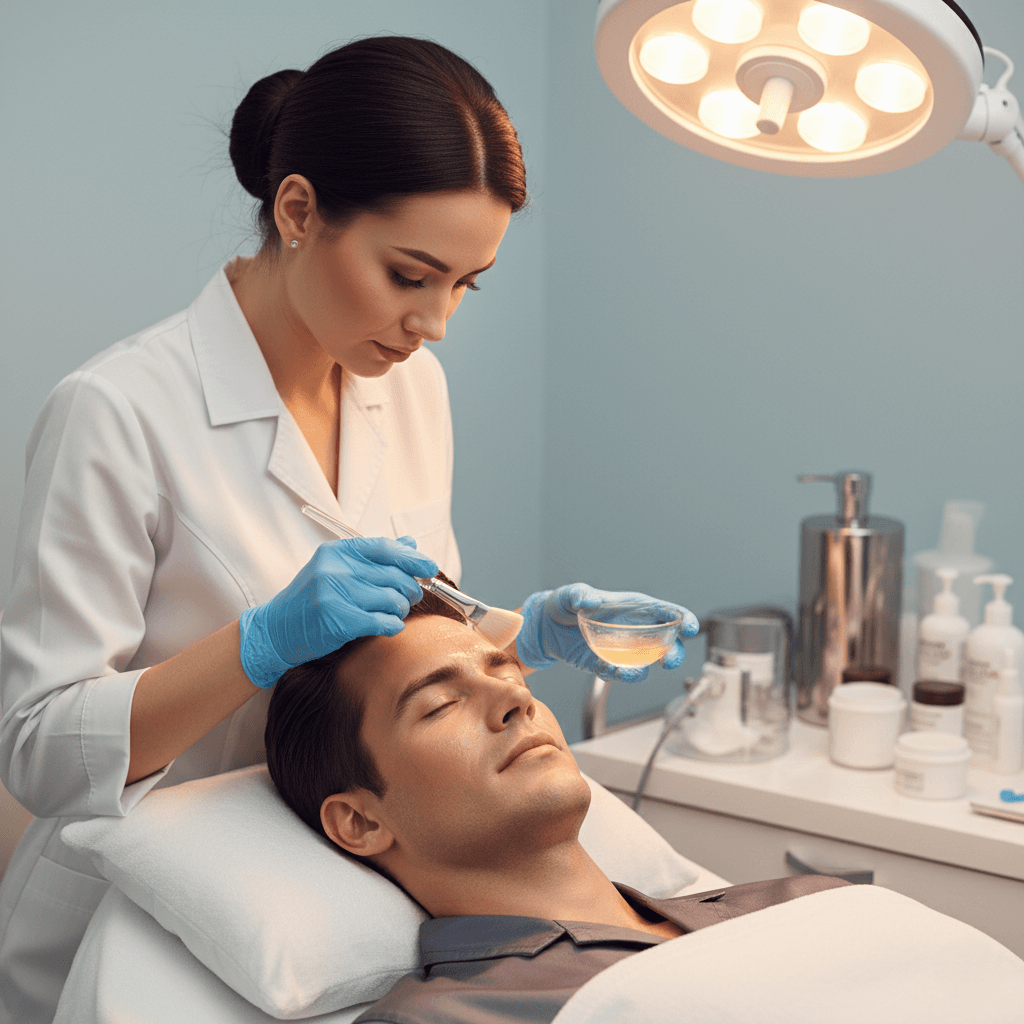
Chemical Peels treatment in a clinical setting

Quick Facts

Skin Rejuvenation

Cost Range

€100–€500 per session

Treatment Time

20-45 minutes depending on peel depth

Pain Level

Low to moderate (1-3/5) — superficial peels may tingle; deeper peels may cause stinging

Recovery Time

Superficial: minimal (1-3 days); Medium: 5-7 days; Deep: 10-14 days

Results Last

1-6 months depending on peel type

Time to Results

7-14 days for skin to fully heal and reveal results

Sessions Needed

Superficial: 4-6 sessions every 2-4 weeks; Medium: 1-3 sessions; Deep: single treatment

Educational content only: This page summarises publicly available information for educational purposes and is not medical advice. SafeSkin does not recommend any specific practitioner, clinic, product, or treatment. Individual results vary. Always consult a registered healthcare professional before any treatment decision. See our full disclaimer.

What Are Chemical Peels?

A chemical peel is a skin resurfacing treatment in which a carefully selected acid solution is applied to the skin to remove damaged outer layers, revealing fresher, smoother, more evenly toned skin beneath. By controlling the type of acid, its concentration, and the duration of application, practitioners can treat a remarkably broad range of skin concerns, from mild dullness and uneven texture to deep wrinkles, pigmentation, and acne scarring.

Chemical peels have been used in dermatology for over a century, with modern formulations developed through the 20th and 21st centuries. They remain one of the most well-established and thoroughly researched skin treatments available. In Ireland. They are one of the most popular and accessible aesthetic treatments, offered by dermatologists, doctors, and qualified nurses, and, within the scope of their practice, some dentists, across the country.

The treatment works on a simple but powerful principle: controlled removal of damaged layers to trigger renewal. The acid solution dissolves the bonds holding dead and damaged skin cells together, prompting the skin's natural healing response. As the treated layers shed (peel), new cells are generated from the deeper, undamaged layers of the skin. This new skin is typically smoother, more evenly pigmented, and firmer, with improved collagen content.

Chemical peels are classified into three categories based on the depth of penetration: superficial (affecting only the epidermis), medium-depth (reaching into the upper dermis), and deep (penetrating to the mid-dermis). The deeper the peel, the more dramatic the results, but also the longer the recovery and the higher the associated risks. Your practitioner will recommend the appropriate depth based on your skin type, concerns, and lifestyle.

Common acids used in chemical peels include glycolic acid, lactic acid, salicylic acid, mandelic acid, and trichloroacetic acid (TCA), each with different properties and suited to different skin types and concerns.

A note on phenol (deep) peels. True phenol peels are specialised, medically intensive procedures that carry systemic risks, phenol is cardiotoxic, and genuine phenol peels require cardiac monitoring, IV hydration, and medical supervision comparable to a minor surgical procedure. They are rarely offered outside specialist dermatology or plastic surgery settings in Ireland. Most treatments marketed as "deep peels" in Irish aesthetic clinics are in fact high-concentration TCA or deeper medium-depth peels, not true phenol peels. This guide focuses on the superficial and medium-depth peels that are routinely available in Ireland.

How Do Chemical Peels Work?

The chemical peel process varies depending on the depth and type of peel, but the general procedure follows these steps:

Pre-treatment consultation and preparation: Your practitioner will assess your skin, discuss your concerns, and determine the most appropriate type and depth of peel. They may recommend a preparatory skincare regime for 2 to 4 weeks before the peel, this may include a retinoid and, if needed for pigmentation concerns, a prescription-only pigment-regulating agent such as hydroquinone (available only on prescription in Ireland and the EU, and only prescribed by a doctor). Daily SPF is essential throughout preparation. Retinoids used to prime the skin in the weeks beforehand should typically be stopped 5 to 7 days before the procedure itself to reduce post-peel sensitivity. For medium and deep peels, prophylactic antiviral medication is typically prescribed for several days before and after treatment, even in patients without active cold sores, to prevent reactivation of herpes simplex virus.

Cleansing and degreasing: On the day of treatment, the skin is thoroughly cleansed and degreased to ensure even penetration of the acid solution. Any residual oils, makeup, or skincare products are removed.

Application of the acid solution: The peel solution is applied to the skin using a brush, gauze, or cotton applicator. Your practitioner will monitor your skin's reaction carefully throughout the application.

  • Superficial peels are typically left on for 1 to 5 minutes. You may feel a mild tingling or warming sensation.
  • Medium-depth peels may be applied in one or more layers, with the practitioner assessing the skin's response between layers. The skin may develop frosting, a whitening of the skin that occurs during medium-depth peels, indicating protein coagulation. Frosting is expected and indicates the peel has reached its intended depth. A stinging or burning sensation is normal and typically lasts a few minutes.
  • Deeper peels are applied in a highly controlled manner, section by section, and may require topical anaesthesia due to the intensity of the procedure.

Neutralisation: Glycolic acid and some alpha-hydroxy acid peels require a neutralising solution to stop the acid's activity. TCA is self-limiting, the acid is consumed as it reacts with skin proteins, so active neutralisation is not required, though cool compresses may be used for comfort.

Post-treatment care: A soothing balm, serum, or cooling mask is typically applied. Your practitioner will provide detailed aftercare instructions tailored to the specific peel you received.

Over the following days and weeks, the treated skin undergoes a controlled exfoliation, and new, healthier skin emerges. The depth and duration of peeling depend on the type and strength of the peel used.

A note on visible peeling. Not all peels cause dramatic visible peeling. Many superficial peels produce real results without significant skin shedding, and the degree of peeling does not necessarily correlate with the effectiveness of the treatment. If you do not see dramatic flaking after a superficial peel, it does not mean the peel has not worked, the biological response can be occurring beneath the surface.

What to Expect

Before Your Treatment

Stop retinoids 5 to 7 days before the procedure to reduce post-peel sensitivity, even if they were used in the preparatory phase. Avoid waxing the treatment area for 1 to 2 weeks beforehand and skip AHAs, BHAs, and exfoliating scrubs in the days leading up. Use broad-spectrum SPF daily for 2 weeks before and avoid tanning or deliberate sun exposure. Tell your practitioner about any cold sore history — for medium and deep peels, prophylactic antivirals are typically prescribed for several days before and after.

During Your Treatment

The skin is thoroughly cleansed and degreased, then the acid solution is applied with a brush, gauze, or cotton applicator and left on for a set time. You may feel a mild tingling or warming with superficial peels, and a stronger stinging or burning with medium-depth peels that usually eases within a few minutes. Some peels require a neutralising solution; TCA is self-limiting and consumed as it reacts with skin proteins. The whole appointment typically takes 15 to 30 minutes.

After Your Treatment

Expect peeling and flaking for 3 to 7 days depending on depth — note that not all peels produce dramatic visible peeling, and the amount of shedding does not correlate with effectiveness. Strict sun avoidance is essential: apply broad-spectrum SPF 50 daily for at least 4 weeks after a superficial or medium peel, and for some deeper peels strict sun avoidance for a month or more is recommended. Keep the skin well moisturised with gentle, bland products, avoid active ingredients until your practitioner advises, and do not pick or pull at peeling skin.

Who Is It Suitable For?

Ideal Candidates

  • Dull, uneven skin tone
  • Sun damage and pigmentation
  • Acne-prone skin
  • Fine lines and surface texture

Who Should Avoid

  • Active sunburn or recent tan (inflamed or irritated skin; peeling over this increases risk of pigmentation changes and, very rarely, scarring)
  • Active eczema, rosacea flare, or dermatitis in the treatment area
  • Active cold sore outbreaks (antiviral prophylaxis required for medium and deep peels)
  • Recent isotretinoin (Accutane) use — traditionally a 6 to 12 month wait for medium and deep peels due to impaired wound healing
  • Pregnancy and breastfeeding (particularly for TCA, salicylic, and deeper peels)
  • Keloid scarring tendency
  • Darker skin types (Fitzpatrick IV to VI) require cautious practitioner selection for medium/deep peels — superficial mandelic and lactic acid peels are often preferred and are safe in these skin types

How Much Does Chemical Peels Cost in Ireland?

Chemical peel pricing in Ireland varies significantly depending on the type, depth, and the practitioner performing the treatment.

Typical price ranges:

  • Superficial peels (glycolic, lactic, salicylic, mandelic): €100 to €200 per session
  • Medium-depth peels (TCA 15–35%): €200 to €400 per session
  • Deeper / high-concentration TCA peels (often marketed as "deep peels" in Irish aesthetic clinics): €300 to €500+ per session
  • True phenol peels (rarely offered outside specialist dermatology or plastic surgery settings, with cardiac monitoring and medical supervision): typically €1,500+ as a one-off procedure

Factors influencing cost:

  • Peel type and depth, deeper peels require more expertise, monitoring, and aftercare, which is reflected in the price
  • Practitioner qualifications, dermatologists and doctors with specialist training may charge more than other providers
  • Treatment area, full-face peels cost more than treating a single area; body peels (back, chest) may have different pricing
  • Course pricing. Many clinics offer a discounted rate for a course of 3 to 6 superficial peels, which can reduce the per-session cost by 15 to 25 per cent
  • Preparatory products, some peel protocols require pre-treatment skincare products (retinoids, SPF, brightening agents), which may be an additional cost of €50 to €150

You can search for verified clinics on SafeSkin.ie to find qualified chemical peel providers near you and compare options.

Benefits and Risks

Key Benefits

  • Reveals fresh, smooth skin
  • Improves tone and texture
  • Treats pigmentation and acne
  • Quick procedure

Potential Risks

  • Peeling and redness (3 to 7 days)
  • Temporary sensitivity to sun
  • Pigmentation changes (higher risk in darker skin, especially with medium/deep peels)
  • Scarring (rare with proper technique, but risk increases with peel depth)

Chemical Peels vs Alternative Treatments

TreatmentBest ForDuration of ResultsPrice RangeDowntime
Chemical PeelsPigmentation, acne, texture, dullnessResults are durable; maintenance every 3–6 months typically recommended for ongoing skin health€100–€500/session1–14 days
MicroneedlingScarring, texture, collagen stimulationEvery 3–6 months (maintenance)€150–€350/session2–5 days
Laser Skin ResurfacingDeep wrinkles, severe scarring, skin tighteningFractional non-ablative 6–12 months; fractional ablative 1–3 years; fully ablative CO2 up to 5 years€300–€1,500/session5–14 days
Skin BoostersHydration, radiance, skin quality4–9 months€200–€400/session24–48 hours

A note on duration. For peels, microneedling, and laser resurfacing, the figures above refer to the typical interval between maintenance sessions rather than the point at which results disappear. Improvements to pigmentation, texture, and clarity are typically durable. What usually drives re-treatment is ongoing skin ageing, new sun damage, or new acne, rather than the previous peel wearing off.

Chemical peels vs microneedling: Microneedling creates controlled micro-injuries to stimulate collagen, while chemical peels dissolve and remove damaged skin layers chemically. Microneedling is generally better for deeper acne scarring and collagen remodelling, while chemical peels excel at treating pigmentation, superficial texture issues, and acne. The two treatments can be used in alternation as part of a comprehensive skin programme.

Chemical peels vs laser skin resurfacing: Laser skin resurfacing uses targeted light energy to achieve similar goals, removing damaged skin and stimulating collagen production. Lasers offer more precise control and can achieve deeper resurfacing, but at a higher cost and with longer downtime. Chemical peels are more accessible, more affordable, and offer a range of intensities from very gentle to quite aggressive.

Chemical peels vs skin boosters: Skin boosters focus on deep hydration and overall skin quality improvement through injectable hyaluronic acid. They do not exfoliate or resurface the skin. For patients concerned primarily with hydration and glow, skin boosters may be more appropriate. For those targeting pigmentation, texture, or acne, chemical peels are the better choice. The two treatments complement each other well when used together.

How to Choose a Provider in Ireland

The safety and effectiveness of a chemical peel depends enormously on the skill and knowledge of the practitioner performing it. This is particularly true for medium and deep peels, which carry real risks if administered incorrectly.

Qualifications to look for:

  • Doctors registered with the Medical Council of Ireland
  • Dentists registered with the Dental Council of Ireland
  • Nurses registered with NMBI (Nursing and Midwifery Board of Ireland)

For medium and deeper peels. It is strongly advisable to choose a doctor, ideally a dermatologist or a practitioner with significant experience in skin resurfacing procedures.

What to expect from a good provider:

  • A comprehensive skin assessment including your Fitzpatrick skin type, medical history, and current medications
  • A clear explanation of which peel type and acid is being recommended and why
  • Realistic expectations about results and recovery
  • A pre-treatment preparation plan if required
  • Written aftercare instructions and emergency contact details
  • Follow-up appointments to monitor your skin's healing

Red flags:

  • No consultation or skin assessment before the peel
  • Performing medium or deep peels without checking medical history or medications
  • Unable to name the specific product, acid type, and concentration being used
  • Offering deep peels in non-medical settings without appropriate equipment and monitoring
  • Pressure to proceed with a deeper peel than you are comfortable with
  • No aftercare plan or follow-up

SafeSkin.ie verifies that all listed practitioners hold current registration with the relevant Irish regulatory body. You can search for verified clinics on SafeSkin.ie to find a qualified chemical peel provider in your area.

Looking for Chemical Peels?

Every practitioner on SafeSkin is register-checked with the Medical Council of Ireland, the Dental Council, or NMBI. Find a qualified professional near you.

Search Verified Clinics

Frequently Asked Questions About Chemical Peels