#What Is Medical Dermabrasion?
Medical dermabrasion is a mechanical skin resurfacing technique that physically removes layers of skin to improve texture, tone, and appearance. It encompasses a spectrum of treatments, from gentle diamond-tip microdermabrasion that brightens and smooths the skin surface, through to deeper medical-grade dermabrasion that can significantly improve acne scarring, wrinkles, and other textural concerns.
The concept behind dermabrasion is straightforward: by mechanically removing damaged or irregular outer layers of skin in a controlled manner, the body is stimulated to produce fresh, new skin with improved texture, tone, and structure. It is one of the oldest forms of skin resurfacing, predating laser technology, and remains relevant today due to its effectiveness, accessibility, and relative affordability.
In the context of Irish aesthetic clinics, you will most commonly encounter two forms of dermabrasion:
Diamond-tip microdermabrasion: The most widely available form. This treatment uses a handpiece with a diamond-encrusted tip that gently abrades the skin surface while a vacuum system simultaneously removes the dead skin cells and debris. It is a superficial treatment that targets the outermost layer of skin (the stratum corneum), producing immediate brightening and smoothing effects with virtually no downtime. It has largely replaced the older crystal microdermabrasion technique, which used aluminium oxide crystals sprayed onto the skin.
Medical-grade dermabrasion: A deeper, more intensive procedure performed by doctors. This uses a rapidly rotating diamond-encrusted wheel, wire brush, or fraise (a specialised abrading tool) to remove the epidermis and reach into the upper dermis. This level of treatment can meaningfully improve acne scars, surgical scars, deep wrinkles, and other significant skin irregularities. It requires anaesthesia and has a recovery period similar to other ablative resurfacing procedures.
In Ireland, microdermabrasion is offered at clinics nationwide, in Dublin, Cork, Galway, Limerick, Waterford, and throughout the country. It is one of the most accessible and affordable professional skin treatments available, making it an excellent entry point for patients new to aesthetic treatments. Medical-grade dermabrasion is available at specialist clinics and is less commonly performed due to the availability of fractional laser resurfacing, which has become the preferred method for deeper skin resurfacing in many practices.
Dermabrasion should not be confused with medical microneedling, which creates vertical micro-channels in the skin rather than physically removing tissue. Both treatments stimulate skin regeneration but through different mechanisms.
#How Does Dermabrasion Work?
Dermabrasion works through the principle of controlled mechanical exfoliation, physically removing layers of skin to trigger the body's wound healing response and the production of new, healthier skin.
Diamond-tip microdermabrasion mechanism:
The diamond-tip handpiece has two main components: a diamond-encrusted tip (available in various grits from fine to coarse) and a vacuum suction system. When the handpiece is moved across the skin:
- The diamond surface physically abrades the outermost layer of dead skin cells (stratum corneum)
- Simultaneously, the vacuum suction removes the loosened dead cells and debris
- The vacuum also increases blood flow to the treatment area, promoting circulation and nutrient delivery
- The gentle abrasion stimulates the basal layer of the epidermis, triggering increased cell turnover
The result is immediately smoother, brighter skin with improved product penetration. Over a course of treatments, the cumulative effect includes improved skin texture, reduced superficial pigmentation, softened fine lines, and decreased pore congestion.
The practitioner can adjust the treatment intensity by varying:
- Tip grit: Finer grits for sensitive areas and skin types; coarser grits for thicker, more resilient skin
- Vacuum pressure: Higher suction for more aggressive treatment
- Number of passes: More passes over the same area for deeper exfoliation
- Speed of movement: Slower passes create more exfoliation than faster passes
- Pressure applied: More pressure against the skin increases exfoliation depth
Medical-grade dermabrasion mechanism:
The deeper procedure uses a motorised handpiece with a rotating abrasive surface, typically a diamond fraise (a cylindrical or flat diamond-coated tool) or a wire brush attachment. The device rotates at high speed (thousands of RPM), and the practitioner controls the depth of skin removal by adjusting the pressure, speed, and number of passes.
This treatment removes the full epidermis and can extend into the papillary dermis (the upper portion of the dermis). The wound healing response at this depth involves:
- Inflammation phase: Increased blood flow and immune cell recruitment to the treated area
- Re-epithelialisation: New epidermal cells migrate from hair follicles and the wound edges to cover the treated surface, typically complete within 7 to 10 days
- Collagen remodelling: Fibroblasts produce new collagen and elastin in the dermis, improving skin structure and firmness over the following weeks and months
- Scar remodelling: In the case of acne scars, the removal of scarred tissue and the production of new collagen can meaningfully improve the depth and appearance of scars
The role of vacuum in microdermabrasion:
The vacuum component is more than just a debris removal system. The suction stimulates blood flow and lymphatic drainage, brings oxygen and nutrients to the skin surface, and may contribute to a mild lifting effect. Some practitioners believe the mechanical stress of the vacuum also helps stimulate collagen production, though this effect is modest compared to treatments like microneedling or fractional resurfacing.
#Common Treatment Areas
Dermabrasion is a versatile treatment that can be applied to most areas of the face and body where skin texture, tone, or clarity needs improvement.
Facial treatment areas:
- Full face: The most common treatment area. A full-face microdermabrasion session addresses overall dullness, uneven texture, enlarged pores, and superficial pigmentation. The entire face is treated systematically, with adjustments to the tip grit and pressure for different zones (gentler around the eyes and lips, more vigorous on the forehead, nose, and cheeks).
- Nose and chin (T-zone): These areas are prone to congestion, blackheads, and enlarged pores, making them particularly responsive to the deep cleansing and exfoliation of microdermabrasion.
- Forehead: Dull, rough forehead skin with visible pores benefits from regular dermabrasion treatment.
- Perioral area (around the mouth): Fine lines around the lips, often called smoker's lines or lipstick lines, can be improved with dermabrasion. Particularly deeper medical-grade treatment.
- Jawline and chin: Textural irregularities, rough skin, and breakout-prone areas respond well to mechanical exfoliation.
Body treatment areas:
- Neck: Sun damage, crepiness, and rough texture on the neck can be improved with gentle microdermabrasion. Note: the neck requires more conservative treatment than the face due to thinner skin.
- Decolletage (chest): Sun-damaged, rough, or pigmented chest skin responds to gentle microdermabrasion.
- Upper back: Rough skin, acne scarring, and post-inflammatory pigmentation on the back can be treated.
- Hands: Rough, sun-damaged hand skin benefits from gentle exfoliation.
- Elbows and knees: Rough, thickened skin on the elbows and knees can be smoothed with microdermabrasion.
- Upper arms: Keratosis pilaris (small, rough bumps on the upper arms) can be improved with regular microdermabrasion sessions.
Skin concerns addressed:
- Dull, lacklustre skin, one of the primary indications, with immediate visible improvement
- Uneven skin texture, rough, bumpy, or irregular skin surface
- Fine lines and superficial wrinkles. Particularly with cumulative treatment
- Enlarged pores, mechanical clearing and cumulative tightening
- Congested skin, blackheads, and milia
- Superficial pigmentation, age spots, sun spots, post-inflammatory marks
- Mild acne scarring, superficial textural scarring
- Dry, flaky skin, removal of the dead cell layer improves moisture absorption
- Keratosis pilaris, rough, bumpy skin on the upper arms and thighs
- Enhanced product penetration, by removing the barrier layer, subsequent skincare products penetrate more effectively
#During the Procedure
The treatment experience differs significantly between microdermabrasion and medical-grade dermabrasion.
Standard diamond-tip microdermabrasion (30–45 minutes):
-
Cleansing: Your skin is thoroughly cleansed to remove all makeup, oil, and product residue.
-
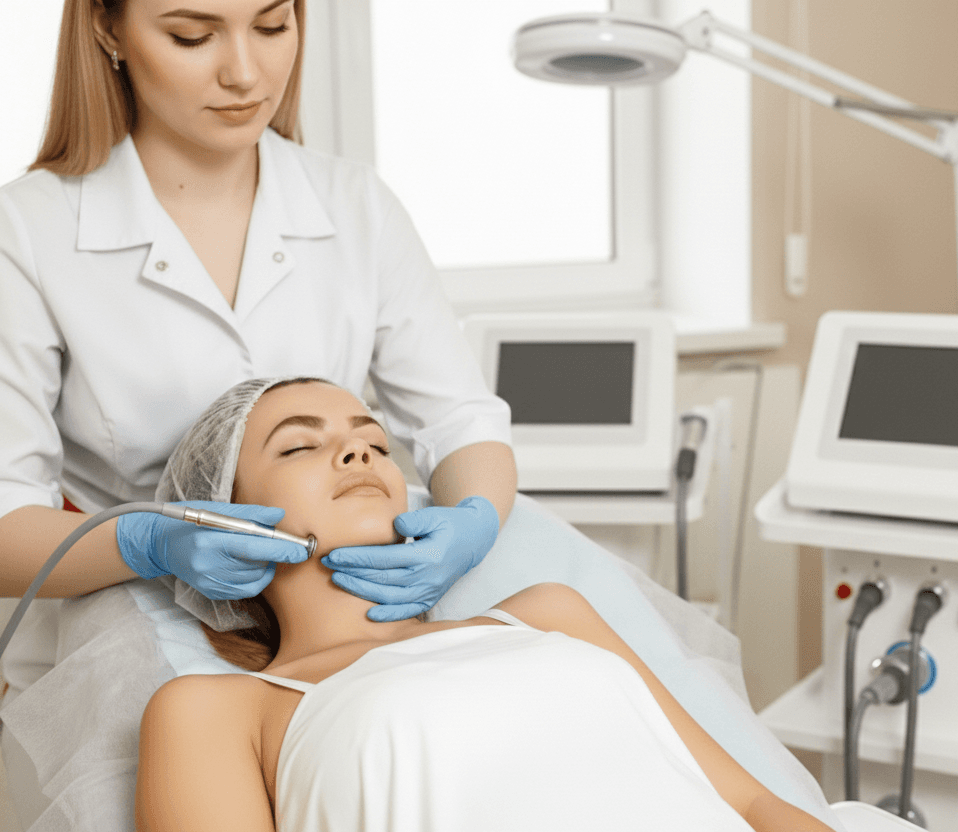
Treatment: The practitioner selects the appropriate diamond tip (based on your skin type and the treatment area) and begins working systematically across the face. The handpiece is held against the skin and moved in gentle, overlapping strokes. The diamond tip exfoliates the surface while the vacuum simultaneously removes dead cells and debris.
The sensation is often described as a light scratching or sandpaper-like feeling combined with a gentle pulling from the vacuum. Most patients find it comfortable and even relaxing. The practitioner adjusts the pressure and tip selection for different areas of the face, gentler around the eyes, lips, and any sensitive zones, and more vigorous on thicker-skinned areas like the forehead and nose.
-
Additional passes: Problem areas such as the nose, chin, or congested zones may receive additional passes for deeper exfoliation.
-
Post-treatment application: A soothing serum, hydrating mask, or targeted skincare product is applied after exfoliation. Because the dead cell barrier has been removed. These products penetrate more effectively. This is one of the treatment's key benefits.
-
Sun protection: SPF is applied as the final step.
No anaesthesia is needed for standard microdermabrasion. The treatment is painless for most patients and often described as pleasant.
Medical-grade dermabrasion (45–90 minutes including preparation):
-
Anaesthesia: Topical anaesthetic cream is applied 30 to 60 minutes before treatment, or local anaesthetic injections (nerve blocks) may be used. For extensive treatments, conscious sedation or general anaesthesia may be offered.
-
Preparation: The treatment area is cleansed and marked. Protective eye shields may be used.
-
Dermabrasion: The motorised handpiece with its rotating diamond fraise or wire brush is applied to the skin. The practitioner carefully controls the depth of skin removal by observing visual cues, the skin surface changes appearance as different layers are reached. The depth of treatment is adjusted based on the concern being treated and the area of the face.
-
Haemostasis: Any bleeding is controlled with gentle pressure and appropriate dressings.
-
Post-treatment dressing: A soothing ointment and dressing is applied to protect the treated surface during the initial healing phase.
The deeper procedure is more uncomfortable, but anaesthesia makes it manageable. The treatment requires more time, clinical expertise, and a controlled medical environment.
#Results Timeline
Understanding when to expect results helps set appropriate expectations for your dermabrasion treatment.
Microdermabrasion results:
- Immediately after treatment: A noticeable glow and smoother skin surface. Many patients describe their skin as looking refreshed, brighter, and more radiant immediately after their first session. This immediate improvement is due to the removal of the dull, dead cell layer and the increase in circulation from the vacuum.
- 24–48 hours after: Improved product penetration, your skincare routine may feel more effective in the days following treatment.
- After 2–3 sessions: Cumulative improvement in texture, pore appearance, and overall skin clarity becomes evident.
- After a full course (4–6 sessions): Noticeable improvement in skin texture, tone, fine lines, superficial pigmentation, and pore size. The cumulative effect of regular exfoliation and stimulation produces meaningful improvements in skin quality.
- Ongoing maintenance: Results are best maintained with regular treatments every 4 to 8 weeks. Without maintenance, the skin will gradually return to its pre-treatment state as dead cells accumulate and turnover slows.
Medical-grade dermabrasion results:
- Weeks 1–2: Healing phase, red, raw skin gradually re-epithelialises and scabs separate.
- Weeks 2–6: New skin is revealed. Skin texture improvement is visible once redness subsides. Early scar improvement may be apparent.
- Months 2–6: Collagen remodelling continues beneath the surface, producing progressive improvement in skin firmness, scar depth, and overall texture. This is when the full benefits of deeper treatment become apparent.
- Months 6–12: Final results are visible as collagen maturation completes. Acne scar improvement of 30% to 50% is typical after a single medical-grade dermabrasion session.
What microdermabrasion will and will not do:
Will:
- Immediately brighten and smooth the skin surface
- Improve product penetration and skincare efficacy
- Reduce superficial dullness, rough texture, and minor pigmentation
- Provide a healthy, radiant glow
- Offer an excellent regular maintenance treatment
- Complement more intensive treatments
Will not:
- Dramatically reduce deep wrinkles or significant skin laxity
- Significantly improve deep acne scars
- Replace more intensive treatments like fractional resurfacing, chemical peels, or microneedling for deeper concerns
- Produce permanent results from a single session, maintenance is needed
#Choosing a Practitioner in Ireland
Choosing the right clinic and practitioner ensures you receive a safe, effective dermabrasion treatment tailored to your skin's needs.
For microdermabrasion:
Microdermabrasion is one of the most widely available aesthetic treatments in Ireland. It is offered by:
- Doctors and nurses in register-verified aesthetic clinics, registered with the Medical Council of Ireland or NMBI
- Skin therapists and aestheticians with training in the specific device used
- Multi-disciplinary clinics offering a range of skin treatments
While microdermabrasion does not require medical registration to perform in Ireland, the quality of treatment varies significantly between providers. A skilled practitioner understands skin physiology, can assess your skin type correctly, adjusts the treatment parameters appropriately, and recommends the right treatment frequency and complementary products.
For medical-grade dermabrasion:
This deeper procedure should only be performed by a medical professional, typically a doctor registered with the Medical Council of Ireland, or a dentist registered with the Dental Council of Ireland for the lower face. The treatment requires anaesthesia, involves bleeding, and carries risks that demand medical expertise and a clinical setting with appropriate emergency equipment.
What to look for in any dermabrasion provider:
- Skin assessment skills: Your practitioner should assess your skin type, condition, and concerns before recommending treatment. A one-size-fits-all approach suggests limited expertise.
- Clean, well-maintained equipment: Diamond tips should be properly sterilised or replaced between patients. The vacuum system should be clean and properly maintained. Ask about their hygiene protocols.
- Personalised approach: The best practitioners adjust tip grit, vacuum pressure, and number of passes based on your individual skin type and the area being treated.
- Post-treatment guidance: A good practitioner will recommend appropriate post-treatment skincare and sun protection, and advise on how dermabrasion fits into your broader skin health plan.
- Transparent pricing: Clear pricing that includes the full treatment plan, not just a single session price.
- Integration with a broader treatment plan: An excellent clinic will position microdermabrasion within a comprehensive skin health strategy, recommending it alongside complementary treatments and products where appropriate.
Finding a verified clinic:
SafeSkin's directory allows you to find a verified clinic offering dermabrasion treatments across Ireland. You can compare clinics by location, qualifications, and treatment offerings. Look for clinics that position microdermabrasion as part of a broader skin health approach rather than as a standalone treatment, as this typically indicates a more knowledgeable and results-focused practice.