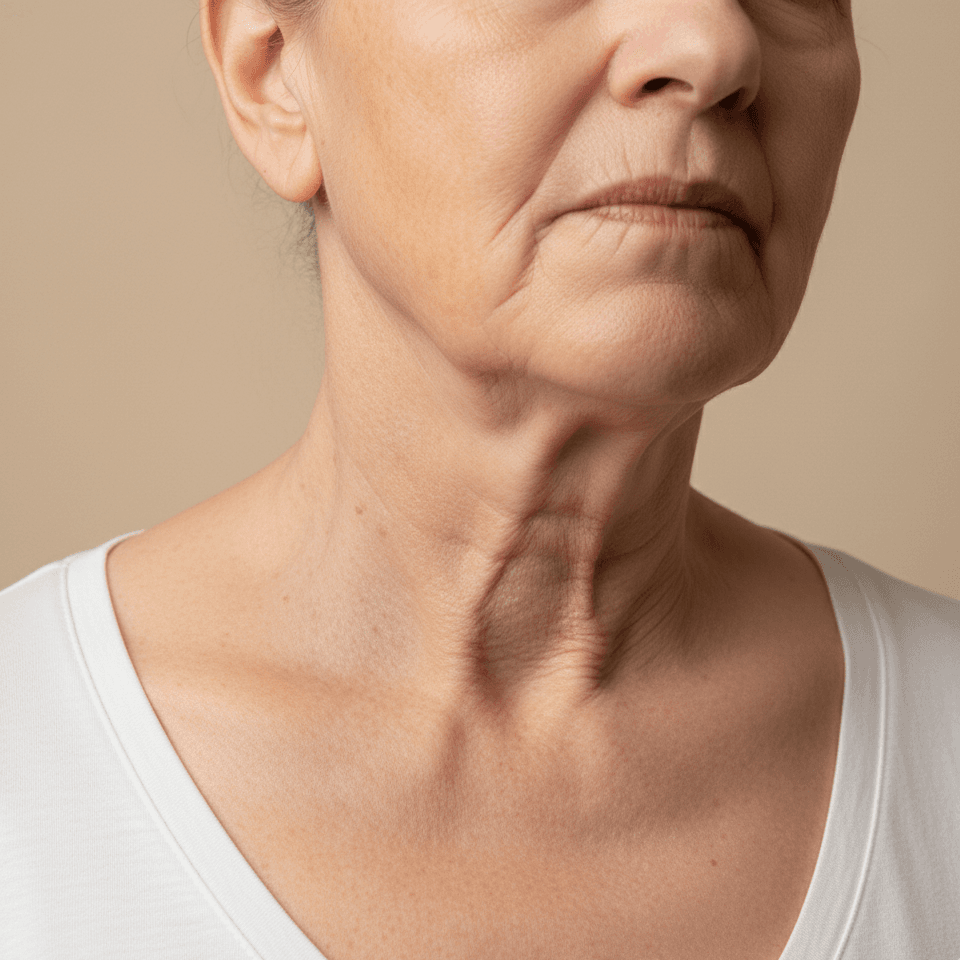
#Understanding Neck Ageing
The neck is often described as the area that reveals a person's true age — and for good reason. While many people invest considerable time and money in facial skincare and treatments, the neck is frequently overlooked, creating a visible disconnect between a well-maintained face and a neglected neck. This contrast has become so common that it has its own informal name in aesthetic medicine: the "necklace of Venus" for horizontal lines, and "turkey neck" for more advanced sagging and banding.
Neck ageing is a multifactorial process involving the skin, underlying fat, muscle, and even bone structure. The skin on the neck is inherently thinner than facial skin — roughly half the thickness — and contains significantly fewer sebaceous glands, meaning it produces less of the natural oils that help keep skin supple and protected. It also has less underlying subcutaneous fat to provide volume and support, making it more susceptible to gravitational changes over time.
In Ireland, neck ageing is a particularly common concern among adults from their early forties onwards, though the foundations of neck ageing are laid much earlier. Years of sun exposure (even in Ireland's temperate climate), neglect in skincare routines, and modern lifestyle habits like prolonged screen use all contribute to premature changes in the neck.
The good news is that neck rejuvenation has advanced enormously in recent years. A range of non-surgical treatments — from injectable skin boosters and anti-wrinkle injections to energy-based devices and medical-grade skincare — can meaningfully improve the appearance of the neck without surgery. Understanding the causes and types of neck ageing is the first step toward choosing the right approach.
#What Causes Neck Ageing?
Neck ageing results from a combination of intrinsic biological processes and extrinsic factors that accelerate visible changes.
Intrinsic ageing is the natural, genetically programmed decline in skin structure that occurs with time. From our mid-twenties, collagen production decreases by approximately one per cent per year, and elastin fibres become less functional. In the neck, where the skin is already thin and has less structural support, these changes manifest earlier and more visibly than in thicker-skinned areas. The subcutaneous fat layer beneath the neck skin also thins with age, contributing to a more skeletal, hollow appearance.
Sun exposure and UV damage are the single greatest accelerators of neck ageing. Cumulative UV exposure breaks down collagen and elastin fibres through a process called photoageing, leading to wrinkles, pigmentation, textural roughness, and loss of elasticity. Many people in Ireland are diligent about applying SPF to their face but consistently forget the neck, leaving it exposed to decades of unprotected UV radiation. Even Ireland's frequently overcast skies transmit significant levels of UVA radiation, which penetrates clouds and glass.
Tech neck — the modern accelerator. The dramatic increase in smartphone, tablet, and laptop use over the past fifteen years has introduced a new and significant cause of neck ageing. The repeated action of looking down at a screen creates persistent horizontal creases across the front of the neck. Over time, as the skin loses elasticity, these creases become permanent. Some practitioners in Ireland report seeing "tech neck" lines in patients as young as their late twenties — far earlier than traditional neck ageing would present.
Platysma muscle changes contribute significantly to neck ageing. The platysma is a broad, thin muscle that runs from the chest up over the neck to the jawline. In youth, the two halves of the platysma sit close together, creating a smooth neck contour. With age, the muscle edges separate and the muscle itself thins, creating the characteristic vertical bands or cords that become increasingly prominent, particularly when grimacing or tensing the neck.
Loss of jawline definition compounds the appearance of neck ageing. As facial volume diminishes and skin laxity increases, the once-sharp angle between the jaw and neck blurs. Jowl formation and submental fullness (the so-called "double chin") further obscure the jaw-neck junction, making the neck appear shorter and older.
Lifestyle factors including smoking (which damages collagen and restricts blood flow), poor nutrition, inadequate hydration, sleep position (side sleeping compresses the neck), and yo-yo dieting (repeated weight gain and loss stretches the skin) all contribute to accelerated neck ageing.
#Types and Severity Levels
Neck ageing presents in several distinct patterns, often in combination, and severity can range from early subtle changes to advanced structural deterioration.
Fine lines and texture changes are typically the earliest signs. The neck skin develops a slightly roughened, dry texture, and fine horizontal lines begin to appear — sometimes called "necklace lines." At this stage, the changes are most noticeable in certain lighting or when the skin is dehydrated. This is the easiest stage to treat and the most important stage at which to begin preventative care.
Horizontal creases and wrinkles represent the next progression. The fine lines deepen into visible creases that are present at rest, not just with movement. These may be accentuated by tech neck habits. The skin between the creases may begin to show early signs of crepiness — a thin, crinkled texture similar to tissue paper.
Crepey skin and loss of elasticity describes a stage where the skin has lost significant structural integrity. When gently pinched, it does not snap back quickly. The surface has a pervasive, fine-lined, paper-like quality. This reflects substantial collagen and elastin depletion and usually indicates years of UV exposure combined with intrinsic ageing.
Platysmal banding involves the appearance of vertical cords running down the front of the neck. These become more prominent with facial expression, particularly when grimacing or clenching the jaw, but in advanced cases are visible at rest. The bands can create a stringy, aged appearance and are one of the most common complaints in neck aesthetics.
Skin laxity and sagging is an advanced presentation where the skin hangs loosely, the jawline is obscured, and there may be excess skin creating visible folds. This stage often involves loss of the cervicomental angle — the clean angle between the chin and neck that characterises a youthful profile.
Combined presentation is the most common clinical scenario. Most people presenting for neck rejuvenation have a combination of several of these features — perhaps horizontal creases with early banding and some textural changes. A comprehensive treatment plan addresses multiple components rather than focusing on a single issue.
#Treatment Options Available in Ireland
Ireland offers an increasingly sophisticated range of non-surgical neck rejuvenation treatments, performed by practitioners registered with the Medical Council of Ireland, the Dental Council, or NMBI. The most effective approach almost always involves combining multiple treatment modalities.
Skin boosters and injectable moisturisers are among the most popular and effective neck treatments in Ireland. Profhilo is particularly well-suited to the neck because it spreads widely beneath the skin, delivering intense hydration while stimulating collagen and elastin production. The treatment involves a series of small injections at specific points — a protocol called Bio Aesthetic Points (BAP). Most patients require two sessions four weeks apart, with results lasting six to nine months. Other skin boosters can also be effective for neck hydration and quality improvement.
Anti-wrinkle injections for platysmal bands use botulinum toxin to relax the platysma muscle, softening vertical bands and creating a smoother neck contour. This technique, sometimes called a "Nefertiti lift" when extended along the jawline, can also subtly improve jawline definition by releasing the downward pull of the platysma. Anti-wrinkle injections for bands typically last three to four months and require maintenance treatments.
Radiofrequency skin tightening uses controlled heat energy to stimulate collagen contraction and new collagen production in the deeper layers of the skin. Radiofrequency treatments are effective for mild to moderate neck laxity and can improve skin texture over a course of sessions. Results build gradually over three to six months as new collagen forms.
Ultrasound skin tightening (HIFU — High-Intensity Focused Ultrasound) delivers focused energy to precise depths beneath the skin, targeting the deeper structural layers including the SMAS (superficial muscular aponeurotic system). Ultrasound skin tightening can produce meaningful lifting and tightening of the neck and jawline, with results developing over three to six months and lasting one to two years.
Medical microneedling creates controlled micro-injuries in the skin to trigger a wound-healing response and new collagen production. Medical microneedling is effective for improving neck skin texture, reducing fine lines, and enhancing overall skin quality. A course of three to six sessions, spaced four to six weeks apart, is typically recommended.
Polynucleotides are a newer treatment gaining popularity in Ireland for neck rejuvenation. Polynucleotide therapy involves injecting purified DNA fragments that stimulate fibroblast activity, boost collagen production, and improve skin quality at a cellular level. The neck responds particularly well to this biostimulatory approach.
Thread lifts offer a minimally invasive option for neck laxity. PDO or PLLA threads are inserted beneath the skin to provide mechanical lift and stimulate collagen production along their path. While not a substitute for surgery in cases of severe laxity, threads can produce meaningful improvement for mild to moderate sagging and can be combined with other treatments.
Dermal fillers can be used judiciously to soften deep horizontal neck creases. Dermal fillers placed carefully along prominent necklace lines can reduce their depth and improve the overall appearance. This is a technique that requires significant practitioner experience, as the neck skin is thin and the anatomy demands precision.
#Choosing the Right Treatment
Selecting the most appropriate neck rejuvenation treatment requires careful consideration of your specific concerns, the severity of changes, your tolerance for downtime, and your budget.
Assess your primary concerns honestly. Stand in front of a well-lit mirror and examine your neck in profile and from the front. Are your main concerns textural (crepey, rough skin)? Lines and creases (horizontal necklace lines, tech neck)? Banding (vertical cords)? Laxity (loose, sagging skin)? Or a combination? Each concern is best addressed by different treatments or treatment combinations.
Match treatments to severity. Early changes (fine lines, mild texture changes) respond beautifully to skin boosters, microneedling, and a medical-grade skincare routine — relatively gentle, lower-cost interventions. Moderate changes (deeper lines, early banding, crepey skin) benefit from combining energy-based treatments like radiofrequency or ultrasound with injectables. Advanced changes (significant laxity, prominent banding, deep creases) may require a multi-modal approach including threads, anti-wrinkle injections, and energy devices — and in some cases, honest discussion about whether surgical options might deliver a better outcome.
Choose a practitioner with neck-specific experience. The neck is anatomically distinct from the face, with thinner skin, different vascular and nerve patterns, and structures like the platysma muscle and thyroid cartilage that require careful navigation. Ask prospective practitioners how frequently they treat the neck, what combination protocols they use, and whether they can show you before-and-after photographs of their own neck rejuvenation results.
Be realistic about outcomes. Non-surgical treatments can produce impressive improvements in neck appearance — smoother texture, reduced lines, softened bands, improved hydration and radiance. However, they cannot replicate the results of a surgical neck lift for advanced laxity. A good practitioner will be honest about what non-surgical treatments can and cannot achieve for your specific presentation.
Consider the full picture. Treating the neck in isolation can sometimes create an odd contrast with the face or decolletage. Many practitioners recommend addressing all three zones — face, neck, and chest — for the most natural, harmonious result. Similarly, treating wrinkles and fine lines on the face while neglecting the neck simply shifts the age mismatch.
You can find a verified clinic near you through SafeSkin's directory, where all listed practitioners hold current registration with the appropriate Irish regulatory body.
#Prevention and Self-Care
Prevention and consistent daily care are by far the most cost-effective strategies for maintaining a youthful neck. Even if you are already seeing signs of neck ageing, these habits will slow further progression and support the results of any professional treatments.
Extend your skincare routine to your neck. This is the single most impactful habit change you can make. Every product you apply to your face — cleanser, serum, moisturiser, and especially SPF — should be extended down over the neck and ideally the decolletage. Apply in upward strokes rather than pulling downward on the delicate neck skin.
Sun protection is paramount. Apply a broad-spectrum SPF 30 or higher to your neck every morning, reapplying if you are outdoors for extended periods. In summer, consider wearing scarves, high-necked tops, or UV-protective clothing. Remember that UVA radiation, which drives photoageing, penetrates clouds and glass — it reaches your neck even on overcast Irish days and through car windows.
Address tech neck posture. Raise your phone and tablet to eye level rather than bending your neck to look down. Position computer screens so the top of the display is at or slightly below eye level. Take regular breaks to look up, stretch your neck gently, and reverse the forward-flexed position. These postural adjustments can genuinely slow the formation of horizontal tech neck creases.
Use targeted neck products. Several medical-grade skincare brands offer specific neck and decolletage creams formulated for the thinner, more delicate skin in this area. Look for products containing retinoids (start with low concentrations and build gradually), peptides, niacinamide, hyaluronic acid, and antioxidants like vitamin C and vitamin E.
Sleep position matters. Sleeping on your side or stomach compresses the neck and chest, creating creases that can become permanent over time. Sleeping on your back — or using a specially designed pillow that reduces neck compression — can help. A silk or satin pillowcase creates less friction than cotton, reducing mechanical stress on the neck skin.
Stay hydrated and nourished. Adequate water intake supports skin hydration from within, while a diet rich in antioxidants (colourful fruits and vegetables), omega-3 fatty acids (oily fish, nuts, seeds), and protein (essential for collagen synthesis) provides the building blocks your neck skin needs to maintain its structure.
Avoid smoking. Smoking accelerates skin ageing throughout the body, but its effects are particularly visible on the thin neck skin. The combination of collagen breakdown, reduced blood flow, and repetitive pursing and squinting motions makes smoking one of the most significant modifiable risk factors for premature neck ageing.
#When to Seek Professional Help
While daily self-care forms the foundation of neck maintenance, there are clear indicators that professional assessment and treatment would be beneficial.
When prevention is no longer sufficient. If you have been diligent with skincare and sun protection but are still noticing progressive changes — deepening lines, increasing laxity, or worsening texture — it is time to explore what professional treatments can add to your routine. Skincare alone cannot reverse established collagen and elastin loss.
When you notice a face-neck mismatch. If your face looks refreshed and well-maintained but your neck is telling a different story, targeted neck treatments can restore balance. This is an increasingly common presentation among people who have invested in facial treatments but neglected the neck.
When platysmal bands become prominent. Vertical banding will not improve with skincare or lifestyle changes — the platysma muscle requires targeted treatment with anti-wrinkle injections or, in more advanced cases, surgical intervention. Early treatment can prevent the bands from becoming more pronounced.
When tech neck lines are deepening. If horizontal creases from screen use are becoming permanent features rather than temporary marks, professional treatments can soften them before they deepen further. Combined with postural changes, early intervention produces the best outcomes.
When skin quality is significantly degraded. Crepey, dehydrated, or extensively sun-damaged neck skin benefits enormously from professional biostimulatory treatments that skincare products simply cannot replicate. Treatments like Profhilo, polynucleotides, and medical microneedling work at deeper skin layers to stimulate genuine structural renewal.
Before a major event or milestone. Many people in Ireland seek neck rejuvenation ahead of weddings, significant birthdays, or career milestones. If this is your situation, plan ahead — most treatments require multiple sessions and results develop over weeks to months. Ideally, begin your treatment plan at least three to six months before your target date.
#What to Expect from Treatment
Understanding the treatment journey helps set appropriate expectations and prepares you for each stage of the process.
The consultation is your starting point and should be thorough. Your practitioner will examine your neck in various positions (sitting, lying, turning the head), assess skin quality, identify specific concerns, and discuss your goals. They should also review your medical history, current skincare routine, and sun exposure habits. Expect this appointment to last 30 to 60 minutes. Many clinics in Ireland offer complimentary initial consultations.
A treatment plan will be proposed. Rather than a single treatment, most practitioners will recommend a phased plan combining several modalities. For example, a common approach might include Profhilo for hydration and quality improvement, anti-wrinkle injections for bands, and a course of radiofrequency for mild tightening — alongside a medical-grade homecare routine including SPF, retinoid, and peptide-rich neck cream.
Treatment sessions are typically quick. Most individual neck treatments take 20 to 45 minutes. Profhilo injections involve five to ten injection points per side and are completed in under 30 minutes. Radiofrequency sessions take 30 to 45 minutes. Anti-wrinkle injections for bands take 15 to 20 minutes. You can usually return to normal activities immediately, making these true "lunchtime" procedures.
Downtime is generally minimal. Most non-surgical neck treatments involve little to no downtime. You may experience mild redness, small bumps at injection sites (with Profhilo or fillers), or warmth (with energy-based devices), all of which typically resolve within hours to a couple of days. Microneedling may leave the neck pink for 24 to 48 hours. Thread lifts involve slightly more recovery — two to five days of mild swelling and restriction on neck movement.
Results develop over time. While some treatments show immediate effects (dermal fillers for lines, anti-wrinkle injections for bands within a week), the most significant improvements come from collagen-stimulating treatments that work over weeks to months. Profhilo results are typically noticeable at three to four weeks, with full effect at two months. Radiofrequency and ultrasound tightening results continue to improve for up to six months after treatment.
Maintenance is essential. The neck is subject to ongoing ageing forces — gravity, UV exposure, movement, and intrinsic collagen decline. Maintaining results requires periodic treatment sessions (typically every six to twelve months depending on the modality) combined with consistent daily skincare and sun protection. Your practitioner should outline a realistic maintenance schedule and associated costs.
Investment in neck rejuvenation varies. A basic programme focusing on hydration and texture improvement (Profhilo plus skincare) might cost €600 to €900 for the initial course. A comprehensive programme addressing multiple concerns (combining skin boosters, anti-wrinkle injections, and energy-based treatments) could range from €1,500 to €3,500 over six to twelve months. Discuss costs openly during your consultation and ask about package pricing or payment plans.
The most important step is choosing a qualified, experienced practitioner registered with the Medical Council of Ireland, the Dental Council, or NMBI. SafeSkin's directory makes it easy to find a verified clinic near you with confidence in their credentials and expertise. You can also explore related concerns like skin laxity and sagging, wrinkles and fine lines, and general ageing prevention for a more comprehensive understanding of your options.