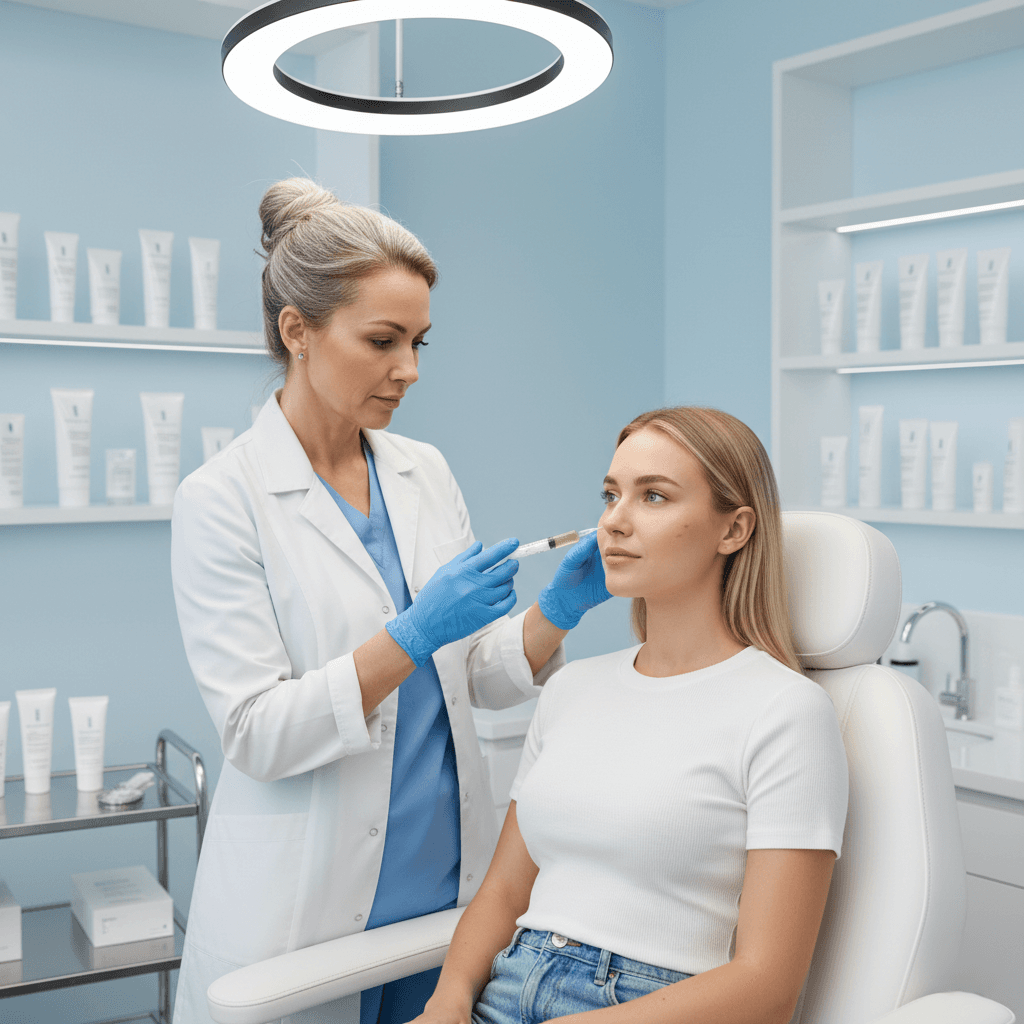
#What Is PRF (Platelet-Rich Fibrin)?
Platelet-Rich Fibrin, or PRF, is a further development of autologous (from-your-own-body) regenerative treatments in aesthetic medicine. Building on the principles of PRP (platelet-rich plasma), PRF takes a different approach to preparing blood products, eliminating anticoagulants and allowing a natural fibrin matrix to form, which then releases growth factors more gradually.
The fundamental concept behind PRF is simple: a small amount of your blood is drawn, processed using a centrifuge, and the resulting PRF concentrate, containing platelets, white blood cells, and circulating growth factors held within a natural fibrin matrix, is then applied to the treatment area either through injection or in combination with medical microneedling. Because PRF is prepared from your own blood without chemical additives, the risk of allergic reaction is extremely low.
What distinguishes PRF from PRP is the processing method. PRP uses anticoagulant additives and higher-speed centrifugation, while PRF is processed at lower centrifuge speeds without anticoagulants. This allows the blood to form a natural fibrin clot, a three-dimensional matrix that holds platelets, white blood cells, and growth factors within its structure. This fibrin matrix acts as a slow-release scaffold, releasing growth factors over 10 to 14 days rather than the more rapid release seen with PRP.
In Ireland, PRF has gained significant traction among both practitioners and patients over the past several years. Clinics in Dublin, Cork, Galway, Limerick, and across the country now offer PRF treatments for facial rejuvenation, under-eye improvement, acne scarring, and general skin quality enhancement. The treatment appeals to patients who prefer a natural, biological approach to aesthetics.
PRF was originally developed in the field of oral and maxillofacial surgery by Dr Joseph Choukroun in France, where it was used to support bone and soft tissue healing after dental procedures. Its transition to aesthetic medicine has been driven by growing clinical experience, though it is worth being aware that PRF exists in various commercial protocols with different centrifuge speeds, tube types, and preparation methods, the label “PRF” can refer to a range of preparations rather than a single standardised product.
#How Does PRF Work?
Understanding the science behind PRF helps explain why it is effective and how it differs from other regenerative treatments.
The blood draw and processing:
The treatment begins with a standard blood draw, typically 2 to 6 tubes of blood (approximately 20 to 60ml) depending on the treatment protocol. This is identical to a routine blood test and takes only a few minutes.
The blood tubes are then immediately placed in a specialised centrifuge. PRF uses lower centrifuge speeds than PRP protocols. The tubes used for PRF are specifically designed to allow natural clot formation without the anticoagulants used in PRP protocols.
The lower centrifugation speed means that more white blood cells and growth factors are preserved in the final product. As the blood spins, a fibrin clot forms naturally, creating the characteristic fibrin matrix that gives PRF its unique properties.
The fibrin matrix, PRF's key advantage:
The fibrin matrix is a three-dimensional network of fibrin protein fibres that forms naturally during the clotting process. In PRF, this matrix serves multiple critical functions:
- Slow-release scaffold: Growth factors and cytokines are trapped within the fibrin network and released gradually as the fibrin breaks down over 10 to 14 days. This sustained release provides a prolonged regenerative stimulus compared to PRP's rapid release.
- Cellular concentration: The fibrin matrix concentrates platelets, leukocytes (white blood cells), and circulating growth factors in a biologically active preparation.
- Structural support: When injected or applied to tissue, the fibrin matrix provides a temporary scaffold that supports tissue repair and regeneration.
Growth factors and biological activity:
Laboratory analysis of PRF has identified various growth factors and signalling molecules, including:
- PDGF (Platelet-Derived Growth Factor): Stimulates cell proliferation and blood vessel formation
- TGF-beta (Transforming Growth Factor): Promotes collagen synthesis and tissue remodelling
- VEGF (Vascular Endothelial Growth Factor): Stimulates new blood vessel formation, improving tissue blood supply
- EGF (Epidermal Growth Factor): Promotes skin cell regeneration and wound healing
- IGF-1 (Insulin-like Growth Factor): Supports cell growth and differentiation
- Interleukins and cytokines: Modulate inflammation and immune response
When these factors are delivered to the skin, either through direct injection or via micro-channels created by microneedling, they trigger a cascade of regenerative responses: fibroblast activation, new collagen and elastin production, improved microcirculation, accelerated cell turnover, and enhanced tissue hydration.
Injectable PRF vs. PRF with microneedling:
PRF can be delivered in two primary ways, each suited to different treatment goals:
- Injectable PRF (i-PRF): Liquid PRF is injected directly into the skin using fine needles or cannulas. This is preferred for targeted treatment of specific areas such as under the eyes or nasolabial folds.
- PRF with microneedling: PRF is applied topically onto the skin immediately before or during a medical microneedling session. The micro-channels created by the needles allow the PRF to penetrate into the dermis. This approach is ideal for broad facial rejuvenation, skin texture improvement, and acne scar treatment.
Some practitioners use a combination of both methods in a single session for comprehensive results.
#Common Treatment Areas
PRF's versatility and excellent safety profile make it suitable for a wide range of treatment areas, including some delicate zones where other treatments carry higher risks.
Face and neck:
- Full-face rejuvenation: PRF is applied across the entire face to improve overall skin quality, texture, tone, and radiance. This is often done in combination with microneedling for enhanced penetration.
- Under-eye area: One of the most sought-after PRF applications. The growth factors may help improve skin thickness, collagen density, and vascular health in the delicate periorbital area. PRF avoids the Tyndall effect (the bluish discolouration that can occur with hyaluronic acid fillers in this area), though temporary swelling and small lumps can occur, and proper injection technique remains important. This is a delicate area that requires specific periorbital injection experience.
- Nasolabial folds and marionette lines: Injectable PRF can improve skin quality in these areas, reducing the appearance of lines and folds.
- Neck rejuvenation: The thin skin of the neck responds well to PRF treatment, improving crepiness and texture.
- Lip rejuvenation: PRF can improve lip skin quality and hydration without adding artificial volume.
Body areas:
- Decolletage: Sun-damaged, crepey chest skin benefits from PRF's regenerative properties.
- Hands: Ageing, thin-skinned hands can be rejuvenated with PRF treatment.
- Acne scarring: PRF combined with microneedling is particularly effective for acne scarring, as it accelerates the skin's remodelling response.
Wound healing and post-procedure recovery:
PRF can be applied to skin following ablative laser treatments, deep chemical peels, or minor surgical procedures to accelerate healing and improve outcomes. This reflects its origins in surgical wound healing applications.
#During the Procedure
The PRF treatment process involves several distinct phases. Here is what happens during a typical session.
Phase 1, Blood draw (5–10 minutes):
Your practitioner or phlebotomist draws a small amount of blood from a vein in your arm, typically from the inside of the elbow. The process is identical to a routine blood test. Depending on the treatment protocol and the area being treated, 2 to 6 tubes of blood are collected. Each tube contains approximately 10ml of blood.
Phase 2, Centrifugation and PRF preparation (10–15 minutes):
The blood tubes are placed in a centrifuge and spun at a specific speed and duration according to the PRF protocol being used. Different protocols may use different centrifuge settings:
- Liquid PRF (i-PRF): Lower speed, shorter spin time, producing a liquid injectable form
- PRF membrane: Higher speed, longer spin time, producing a gel-like clot that can be pressed into a membrane for topical application
During centrifugation, a topical numbing cream is applied to the treatment area if needed. This waiting time is used productively for skin preparation.
Phase 3, Treatment application (20–40 minutes):
The method of application depends on the treatment plan:
Injectable PRF:
- Liquid PRF is drawn into syringes
- Using fine needles or cannulas, the PRF is injected into the target areas
- For facial rejuvenation, multiple small injections are placed across the treatment area
- For under-eye treatment, a cannula approach is often preferred for safety and comfort
PRF with microneedling (the PRF facial):
- PRF is prepared in both injectable and membrane/liquid form
- The medical microneedling device (such as Dermapen or SkinPen) is used to create controlled micro-injuries across the treatment area
- PRF is applied topically during and after the microneedling, allowing it to penetrate through the micro-channels into the dermis
- The remaining PRF may be left on the skin as a mask for ongoing absorption
Combination protocol:
- Some practitioners inject PRF into specific targeted areas (such as under the eyes or nasolabial folds) and then perform microneedling with PRF across the broader treatment area in the same session
Phase 4, Post-treatment (5 minutes):
After the treatment phase, your practitioner will clean the area gently, apply a soothing serum or barrier cream if appropriate, and provide detailed aftercare instructions. No heavy products or makeup should be applied immediately. Some practitioners leave a layer of PRF on the skin to continue absorbing.
Comfort level:
The blood draw is briefly uncomfortable but over quickly. The injection or microneedling phase is manageable with topical anaesthesia. Most patients rate overall comfort as 3 out of 5, mildly to moderately uncomfortable but very tolerable.
#Results Timeline
PRF results develop gradually as your body's regenerative processes are activated and sustained by the growth factors and fibrin matrix. Patience is important, the best results come from completing the full treatment course.
Immediately after treatment:
You may notice a temporary glow or plumpness due to the hydrating effect of the PRF and mild swelling. This is not the treatment's true result and will settle within a few days.
Weeks 1–2:
The fibrin matrix is actively releasing growth factors, stimulating fibroblast activity and initiating collagen synthesis. You may notice improved skin hydration and a subtle radiance developing, but major visible changes are not expected yet.
Weeks 3–6:
New collagen production accelerates. Skin texture begins to improve, fine lines may start to soften, and overall skin quality shows gradual enhancement. The under-eye area may show early improvement in skin thickness and dark circle visibility. This is typically when the second treatment session occurs.
Weeks 6–12:
With 2 to 3 sessions completed, cumulative results become more apparent. Patients typically notice:
- Improved skin texture and smoothness
- Reduced appearance of fine lines and crepe-like skin
- Better skin tone and radiance
- Improved under-eye area (reduced dark circles, improved skin quality)
- Early improvement in acne scarring
Months 3–6:
The full benefits of the treatment course are realised during this period. Collagen maturation leads to continued improvement in skin firmness, elasticity, and overall quality.
Months 6–12:
Results are maintained as the collagen and tissue improvements persist. Improvements reflect your body's own regenerative response, which fades more gradually than the immediate effects of some cosmetic treatments. Maintenance sessions every 6 to 12 months help sustain and build upon the improvements.
Factors affecting results:
- Age: Younger patients generally respond more rapidly due to higher baseline growth factor levels
- Overall health: Good nutrition, hydration, and non-smoking status improve outcomes
- Skin condition: More damaged or aged skin may require more sessions to achieve optimal results
- Consistency: Completing the full treatment course and maintenance protocol delivers the best long-term results
- Combination treatments: Pairing PRF with microneedling or polynucleotides can enhance and accelerate results
#How Much Does PRF Cost in Ireland?
PRF treatment in Ireland typically costs between €300 and €600 per session, broadly similar to PRP pricing. With the recommended course of 3 sessions, patients should budget approximately €900 to €1,800 for their initial treatment programme.
Factors that influence pricing:
- Treatment area and complexity, facial rejuvenation may differ in cost from under-eye-specific treatments. Treating multiple areas in one session will cost more.
- Combination treatments, PRF combined with microneedling is typically priced higher than PRF injections alone, reflecting the additional time and equipment.
- PRF protocol and equipment, different centrifuge systems and tube protocols produce different preparations. Clinics using validated, dedicated PRF systems may charge a premium.
- Practitioner experience, doctors with extensive experience in regenerative medicine may charge more, reflecting their training.
Package pricing is commonly offered, typically reducing the per-session cost by 10 to 20 per cent when you book the full course upfront.
#Regulatory Status
PRF sits in an unusual regulatory space. Because it is prepared from your own blood and processed in-clinic for immediate re-use, autologous blood products of this kind are not typically regulated as medicinal products under EU pharmaceutical law. They are generally treated as a medical procedure rather than a dispensed medicine, and the tubes and centrifuges used fall under medical device regulations (CE marking).
This means PRF does not carry a product-level regulatory approval in the way a branded hyaluronic acid filler does. What matters for safety is the practitioner’s training, the quality of the equipment used, and strict infection control. These are covered below.
#Safety and Infection Control
PRF involves the drawing, processing, and re-application of your own blood. This makes infection control and sample handling absolutely critical. Before booking, confirm that:
- PRF is prepared within a closed, sterile system, the blood should not be exposed to open air or potential contaminants during processing.
- Your blood sample is clearly labelled with your name throughout the process, from draw to application.
- Single-use, sterile kits, needles, and tubes are used and disposed of properly in sharps containers.
- The treatment is performed in a clean clinical environment with appropriate infection control protocols.
Although PRF uses only your own blood, improper sample handling or contamination carries a theoretical risk of blood-borne disease transmission. Never receive PRF treatment at a facility that does not follow strict infection control standards. If in doubt, ask to see the preparation kit and ask about the clinic’s decontamination and waste disposal procedures.
#Choosing a Practitioner in Ireland
The quality of your PRF treatment depends significantly on the practitioner's knowledge, training, and the quality of their equipment and protocols. Here is what to consider when choosing a PRF provider in Ireland.
Professional qualifications:
In Ireland, PRF treatment involves blood draw and processing, making it important that your practitioner is a qualified healthcare professional:
- Doctors registered with the Medical Council of Ireland.
- Dentists registered with the Dental Council of Ireland.
- Nurses registered with NMBI (Nursing and Midwifery Board of Ireland). Blood draws may be performed by the nurse or a designated phlebotomist.
The blood draw and processing aspect of PRF treatment adds an additional layer of clinical skill requirements compared to standard injectable treatments.
What to look for:
- Specific PRF training: Ask about the practitioner's training in PRF processing and application. The centrifuge protocol, tube type, spin speed, and processing technique all affect the quality of the final product.
- Quality centrifuge equipment: Dedicated PRF centrifuges (such as those by Choukroun or other validated systems) produce more consistent results than generic laboratory centrifuges. Ask what equipment the clinic uses.
- Sterile processing environment: Blood processing must be performed in a clean, sterile environment to prevent contamination. The clinic should have appropriate infection control protocols.
- Experience: Ask how many PRF treatments the practitioner has performed and request to see before and after photographs of their own patients.
- Comprehensive consultation: A thorough pre-treatment consultation that includes medical history review, skin assessment, and discussion of realistic expectations.
- Transparent pricing: Clear pricing that includes all sessions in the recommended course, without hidden extras.
Red flags:
- No formal medical qualification or registration
- No specific training in PRF protocols
- Inadequate sterile technique during blood processing
- Extremely low pricing that may indicate shortcuts in equipment or protocol
- No consultation before treatment
- Pressure to commit to treatment immediately
- Unable or unwilling to discuss the specific PRF protocol used
Finding a verified clinic:
Use SafeSkin's directory to find a verified clinic offering PRF treatments in Ireland. All listed clinics are verified for appropriate professional registration, helping you make a safe, informed choice. You can search by location, treatment type, and compare clinics in your area.