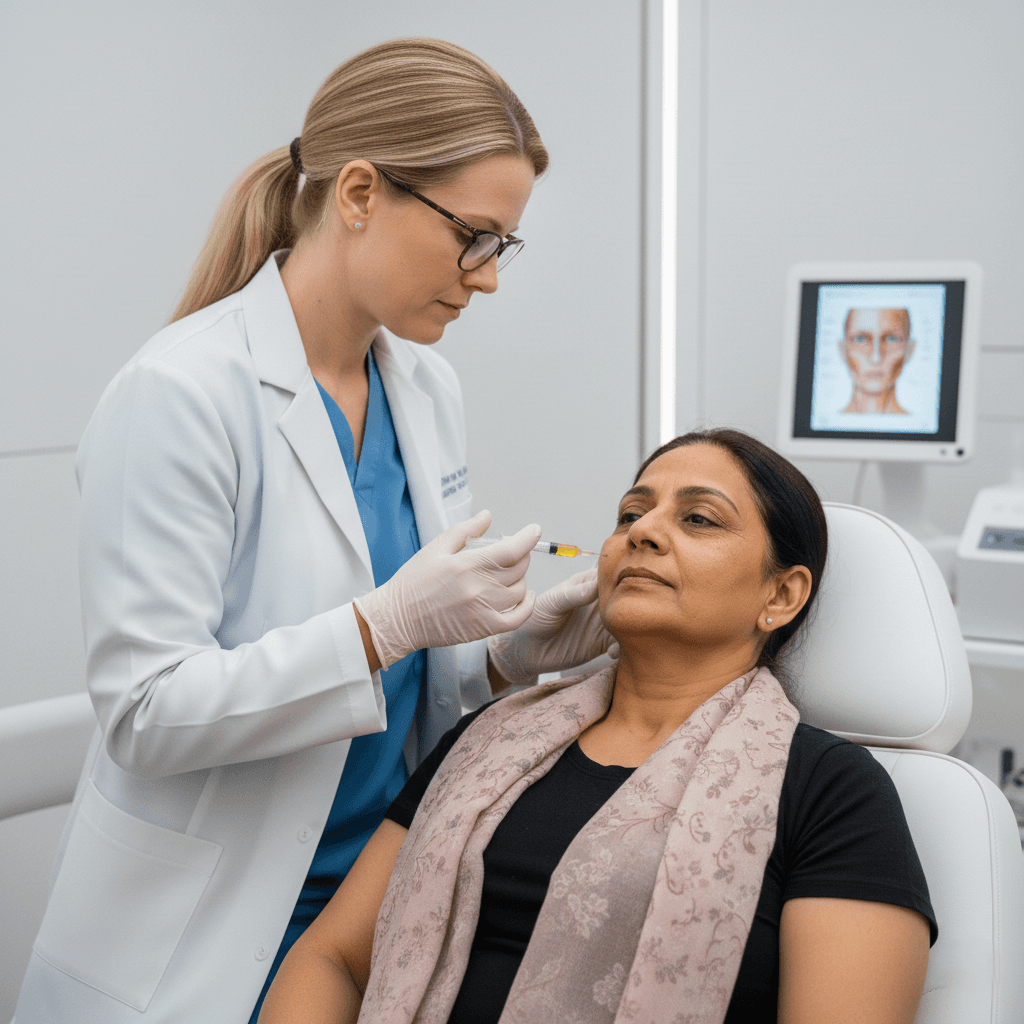
#What Is PRP Therapy?
PRP (Platelet-Rich Plasma) therapy is a regenerative treatment that harnesses your body's own healing mechanisms to rejuvenate the skin, stimulate collagen production, and promote tissue repair. The treatment involves drawing a small sample of your blood, processing it to concentrate the platelets and growth factors, and then re-introducing this platelet-rich plasma into the treatment area through injections or in combination with microneedling.
Platelets are cell fragments in your blood responsible for clotting and initiating healing. They contain a rich mix of growth factors, including PDGF, TGF-beta, VEGF, and EGF, that stimulate cell turnover, new collagen formation, and increased blood supply to the treated tissue. PRP therapy aims to concentrate these growth factors to approximately 3 to 5 times their baseline levels, though the actual concentration achieved depends on the preparation system used and the patient's own blood composition.
In Ireland, PRP therapy has grown significantly in popularity over the past decade. It appeals to patients who value a natural approach to aesthetics, as the treatment uses your own biological material. The risk of allergic reaction is extremely low since the treatment uses your own blood, though PRP preparation kits do contain anticoagulants and other components to which a reaction is possible. This is very rare.
PRP is used for facial rejuvenation. The treatment of fine lines and wrinkles, improvement of skin texture and tone, and the reduction of acne scarring. It is sometimes referred to colloquially as a "vampire facial," particularly when combined with microneedling, though this term is more marketing than medicine.
#How Does PRP Therapy Work?
PRP therapy is a multi-step process that takes approximately 45 to 60 minutes in total.
Step 1, Blood draw: A small amount of blood is drawn from your arm, typically 10 to 20ml. This is similar to a routine blood test and takes just a few minutes. If you are nervous about needles, let your practitioner know. They are experienced in making this as comfortable as possible.
Step 2, Centrifugation: The blood sample is placed in a specialised medical centrifuge, which spins at high speed for 10 to 15 minutes. This separates the blood into three layers: red blood cells at the bottom, a "buffy coat" of white blood cells and platelets in the middle, and platelet-poor plasma at the top. The platelet-rich layer is carefully extracted.
Step 3, Preparation of the treatment area: While the blood is being processed, your practitioner will cleanse the treatment area and apply a topical anaesthetic cream to ensure your comfort during the procedure.
Step 4, Application: The concentrated PRP is then delivered to the treatment area using one of several methods:
- Direct injection, the PRP is injected at multiple points using a fine needle, targeting specific areas of concern such as under-eye hollows, fine lines, or acne scars.
- Combined with microneedling, a microneedling device creates thousands of controlled micro-channels in the skin, and the PRP is applied topically to penetrate through these channels for enhanced absorption and deeper delivery.
- Topical application, in some protocols, PRP is applied to the skin surface immediately after another treatment to support healing.
Step 5, Post-treatment care: Your practitioner will apply a soothing serum or recovery cream and provide detailed aftercare instructions.
The growth factors in the PRP then work over the following weeks and months, stimulating fibroblast activity, new collagen and elastin production, and increased blood vessel formation (angiogenesis) in the treated area.
#Safety and Infection Control
PRP involves the drawing, processing, and re-injection of your own blood. This makes infection control and sample handling absolutely critical. Before booking, confirm that:
- PRP is prepared within a closed, sterile system, the blood should never be exposed to open air or potential contaminants during processing.
- Your blood sample is clearly labelled with your name throughout the process, from draw to injection.
- Single-use, sterile kits, needles, and syringes are used and disposed of properly in sharps containers.
- The treatment is performed in a clean clinical environment with appropriate infection control protocols in place.
Although PRP uses only your own blood, improper sample handling or contamination carries a theoretical risk of blood-borne disease transmission. Never receive PRP treatment at a facility that does not follow strict infection control standards. If in doubt, ask to see the preparation kit and ask about the clinic's decontamination and waste disposal procedures.
#How Much Does PRP Therapy Cost in Ireland?
PRP therapy in Ireland typically costs between €300 and €600 per session. With the recommended course of 3 sessions, patients should budget approximately €900 to €1,800 for their initial treatment programme.
Factors that influence pricing:
- Treatment area and complexity, facial rejuvenation may differ in cost from scalp treatments for hair restoration. Treating multiple areas (face plus neck, for example) will cost more.
- Combination treatments, PRP combined with microneedling (the "vampire facial") is typically priced higher than PRP injections alone, reflecting the additional time and equipment involved.
- PRP preparation system, different centrifuge systems and kits produce different concentrations of platelets. Higher-quality systems may result in a higher treatment cost but can also deliver superior results.
- Practitioner expertise, doctors with extensive experience in regenerative medicine and advanced injection techniques may charge more, reflecting their training and skill.
- Geographic location, Dublin clinics tend to charge more than those in other parts of Ireland, though this is not always the case.
Package pricing is commonly offered by Irish clinics and can reduce the per-session cost by 10 to 20 per cent when you book the full course upfront.
Most reputable clinics offer a free or low-cost initial consultation. This is your opportunity to receive a personalised assessment and quote. You can search for verified clinics on SafeSkin.ie to compare practitioners in your area.
#PRP Therapy vs Alternative Treatments
| Treatment | Best For | Duration of Results | Price Range | Downtime |
|---|
| PRP Therapy | Natural rejuvenation, fine lines, acne scarring | 6–12 months | €300–€600/session | 2–5 days |
| Skin Boosters | Deep hydration, skin radiance | 4–9 months | €200–€400/session | 24–48 hours |
| Microneedling | Texture, scarring, pore size | Every 3–6 months (maintenance) | €150–€350/session | 2–5 days |
| Profhilo | Skin laxity, bio-remodelling | 6–9 months | €250–€450/session | 24 hours |
A note on duration. For microneedling, the interval shown reflects the typical maintenance schedule rather than the point at which results disappear, collagen improvements are durable. Injectable hydration and biostimulatory treatments (skin boosters, Profhilo, PRP) require periodic re-treatment as their effects wane.
PRP vs skin boosters: Skin boosters deliver hyaluronic acid for intense hydration and glow, while PRP stimulates your body's own regenerative processes using growth factors from your blood. Skin boosters produce more immediate visible results (hydration, plumpness), whereas PRP's benefits develop more gradually but can last longer. The two treatments complement each other beautifully and are often used together in a comprehensive skin programme.
PRP vs microneedling alone: Microneedling on its own is effective for texture improvement and collagen stimulation. Some clinical studies suggest that PRP combined with microneedling may enhance results. Particularly for acne scarring, though the level of additional benefit varies. The growth factors in PRP are delivered into the micro-channels created by the needles, enhancing the healing response. Many practitioners consider the combination to be more effective than either treatment alone. Particularly for acne scarring.
PRP vs Profhilo: Profhilo is an injectable hyaluronic acid treatment that focuses on tissue remodelling and improving skin laxity. PRP focuses on regeneration and repair using your own biological material. Profhilo tends to show results faster (within 2 to 4 weeks), while PRP results develop over a longer period. For patients with skin laxity, Profhilo may be the first choice. For those wanting natural regeneration and collagen building, PRP is excellent.
#How to Choose a Provider in Ireland
Selecting the right practitioner for PRP therapy is critically important. Because the treatment involves drawing blood and performing injections. It should only be carried out by a qualified medical professional in a clinical setting.
Essential qualifications to look for:
- Doctors registered with the Medical Council of Ireland, PRP therapy is ideally performed by a doctor with training in aesthetic or regenerative medicine
- Dentists registered with the Dental Council of Ireland may also perform facial PRP therapy
- Nurses registered with NMBI (Nursing and Midwifery Board of Ireland) may perform PRP under appropriate medical supervision
Key questions to ask during your consultation:
- What PRP preparation system do you use, and what platelet concentration does it achieve?
- How many PRP treatments have you performed?
- Can I see before and after photographs of previous patients?
- What is included in the price, consultation, follow-up appointments, aftercare products?
- What happens if I am not satisfied with the results?
Red flags to watch for:
- Practitioners who are not registered with one of the Irish regulatory bodies
- Treatments offered outside of a clinical environment (homes, beauty salons, hotel rooms)
- No consultation or medical history review before treatment
- Inability or unwillingness to explain the PRP preparation process
- Unusually low prices that may indicate inferior equipment or inadequate training
- Pressure to book immediately without time to consider
SafeSkin.ie verifies that all listed practitioners hold current registration with the appropriate Irish regulatory body. You can search for verified clinics on SafeSkin.ie to find a qualified PRP therapy provider near you.