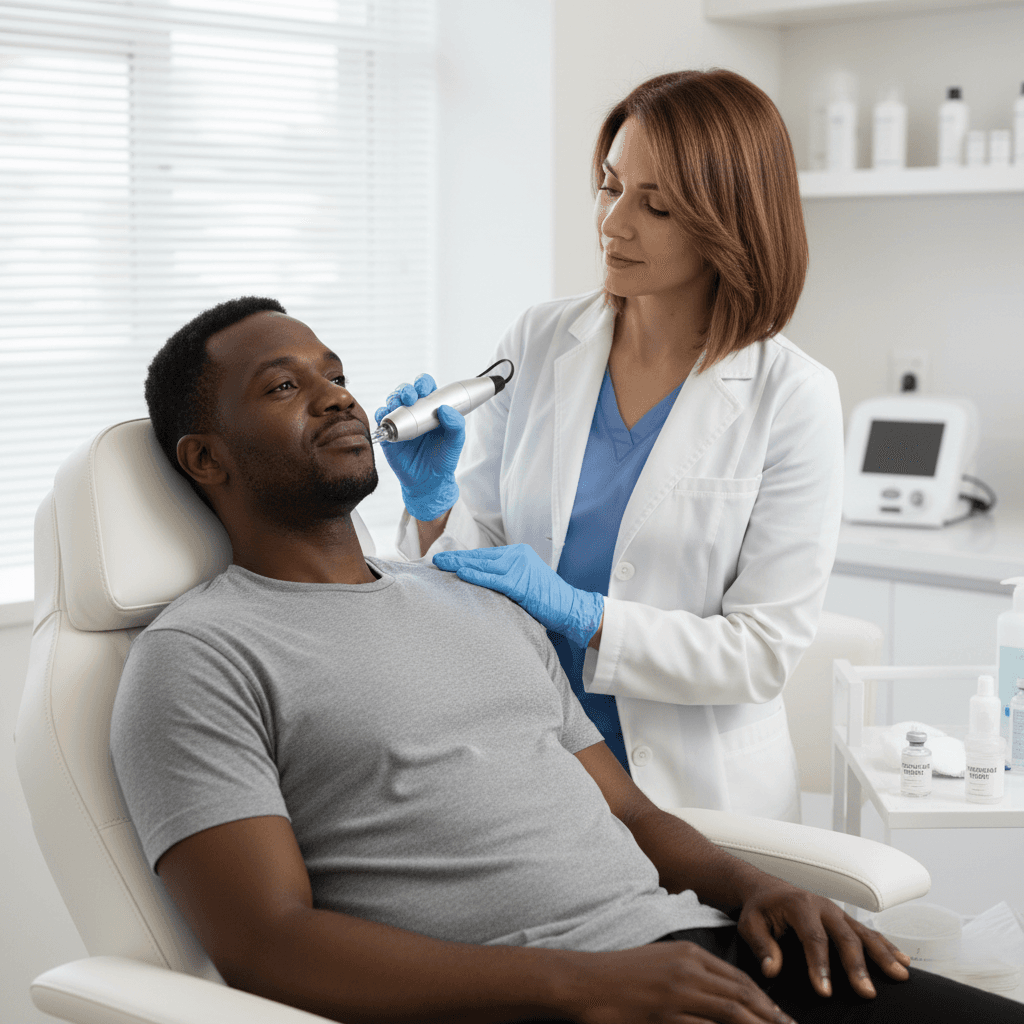
#What Is Exosome Therapy?
Exosome therapy is an emerging area of regenerative aesthetics that uses concentrated preparations of cell-signalling vesicles, exosomes, to influence skin cells and, in some applications, hair follicles. Before going further. It is important to be transparent about the current regulatory and evidence landscape.
An important regulatory note
Exosome products for aesthetic use occupy a complex regulatory grey area that patients should understand before considering this treatment:
- In the United States, the FDA has explicitly classified therapeutic exosome products as biologics requiring pre-market approval, and has taken enforcement action against clinics using unapproved products. No exosome product is FDA-approved for aesthetic use.
- In the EU, exosome products derived from human cells would likely fall under Advanced Therapy Medicinal Products (ATMP) regulation, which requires full clinical trial data and European Medicines Agency approval. No exosome aesthetic products are currently EMA-approved for therapeutic use.
- Most exosome products used in Irish aesthetic clinics are marketed as cosmetics rather than medicinal products. When they are injected or used in combination with microneedling that disrupts the skin barrier, this cosmetic classification becomes questionable.
Safety considerations. Documented adverse events have been reported with unapproved exosome products in other jurisdictions, most notably a 2019 FDA investigation of multiple patients hospitalised after receiving contaminated exosome products in a US clinic, with confirmed bacterial infections traced to the products. This underscores the importance of product quality, documented manufacturing control, and appropriate sterile technique during reconstitution and handling.
Before proceeding, ask your practitioner about the specific product being used, its source, manufacturer, and regulatory status in Ireland and the EU.
What exosomes are
Exosomes are nano-sized extracellular vesicles, tiny particles ranging from 30 to 150 nanometres in diameter, that are naturally produced and released by nearly every cell in the body. They serve as part of the body's intercellular messaging system, carrying a cargo of growth factors, cytokines, proteins, messenger RNA (mRNA), and microRNA (miRNA) from one cell to another. When a cell releases exosomes, the receiving cell takes them up and responds to the biological cargo, which can influence processes such as collagen production, inflammatory pathways, cell proliferation, and tissue repair.
In aesthetic medicine, exosomes used in current products are derived from various sources, and these are not all equivalent:
- Human mesenchymal stem cell (MSC)-derived exosomes, most commonly from umbilical cord tissue (Wharton's jelly), bone marrow, or adipose tissue. These carry human cellular material and bring the regulatory and ethical considerations described above.
- Plant-derived or "exosome-like vesicles", from fruits such as grapes or plants such as ginger. These have a fundamentally different composition, safety profile, and regulatory classification from human MSC-derived products.
When concentrated exosome preparations are delivered to the skin, either through injection, microneedling, or topical application after a skin treatment, the concept is that they deliver a concentrated preparation of biological signalling molecules that can influence existing skin cells to function more effectively. The exosomes do not literally "reprogramme" cells in the technical sense (as in induced pluripotent stem cell generation), nor do cells become "younger" in any measurable way, rather, the signalling cargo may temporarily influence gene expression and cellular behaviour, potentially supporting cells to function more effectively.
Where exosomes sit in Ireland
In Ireland, exosome therapy is available at some advanced aesthetic clinics in Dublin, Cork, Galway, and other cities. It is newer than established regenerative treatments like polynucleotides, PRF, or PRP, and the published clinical evidence specifically for aesthetic exosome outcomes is considerably more limited. Most studies to date are small, industry-funded, or in vitro/animal studies; the underlying exosome biology is well-studied for wound healing and oncology research, but specific aesthetic applications are still being characterised.
Patients should approach the treatment with realistic expectations, an understanding of the current regulatory and evidence landscape, and choose practitioners who are transparent about both potential benefits and current limitations.
#How Does Exosome Therapy Work?
The science of exosomes is rooted in one of the most fascinating discoveries in cell biology, the realisation that cells communicate not just through direct contact and soluble chemical signals, but through these tiny vesicle-based messaging systems.
Understanding exosomes:
Every cell in the body releases exosomes as part of its normal function. When a cell packages exosomes, it selectively loads them with specific proteins, lipids, mRNA, and miRNA that reflect the cell's current state and function. When these exosomes are taken up by a target cell, the cargo is released inside the receiving cell, where it can directly influence gene expression, protein production, and cellular behaviour.
This is why stem cell-derived exosomes are particularly valuable in aesthetics: stem cells are characterised by their regenerative, reparative, and growth-promoting functions. The exosomes they produce carry signals that promote:
- Collagen and elastin synthesis: Growth factors like TGF-beta, PDGF, and FGF stimulate fibroblasts to produce new structural proteins
- Cell proliferation: Signalling molecules promote the division and growth of keratinocytes and fibroblasts
- Anti-inflammation: Cytokines and miRNA within exosomes modulate inflammatory pathways, reducing chronic low-grade inflammation (inflammageing) that drives skin ageing
- Angiogenesis: VEGF and other pro-angiogenic factors promote new blood vessel formation, improving tissue blood supply and nutrient delivery
- Antioxidant activity: Exosomal cargo includes enzymes and molecules that help neutralise free radical damage
- Wound healing acceleration: Multiple signalling pathways are activated that support the healing response, which is why exosomes are sometimes used after ablative laser treatments and deep chemical peels
- Gene expression modulation: Exosomes contain microRNA (miRNA) that can theoretically modulate gene expression in recipient cells, though the specific effects in aesthetic applications are still being characterised through research
How exosome products are made:
Aesthetic exosome products are manufactured through a controlled process:
-
Cell culture: Mesenchymal stem cells (typically derived from umbilical cord tissue, adipose tissue, or bone marrow) are grown in controlled laboratory conditions. Alternatively, some products use plant-derived or synthetic exosome-like vesicles.
-
Exosome harvesting: The culture medium in which the cells grow is collected. This conditioned medium contains the exosomes released by the cells during their growth.
-
Purification: The exosomes are isolated from the culture medium using ultracentrifugation, ultrafiltration, or other separation techniques. This removes cellular debris, proteins, and other contaminants, leaving a concentrated exosome preparation.
-
Quality control: Reputable manufacturers characterise the exosomes by size distribution, concentration, and cargo content (growth factor profiling). This ensures batch-to-batch consistency and product quality.
-
Formulation: The purified exosomes are formulated into a product suitable for clinical use, either as a lyophilised (freeze-dried) powder that is reconstituted before use, or as a liquid preparation.
Delivery methods:
Exosomes can be delivered to the skin through several approaches, each suited to different treatment goals:
-
Microneedling with exosomes: The most popular approach. Medical microneedling creates thousands of micro-channels in the skin, and exosome solution is applied topically during and after the procedure. The micro-channels allow the exosomes to penetrate into the dermis, where they can interact with fibroblasts and other dermal cells. The microneedling itself also creates a wound healing stimulus that synergises with the exosome signals.
-
Injection: Liquid exosome preparations can be injected directly into the skin using fine needles or cannulas, similar to the technique used for polynucleotides or skin boosters. This allows precise delivery to specific areas such as the under-eyes, nasolabial folds, or scalp.
-
Post-procedure application: Exosomes are applied topically after ablative treatments like fractional resurfacing or deep chemical peels, where the disrupted skin barrier allows penetration. In this context, exosomes serve as a healing accelerant, reducing downtime and improving treatment outcomes.
#Common Treatment Areas
Exosome therapy's versatility allows it to be applied across a range of treatment areas and for various concerns.
Facial rejuvenation:
- Full face: The most common application. Exosomes are delivered across the entire face to improve overall skin quality, texture, tone, radiance, firmness, and hydration. This is typically done in combination with microneedling for optimal penetration.
- Under-eye area: The delicate periorbital skin responds well to exosome therapy. Growth factors can improve skin thickness, collagen density, and reduce the appearance of dark circles and fine lines. Because exosomes are cell-free and contain no filler material, there is no risk of lumpiness or Tyndall effect.
- Perioral area: Fine lines around the mouth benefit from the collagen-stimulating effects of exosome therapy.
- Forehead and temples: Volume loss and skin thinning in these areas can be addressed through exosome-stimulated collagen regeneration.
Neck and decolletage:
The neck and chest area often show signs of sun damage and ageing that are difficult to treat with many modalities. Exosome therapy can improve skin quality, texture, and elasticity in these areas through its regenerative signalling. These areas benefit particularly from the anti-inflammatory and collagen-stimulating properties of exosomes.
Hands:
Ageing hands with thinning skin, visible veins, and age spots can be rejuvenated with exosome therapy, improving skin thickness and quality.
Scalp, hair restoration:
Exosome therapy for hair loss is one of the most promising and rapidly growing applications. The growth factors and signalling molecules in exosomes can:
- Stimulate dormant hair follicles to re-enter the active growth (anagen) phase
- Improve blood supply to the hair follicles
- Reduce follicular inflammation that contributes to hair miniaturisation
- Promote thicker, healthier hair growth
- Create a more favourable scalp environment for hair growth
Scalp exosome therapy is typically delivered through direct injection into the scalp in areas of thinning, and is used for androgenetic alopecia (pattern hair loss) in both men and women. It can serve as an alternative or complement to PRP and PRF for hair restoration.
Post-procedure healing:
An increasingly popular application is using exosomes immediately after other aesthetic procedures to accelerate healing and enhance results:
In this context, the exosomes are applied topically to the treated skin, where they penetrate through the disrupted skin barrier and deliver their regenerative cargo to accelerate the healing process.
#During the Procedure
The treatment process varies depending on the delivery method chosen. Here is what to expect for the most common protocols.
Exosomes with microneedling (the most common protocol):
-
Cleansing (5 minutes): The skin is thoroughly cleansed with an antiseptic solution to remove all makeup, oil, and product residue.
-
Numbing (20–30 minutes): A topical anaesthetic cream is applied to the treatment area and left to take effect for 20 to 30 minutes.
-
Exosome preparation: The exosome product is prepared according to the manufacturer's protocol. Lyophilised (freeze-dried) products are reconstituted with the specified diluent. Liquid products are drawn into application vials.
-
Microneedling with exosome application (20–30 minutes): The medical microneedling device (such as Dermapen 4 or SkinPen) is used to create controlled micro-channels across the treatment area. The exosome solution is applied to the skin during the microneedling process, allowing it to be driven into the dermis through the micro-channels. The practitioner works systematically across the face, applying additional exosome solution as needed.
-
Post-treatment exosome mask (10–15 minutes): After microneedling, additional exosome solution may be applied as a mask or left on the skin. Some protocols use exosome-infused sheet masks for continued absorption.
-
Completion: A soothing, barrier-repairing product may be applied. No heavy products or sunscreen are applied immediately. These are typically started the following day.
Injectable exosome therapy:
-
Cleansing and numbing: As above, with topical anaesthetic applied 20 to 30 minutes before injection.
-
Injection (15–20 minutes): Using fine needles (30 or 32 gauge) or a cannula, the exosome solution is injected directly into the dermis at multiple points across the treatment area. For scalp treatment, injections are placed systematically across the thinning zones.
-
Post-treatment: Gentle pressure is applied to injection sites. A soothing product may be applied.
Post-procedure exosome application:
When used after a laser or peel treatment, the exosome solution is simply applied topically to the treated skin. The disrupted skin barrier allows the exosomes to penetrate without additional needling. This is the simplest application method and adds only a few minutes to the primary procedure.
Treatment duration:
Including preparation and numbing time, expect the full appointment to take 45 to 75 minutes for microneedling with exosomes, and 30 to 45 minutes for injectable treatment.
Comfort level:
When combined with microneedling, the comfort level is similar to a standard microneedling session, mild to moderate discomfort managed well by topical anaesthesia. Injectable treatment is similar to other injectable procedures. Most patients rate the experience as a 2 out of 5 for discomfort.
#Results Timeline
Exosome therapy results develop gradually as the regenerative signals take effect and stimulate biological changes in the treated tissue.
Days 1–3:
An initial glow or radiance may be noticeable, partly from the hydrating effect of the exosome solution and partly from the increased blood flow stimulated by the treatment (particularly if combined with microneedling). This is not the full treatment effect.
Weeks 1–2:
The exosome cargo is actively being processed by skin cells. Growth factors and signalling molecules are stimulating fibroblast activity and beginning to influence gene expression in target cells. Subtle improvements in skin hydration and texture may be apparent.
Weeks 2–6:
New collagen synthesis accelerates. Skin texture begins to noticeably improve, smoother, more refined, with improved luminosity. Fine lines may start to soften. Skin tone becomes more even. This is the period when most patients first recognise meaningful visible improvement.
Weeks 6–12:
With multiple sessions completed, cumulative results become increasingly apparent:
- Improved skin firmness and elasticity
- Visibly smoother texture
- Enhanced radiance and glow
- Softened fine lines
- More even skin tone
- Improved hydration and plumpness
- For hair treatments: early signs of improved hair density and thickness
Months 3–6:
Peak results develop as collagen maturation continues and the full cumulative effect of the treatment course is realised. Hair restoration patients typically notice the most significant improvements during this period.
Months 6–12:
Results are maintained as the collagen and structural improvements persist. The regenerative effects represent genuine biological improvement, so they fade gradually rather than suddenly. Maintenance sessions every 6 to 12 months help sustain and build upon the improvements.
Factors affecting results:
- Age: Younger patients' cells are more responsive to regenerative signals and typically show faster, more pronounced results
- Overall health: Nutrition, hydration, sleep, and non-smoking status all support better outcomes
- Skin condition: More damaged or aged skin may require more sessions
- Product quality: Not all exosome products are equal, quality, concentration, and cargo composition vary between manufacturers
- Delivery method: Combining exosomes with microneedling generally produces better results than topical application alone
- Number of sessions: Completing the full recommended course produces significantly better results than a single session
#How Much Does Exosome Therapy Cost in Ireland?
Exosome therapy is among the more expensive aesthetic treatments in Ireland:
- Face (topical with microneedling): €500 to €1,000 per session
- Face (injectable): €400 to €800 per session
- Hair restoration (per area per session): €400 to €700
- Full course of 2 to 4 sessions for face typically €800 to €4,000; hair courses may run longer
Prices vary with the specific product used, practitioner experience, and clinic location. A note on value: exosome therapy is often the most expensive option among regenerative treatments, and its evidence base is considerably thinner than PRP, PRF, or polynucleotides. Patients weighing cost against evidence may wish to consider these alternatives first.
#Exosomes vs Other Regenerative Treatments
| Treatment | Source | Evidence base | Typical cost (Ireland) | Notes |
|---|
| Exosomes | Cell-derived signalling vesicles (MSC or plant) | Emerging; mostly small, industry-funded, or preclinical studies | €400–€1,000 per session | Regulatory grey area, no EMA approval for aesthetic use |
| PRP | Autologous (your own blood) | Well-established across skin and hair applications | €300–€600 per session | Lower cost; concentrations vary by preparation |
| PRF | Autologous (your own blood) | Good and growing. Particularly for under-eye and scarring | €300–€600 per session | Similar to PRP with slower release profile |
| Polynucleotides | Purified salmon or trout DNA fragments | Good evidence for skin and under-eye rejuvenation | €250–€450 per session | Established CE-marked products; moderate cost |
For most patients, PRP, PRF, or polynucleotides represent a more evidence-based starting point than exosomes. Exosome therapy may appeal to patients who have exhausted other options or who specifically want to try an emerging modality, provided they understand the current evidence and regulatory landscape.
#Choosing a Practitioner in Ireland
Choosing the right practitioner for exosome therapy is particularly important given the regulatory grey area, variable product quality, and limited comparative evidence for aesthetic use.
Qualifications:
- Doctors registered with the Medical Council of Ireland
- Dentists registered with the Dental Council of Ireland
- Nurses registered with NMBI (Nursing and Midwifery Board of Ireland)
Medical oversight is particularly important for this treatment. A practitioner with a strong scientific background is better positioned to understand the products they use, to assess their quality, and to keep up with the rapidly evolving evidence base. Ensure your practitioner uses appropriate sterile technique when reconstituting and handling exosome products, contamination during preparation has been documented as a source of serious adverse events with unapproved products.
What to look for:
- Product transparency: The practitioner should be able to clearly identify the exosome product they use, its manufacturer, and its source. Ask about CE marking and regulatory compliance. Be wary of practitioners who are vague about what they are using.
- Scientific understanding: A good exosome practitioner should be able to explain how exosomes work, what distinguishes their product from others, and what the current evidence supports. They should also be honest about what is not yet fully proven.
- Quality assurance: Exosome products vary significantly in quality. The practitioner should use products from reputable manufacturers with documented quality control, including exosome characterisation (size, concentration, growth factor profiling).
- Realistic claims: Be cautious of practitioners who make extravagant claims about exosome therapy. While the science is promising. It is still a relatively new aesthetic application, and responsible practitioners will present realistic expectations.
- Training and continuing education: Ask about specific training in exosome therapy and whether the practitioner stays current with the latest research and clinical developments.
- Integration with a broader treatment plan: The best practitioners will position exosome therapy within a comprehensive aesthetic plan, explaining how it complements or compares to other regenerative options.
Red flags:
- Vagueness about the product being used or its source
- Extravagant or unsubstantiated claims about results
- No discussion of the treatment's limitations or the current state of evidence
- Extremely low pricing that may indicate inferior or unverified products
- No consultation or medical history review
- Pressure to commit immediately or to purchase large packages upfront
- Claims that exosomes can treat conditions far beyond their current evidence base
Finding a verified clinic:
SafeSkin's directory allows you to find a verified clinic offering exosome therapy in Ireland. All listed practitioners hold appropriate professional registration. Given the specialised nature of this treatment, we recommend consulting with 1 to 2 clinics before committing to ensure you feel confident in the practitioner's expertise and the quality of the product they use.