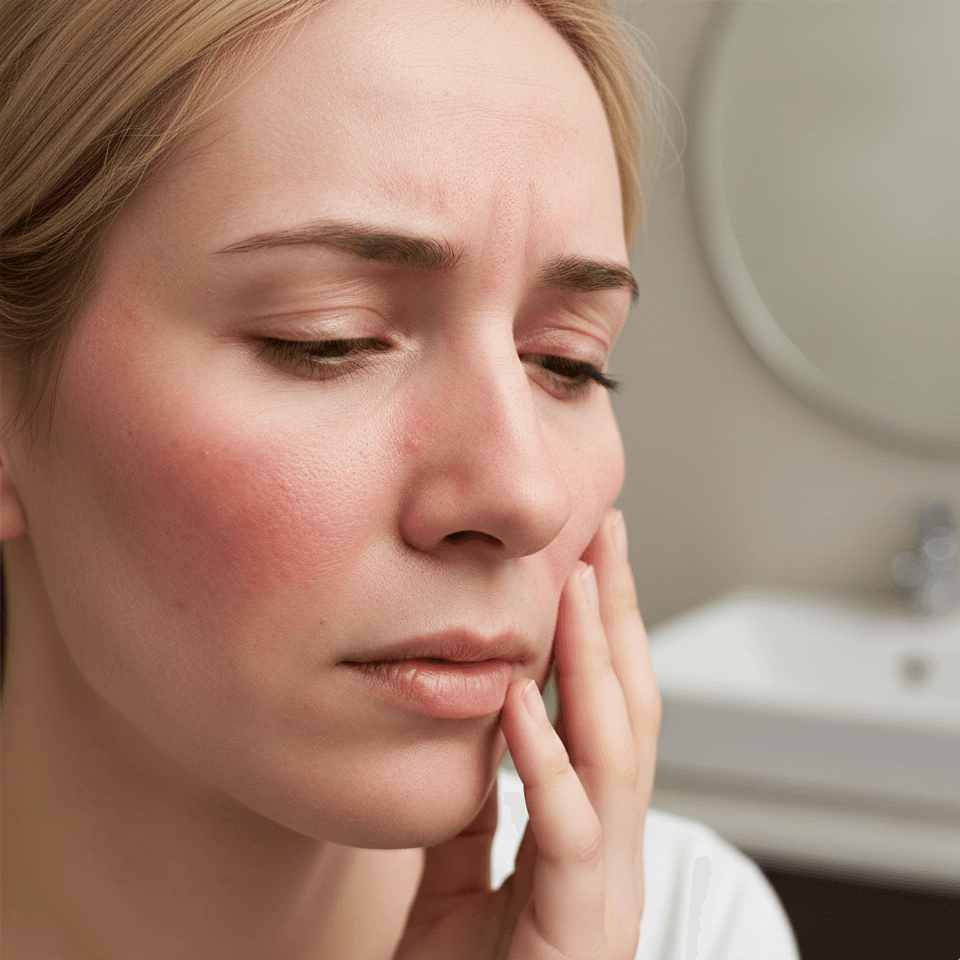
#Understanding Sensitivity and Reactive Skin
Sensitive skin is one of the most common skin complaints in Ireland, affecting an estimated 50 to 60 per cent of women and 30 to 40 per cent of men at some point in their lives. Despite its prevalence, it remains widely misunderstood — partly because sensitivity exists on a broad spectrum, and partly because it can mimic or overlap with other skin conditions like rosacea, eczema, and contact dermatitis.
At its core, skin sensitivity is about the barrier. Your skin's outermost layer — the stratum corneum — functions as a protective wall, holding moisture in and keeping irritants, allergens, and microorganisms out. When this barrier is compromised, the skin becomes more permeable. Irritants penetrate more easily, moisture escapes more readily, and the nerve endings in the skin become hyper-responsive, triggering sensations of stinging, burning, tightness, and itching.
Reactive skin takes this a step further. While someone with generally sensitive skin might experience mild irritation from a new product or a change in weather, reactive skin flares quickly and intensely — often with visible redness, flushing, or even hive-like patches. The triggers can be unpredictable, and the skin can swing from calm to inflamed in a matter of hours.
For people living in Ireland, the climate presents particular challenges. The combination of cool, damp air outdoors and dry, heated air indoors creates a constant tug-of-war on the skin barrier. Add in Ireland's notoriously changeable weather — where you can experience four seasons in a single day — and it becomes clear why sensitivity is so widespread here.
The good news is that sensitive and reactive skin can be effectively managed. With the right approach, including professional assessment, targeted treatments, and a carefully curated home skincare routine, most people see a significant and lasting improvement in their skin's resilience and comfort.
#What Causes Sensitivity and Reactive Skin?
The causes of skin sensitivity fall into two broad categories: intrinsic factors (those you are born with) and extrinsic factors (those imposed by your environment and behaviour).
Genetics and skin type play a foundational role. People with fair skin — particularly those with Celtic or Northern European heritage common in Ireland — tend to have a thinner epidermis and produce less protective melanin, making the barrier inherently more vulnerable. If your parents had sensitive skin, you are significantly more likely to experience it yourself.
A compromised skin barrier is the single most important factor in sensitivity. The barrier can be damaged by over-cleansing, over-exfoliating, using too many active ingredients simultaneously, or stripping the skin with harsh products. In an era of elaborate multi-step skincare routines promoted by social media, barrier damage from product overuse has become increasingly common — sometimes called "skincare-induced sensitivity."
Underlying skin conditions frequently present as sensitivity. Rosacea is perhaps the most common example in Ireland, causing chronic redness, flushing, and reactivity, particularly on the cheeks, nose, and chin. Eczema (atopic dermatitis), contact dermatitis, and seborrhoeic dermatitis can all produce sensitivity symptoms. These conditions require medical diagnosis and may need prescription treatment alongside cosmetic management.
Environmental and lifestyle triggers include temperature extremes, wind, low humidity, air pollution, hard water (prevalent in many parts of Ireland), UV radiation, stress, lack of sleep, alcohol consumption, and spicy foods. Hormonal fluctuations — during the menstrual cycle, pregnancy, perimenopause, and menopause — can also heighten skin reactivity.
Medications and medical treatments sometimes cause or worsen sensitivity. Prescription retinoids, certain antibiotics, and some acne medications can thin the barrier or increase photosensitivity. Prior cosmetic treatments — particularly aggressive chemical peels or laser procedures performed without adequate barrier preparation — can leave the skin in a reactive state.
Psychological stress has a well-documented connection to skin sensitivity. Stress hormones like cortisol increase inflammation throughout the body, including in the skin, and can impair barrier repair. Many people in Ireland notice that their skin flares during periods of high stress, poor sleep, or emotional upheaval.
#Types and Severity Levels
Skin sensitivity is not a single condition but a spectrum, and understanding where you fall on it helps determine the right management approach.
Mild sensitivity is the most common presentation. The skin occasionally reacts to new products, weather changes, or specific ingredients, but settles relatively quickly and can tolerate most well-formulated skincare. People with mild sensitivity may notice occasional tightness, slight redness after cleansing, or temporary stinging when applying certain actives. This level often responds well to simple adjustments in product selection and routine.
Moderate sensitivity involves more frequent and pronounced reactions. The skin is consistently reactive to multiple triggers, experiences regular episodes of redness, tightness, or flaking, and may struggle with products labelled "for sensitive skin." There is often an underlying barrier impairment that requires targeted repair. People at this level benefit from professional skin assessment and a structured barrier-restoration programme.
Severe or chronic sensitivity describes skin that is almost always in a reactive state. It stings or burns with most topical products, flushes readily with temperature changes or emotional triggers, and may show persistent redness, broken capillaries, or dry, flaking patches. This level frequently overlaps with or is caused by conditions like rosacea or eczema and typically requires medical evaluation and a combination of prescription and cosmetic treatments.
Sensitised skin is an important distinction from inherently sensitive skin. Sensitised skin was previously tolerant but has become reactive due to external damage — over-exfoliation, retinoid overuse, aggressive treatments, or prolonged irritant exposure. The good news is that sensitised skin often has excellent recovery potential once the offending factors are identified and removed, and the barrier is given time and support to heal.
Condition-linked sensitivity refers to sensitivity that is a symptom of a diagnosed skin condition. Rosacea, eczema, psoriasis, and contact dermatitis all involve barrier disruption and heightened nerve sensitivity. In these cases, managing the underlying condition is essential before — or alongside — any cosmetic treatment.
#Treatment Options Available in Ireland
Ireland offers a comprehensive range of professional treatments for sensitive and reactive skin, delivered by practitioners registered with the Medical Council of Ireland, the Dental Council, or the Nursing and Midwifery Board of Ireland (NMBI). The key is selecting treatments that strengthen rather than further challenge the barrier.
Barrier-repair facial treatments are the foundation of professional sensitive skin management. These clinical facials use medical-grade products specifically formulated to calm inflammation, deliver hydration deep into the skin, and reinforce the lipid barrier. Ingredients like ceramides, cholesterol, fatty acids, hyaluronic acid, and centella asiatica feature prominently. Unlike high-street facials, these are conducted by trained skin therapists under medical supervision.
LED light therapy is one of the safest and most effective treatments for sensitive skin. It is entirely non-invasive — no products are applied to the skin, and there is no heat or UV exposure. Red LED light (around 633nm) reduces inflammation and promotes healing, while near-infrared light penetrates deeper to stimulate collagen production and cellular repair. Most people with even severe sensitivity tolerate LED therapy comfortably.
Gentle chemical peels can be beneficial for sensitive skin when selected and applied by an experienced practitioner. Very low-concentration lactic acid, mandelic acid, or polyhydroxy acid (PHA) peels exfoliate gently without the aggressive stripping associated with stronger peels. These can improve texture, hydration, and product penetration when used appropriately. Learn more about chemical peels and how they can be adapted for reactive skin types.
Skin boosters and injectable moisturisers like Profhilo and other hyaluronic acid-based skin boosters work beneath the surface to hydrate and stimulate collagen and elastin production from within. Because they bypass the barrier rather than sitting on top of it, they can deliver deep hydration without triggering surface-level reactivity. These treatments are particularly effective for dehydrated sensitive skin.
Medical-grade skincare programmes prescribed by a qualified practitioner form the backbone of ongoing sensitive skin management. These programmes typically centre on barrier repair — introducing gentle, evidence-based products in a structured sequence. Medical-grade skincare products contain higher concentrations of active ingredients in clinically tested formulations that outperform over-the-counter alternatives.
IPL and laser treatments can address specific concerns associated with sensitivity, such as visible blood vessels, persistent redness, and rosacea. IPL treatments and laser skin treatments must be performed at carefully calibrated settings by practitioners experienced with sensitive skin. These treatments are not first-line options and should only be considered once the barrier has been stabilised.
Microneedling with devices like medical microneedling can be used cautiously on sensitive skin to promote collagen remodelling and improve product absorption. However, it should only be performed when the barrier is in a stable phase, and using shorter needle depths than would typically be used on non-sensitive skin.
#Choosing the Right Treatment
Selecting the right treatment for sensitive or reactive skin requires a more careful, graduated approach than for resilient skin types. Rushing into aggressive treatments without adequate preparation is one of the most common mistakes.
Start with a thorough consultation. Before any treatment, you should have a detailed skin assessment with a qualified practitioner. This should include a full medical history, discussion of your current skincare routine, identification of your specific triggers, and an honest assessment of your skin's current barrier health. Practitioners who skip this step and proceed directly to treatment are not following best practice.
Prioritise barrier repair first. If your barrier is significantly compromised, the most important first step is restoring it — not treating the cosmetic concerns you came in for. This might feel frustrating, but attempting treatments like peels, lasers, or even microneedling on a damaged barrier is likely to worsen your sensitivity rather than improve it. A barrier-repair phase typically takes four to eight weeks and involves a simplified, targeted skincare routine.
Look for practitioners with sensitive skin experience. Not all aesthetic practitioners have specific expertise in managing reactive skin. When searching for a practitioner, ask about their experience with sensitive skin, what protocols they use to adapt treatments, and what barrier assessment they perform before treatment. You can find a verified clinic near you through SafeSkin's directory and filter by the concerns that matter to you.
Expect a gradual, phased approach. The best results for sensitive skin come from a step-by-step treatment plan that starts gentle and progresses cautiously. A responsible practitioner will want to see how your skin responds to initial barrier work before introducing more active treatments. They should schedule review appointments and adjust the plan based on your skin's response.
Consider combination approaches. Many people with sensitive skin benefit most from combining in-clinic treatments with a robust home skincare programme. For example, a course of LED therapy combined with a barrier-repair skincare routine, followed by a series of gentle peels once the barrier is stronger. This layered approach delivers better outcomes than any single treatment alone.
Verify your practitioner's credentials. In Ireland, aesthetic treatments should be performed by practitioners registered with the Medical Council of Ireland (doctors), the Dental Council (dentists), or NMBI (nurses). Registration ensures a minimum standard of training, accountability, and professional governance. SafeSkin only lists practitioners with verified registration, giving you confidence in your choice.
#Prevention and Self-Care
Managing sensitive skin effectively is as much about daily habits as it is about professional treatments. A disciplined, informed approach to self-care can dramatically reduce the frequency and severity of reactive episodes.
Simplify your routine. One of the most impactful things you can do for sensitive skin is to strip your routine back to essentials: a gentle cleanser, a hydrating serum, a barrier-supportive moisturiser, and a broad-spectrum SPF. Adding products slowly — one at a time, with at least two weeks between introductions — allows you to identify what your skin tolerates and what it does not.
Patch test everything. Before applying any new product to your face, test it on a small area of skin — typically behind the ear or on the inner forearm — for 48 hours. This simple step can prevent a full-face flare from a product your skin does not tolerate.
Protect against UV. Sun protection is non-negotiable for sensitive skin. UV radiation directly damages the skin barrier, increases inflammation, and worsens conditions like rosacea and pigmentation. Use a mineral (physical) sunscreen containing zinc oxide or titanium dioxide — these tend to be better tolerated than chemical sunscreens on sensitive skin. Even on overcast Irish days, UV levels can be significant.
Manage indoor climate. Central heating dries the air and strips moisture from exposed skin. Using a humidifier in your home or office during the colder months can help maintain ambient humidity and reduce transepidermal water loss. Keeping the thermostat at a moderate level (18 to 20 degrees) rather than cranking the heat helps too.
Watch your diet and hydration. While diet alone does not cause or cure sensitive skin, certain dietary factors can influence reactivity. Alcohol, spicy foods, very hot drinks, and high-histamine foods are common triggers for flushing, particularly in people with rosacea. Adequate water intake supports overall skin hydration, though it is not a substitute for topical barrier protection.
Manage stress proactively. The stress-skin connection is well established in dermatological literature. Chronic stress elevates cortisol, which impairs barrier repair and increases inflammation. Regular exercise, adequate sleep (seven to nine hours), mindfulness practices, and maintaining social connections all contribute to lower baseline stress and, by extension, calmer skin.
Be cautious with makeup. If you wear makeup, choose mineral-based or hypoallergenic formulations specifically designed for sensitive skin. Avoid products with heavy fragrance, and always remove makeup thoroughly but gently at the end of the day. Double cleansing — using a gentle oil-based cleanser followed by a mild water-based cleanser — can be effective without stripping the barrier.
#When to Seek Professional Help
While mild sensitivity can often be managed with sensible self-care and over-the-counter products, there are clear signals that indicate professional assessment is needed.
Persistent redness that does not resolve — if your skin is consistently red, particularly across the cheeks, nose, chin, or forehead, this may indicate rosacea or another inflammatory condition that requires medical diagnosis. Left untreated, rosacea can progress, so early intervention is important.
Stinging or burning with most products — when even products labelled for sensitive skin cause discomfort, your barrier is likely significantly compromised. A professional can assess the extent of the damage and prescribe a structured repair programme using medical-grade products.
Visible broken capillaries or spider veins — these vascular changes on the face are common in sensitive and rosacea-prone skin and will not resolve with skincare alone. Professional treatments such as IPL or vascular laser can safely reduce their appearance.
Unexplained flare-ups or worsening sensitivity — if your skin is becoming more reactive over time despite careful management, there may be an underlying factor you have not identified. A dermatologist can perform patch testing to rule out contact allergies and assess for conditions that might be driving the sensitivity.
Impact on quality of life — if skin sensitivity is affecting your confidence, causing you to avoid social situations, or creating significant daily discomfort, professional help can make a real difference. You do not need to simply "put up with" chronically reactive skin.
Post-treatment complications — if you have had a cosmetic treatment that has left your skin in a worse state than before — more reactive, persistently red, or painful — seek assessment promptly. A qualified practitioner can evaluate the situation and implement a recovery plan.
If you are unsure where to start, find a verified clinic near you through SafeSkin. All listed practitioners are registered with their relevant Irish regulatory body and can provide an initial skin assessment to determine the best path forward.
#What to Expect from Treatment
Setting realistic expectations is essential for anyone embarking on a professional treatment plan for sensitive or reactive skin.
The initial consultation will typically last 30 to 60 minutes. Your practitioner will examine your skin closely (potentially using magnification or skin analysis technology), discuss your full history of sensitivity, review every product you are currently using, and ask about lifestyle factors. They may take baseline photographs. This appointment is diagnostic — it is about understanding your skin, not selling you a treatment.
A barrier-repair phase will likely come first. Most experienced practitioners will not proceed to active treatments until your barrier is in reasonable condition. This preparatory phase may involve switching to a simplified skincare routine, introducing barrier-repair products (typically containing ceramides, niacinamide, and hyaluronic acid), and eliminating known irritants. Expect this phase to last four to eight weeks.
Treatment sessions will be gentler than standard protocols. When you do progress to in-clinic treatments, expect your practitioner to use lower concentrations, shorter exposure times, or reduced energy settings compared to what they would use on non-sensitive skin. This conservative approach is not inferior — it is appropriate clinical practice for your skin type.
You may experience temporary reactions even from suitable treatments. Some mild redness, warmth, or tightness immediately after treatment is normal and should resolve within hours to a day. Your practitioner should explain exactly what to expect and provide clear post-care instructions, including what products to use and avoid.
Results are cumulative, not instant. Improving sensitive skin is a gradual process. You may notice some relief from your first LED therapy session or barrier-repair facial, but meaningful, lasting improvement in your skin's resilience typically takes three to six months of consistent professional and home care. Patience and consistency are key.
Ongoing maintenance is important. Sensitive skin is a long-term characteristic, not a problem that is "fixed" once and forgotten. Most people benefit from periodic professional treatments — perhaps monthly or every six to eight weeks — combined with a consistent daily routine. Your practitioner should create a maintenance plan that fits your skin, your goals, and your budget.
Costs vary depending on your treatment plan. LED therapy sessions typically range from €50 to €100. Barrier-repair facials cost €80 to €180. Skin boosters like Profhilo range from €250 to €350 per session. A comprehensive treatment plan over several months might involve an investment of €500 to €1,500, depending on the treatments selected and the severity of your sensitivity. Many clinics in Ireland offer treatment packages and payment plans to make care more accessible.
The most important thing is to work with a practitioner who understands sensitive skin, takes a cautious and methodical approach, and is registered with the appropriate Irish regulatory body. SafeSkin's directory helps you find a verified clinic near you where you can be confident in the standard of care you will receive.