
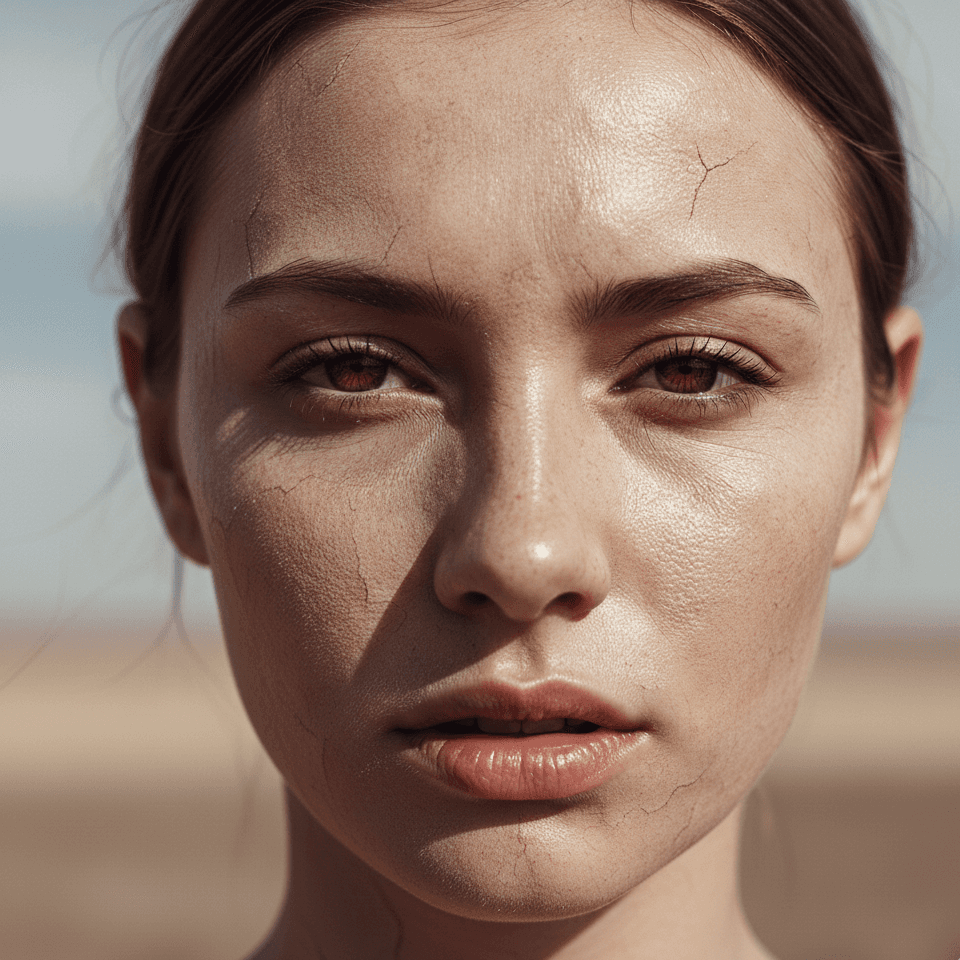
Understanding Dryness and Dehydration
Dryness and dehydration are among the most widespread skin concerns in Ireland, affecting people of all ages and skin types. While often discussed interchangeably, dry skin and dehydrated skin are distinct conditions with different underlying causes — and understanding this distinction is the first step toward effective management.
Dry skin (medically termed xerosis) is a skin type characterised by an inherent deficiency in sebum (oil) production. The skin's sebaceous glands produce less oil than is needed to maintain the natural lipid barrier that keeps moisture locked in and irritants locked out. Dry skin is a chronic, genetic tendency — if you have naturally dry skin, it is part of your constitution and will require ongoing management throughout your life.
Dehydrated skin is a temporary condition in which the skin lacks sufficient water content, regardless of how much oil it produces. Dehydrated skin can affect anyone — even people with oily or combination skin types can become dehydrated. Dehydration is driven by external factors (environment, lifestyle, skincare habits) and internal factors (hydration status, diet, health conditions), and it can be resolved by addressing these factors.
Many people, particularly in Ireland, experience both conditions simultaneously — a dry skin type that is also dehydrated by environmental factors. This combination creates a particularly challenging skin state characterised by tightness, flaking, roughness, dullness, sensitivity, and visible fine lines.
Ireland's climate is uniquely challenging for skin hydration. The combination of cold, damp outdoor air (which, counterintuitively, can be low in humidity during winter), persistent wind that strips moisture from the skin surface, frequent rain that disrupts the skin's protective barrier, and the constant transition between cold outdoor conditions and centrally heated indoor environments creates a year-round assault on skin hydration and barrier function.
The good news is that both dryness and dehydration respond exceptionally well to appropriate treatment. With the right combination of medical-grade skincare, professional hydration treatments, barrier repair strategies, and lifestyle adjustments, even severely dry and dehydrated skin can be transformed to a comfortable, healthy, radiant state.
What Causes Dryness and Dehydration?
Multiple factors contribute to skin dryness and dehydration, often working in combination.
Impaired skin barrier function is the central mechanism in both dryness and dehydration. The skin barrier (stratum corneum) is the outermost layer of the skin, structured like a brick wall — skin cells (corneocytes) are the bricks, and a complex mixture of lipids (ceramides, cholesterol, and fatty acids) acts as the mortar. When this barrier is intact, it effectively prevents water loss and blocks external irritants. When it is compromised, water escapes rapidly from the skin (a process called transepidermal water loss, or TEWL), and the skin becomes vulnerable to irritants, allergens, and microorganisms.
Environmental factors are particularly significant in the Irish context:
- Cold weather reduces sebum production and slows the skin's natural lipid synthesis, weakening the barrier
- Wind physically strips moisture from the skin surface and disrupts the barrier layer
- Low humidity — while Ireland is perceived as humid, winter indoor environments heated with gas or electric central heating have very low humidity, often below 30 percent, which draws moisture from the skin
- Hard water — many areas in Ireland, particularly in the midlands and east, have hard water with high calcium and magnesium content. Hard water raises the skin's pH, disrupts the barrier, and leaves mineral deposits that can cause irritation and dryness
- Temperature fluctuations — constantly moving between cold outdoor air and warm indoor environments stresses the skin barrier, as the skin must constantly adapt to different temperature and humidity conditions
Over-cleansing and harsh skincare is one of the most common causes of barrier damage and dehydration. Foaming cleansers, soap-based products, over-exfoliation (particularly with physical scrubs or excessive acid use), alcohol-based toners, and fragranced products can all strip the skin of its protective lipids, raise its pH, and impair barrier function. Many people inadvertently worsen their dryness through their skincare routine.
Ageing naturally reduces both sebum production and the skin's capacity to retain moisture. Ceramide levels in the skin decrease by approximately 40 percent between the ages of 20 and 70. Hyaluronic acid content in the skin also diminishes with age. Combined with thinning of the epidermis and slower cell turnover, these changes make mature skin increasingly susceptible to dryness and dehydration.
Medical conditions including eczema (atopic dermatitis), psoriasis, contact dermatitis, ichthyosis, thyroid disorders (hypothyroidism), diabetes, and kidney disease can all cause or significantly worsen skin dryness. If your dryness is severe, sudden in onset, or accompanied by other symptoms, a medical assessment is advisable.
Medications that can cause skin dryness include retinoids (oral and topical), diuretics, statins, certain blood pressure medications, and some acne treatments. If a medication is contributing to your dryness, discuss this with your prescribing doctor before making any changes.
Lifestyle factors including inadequate water intake, excessive caffeine or alcohol consumption, smoking, poor nutrition (particularly deficiency in essential fatty acids, vitamins A, C, and E), and chronic stress all contribute to skin dehydration and impaired barrier function.
Types and Severity Levels
Dryness and dehydration present in distinct patterns that help guide treatment.
Type 1: True dry skin (alipidic/lipid-deficient skin) is characterised by a genetic deficiency in sebum production. The skin feels tight and rough, may appear matte or chalky, and is prone to visible flaking and scaling. It rarely produces excess oil and tends to be evenly dry across the face. This skin type requires emollient and occlusive products to supplement the missing lipids.
Type 2: Dehydrated skin (water-deficient) can occur in any skin type. The hallmark is a tight, uncomfortable feeling despite the skin potentially appearing normal or even oily. Dehydrated skin often shows fine "dehydration lines" (different from true wrinkles — these are surface crinkles that disappear when the skin is well-hydrated), dullness, and a general lack of radiance. Oily-dehydrated skin has a characteristic appearance: shiny on the surface but tight and uncomfortable, with clogged pores and possible breakouts.
Type 3: Barrier-compromised skin features a damaged protective layer. This type is characterised by stinging or burning when products are applied (even gentle ones), redness and sensitivity, increased reactivity to environmental factors, and a feeling that nothing seems to soothe the skin. Barrier damage can result from over-exfoliation, harsh product use, environmental exposure, or medical conditions.
Type 4: Mature dry skin combines the natural decline in sebum production, ceramide levels, and hyaluronic acid with cumulative environmental damage. The skin is thin, crepe-like, prone to itching (especially in winter), and shows accelerated signs of ageing. This type benefits from intensive nourishment and barrier support.
Severity levels:
- Mild: Occasional tightness, slight roughness, minor flaking, skin feels comfortable after moisturising
- Moderate: Persistent tightness and roughness, visible flaking, skin feels uncomfortable for much of the day, products sting or do not seem to absorb
- Severe: Cracking, painful tightness, widespread flaking or scaling, persistent redness, skin reacts to most products, may bleed in severe cases, significantly impacts comfort and quality of life
Treatment Options Available in Ireland
A range of professional treatments can accelerate recovery from dryness and dehydration and maintain optimal skin hydration long-term.
Medical-grade skincare programmes are the foundation of treatment for dry and dehydrated skin. Medical-grade skincare products contain active ingredients at clinically effective concentrations that significantly outperform consumer-grade alternatives. Key ingredients include ceramides (restore the lipid barrier), hyaluronic acid (multi-molecular-weight formulations for deep and surface hydration), niacinamide (strengthens the barrier, improves moisture retention, reduces inflammation), squalane (a lightweight emollient that mimics the skin's natural oils), cholesterol and fatty acids (essential barrier lipids), and urea (a powerful humectant that also gently exfoliates at higher concentrations).
Skin boosters and bio-remodelling treatments deliver hydration directly into the skin. Profhilo, the leading bio-remodelling treatment, uses ultra-pure hyaluronic acid that spreads through the tissue to provide deep hydration while stimulating collagen, elastin, and adipocyte activity. The result is plumper, more hydrated, firmer skin with improved radiance. Two sessions, spaced 4 weeks apart, provide results lasting 6 months or more. Skin boosters such as Restylane Skinboosters deliver stabilised hyaluronic acid into the dermis for lasting hydration improvement.
Mesotherapy involves injecting customised cocktails of hydrating ingredients (hyaluronic acid, vitamins, amino acids, minerals, antioxidants) into the superficial layers of the skin using very fine needles or a mesotherapy gun. Treatments are typically performed in courses of 3 to 6 sessions and can significantly improve skin hydration, radiance, and overall quality.
Gentle chemical peels can benefit dry and dehydrated skin when chosen carefully. Lactic acid peels are particularly appropriate — lactic acid is both an exfoliant and a humectant, so it removes dry, flaky surface cells while simultaneously drawing moisture into the skin. Chemical peels for dry skin should be superficial, gentle, and followed by intensive hydration. They help improve product penetration, which can be significantly impaired by a buildup of dry, dead cells on the skin surface.
LED light therapy using red and near-infrared wavelengths can support barrier repair, reduce inflammation, and promote cellular energy production. LED therapy is completely non-invasive and can be used even on severely compromised, sensitive skin. It is often used in combination with other treatments.
Medical microneedling at shallow depths can improve product absorption and stimulate the skin's own hyaluronic acid and collagen production. Medical microneedling for dry skin uses shorter needles than typical microneedling for scarring or wrinkles, and the treatment is often combined with hyaluronic acid serums that are delivered into the skin through the channels created by the needles.
PRP (Platelet-Rich Plasma) therapy can support skin rejuvenation and barrier function through the growth factors concentrated from your own blood. PRP therapy may benefit chronically dehydrated, poorly functioning skin by stimulating cellular regeneration and improving overall skin health.