
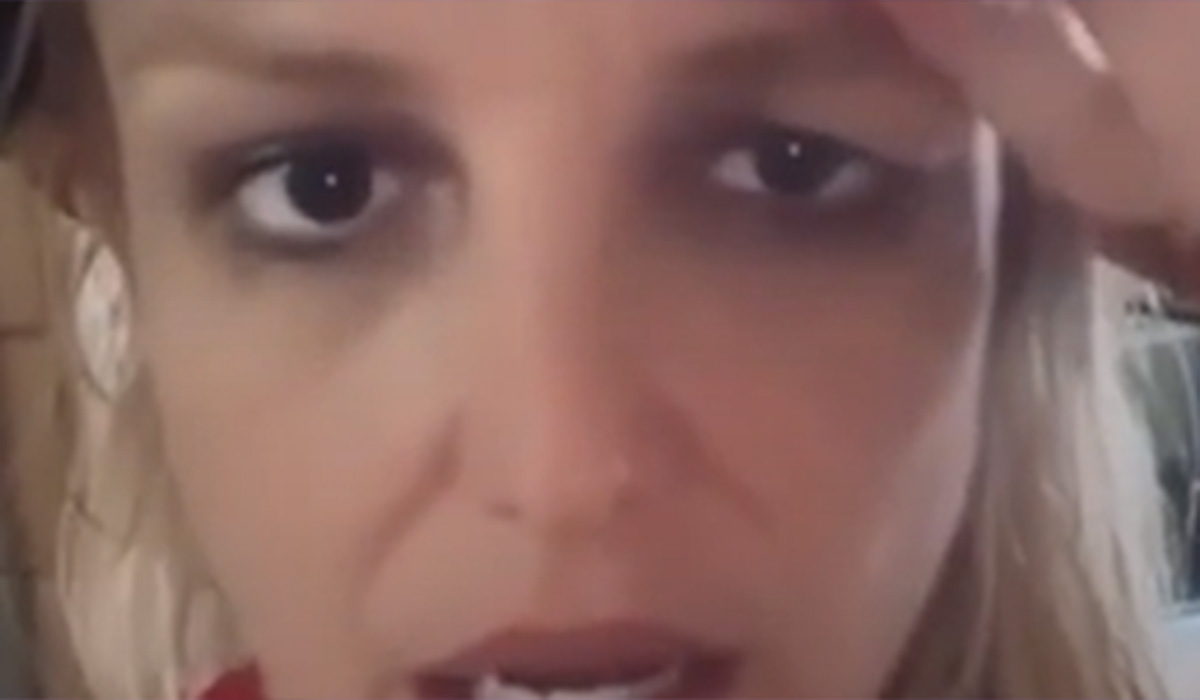
Britney Spears has spent the past week telling the world about a cosmetic treatment she wishes she had never had.
In an Instagram video, the singer said a practitioner put so much Botox near her left eye that the eyelid drooped, and stayed drooped for about four weeks.
She called the experience embarrassing, and turned it into a blunt warning for her followers: be careful who you let near your face.
She has since posted a follow-up showing off a new at-home routine of creams and a face roller, joking that she has become her own doctor. More on that in a moment, because it is the one part of the story worth gently pushing back on.
First, the useful question her video raises for everyone else: what actually happened, and how do you stop it happening to you?
What a drooping eyelid after Botox actually is
Spears did not name the practitioner, and her account is her own description rather than a medical report, so nobody outside that clinic room can say precisely what went wrong. But what she describes matches a recognised complication of anti-wrinkle injections with a name: ptosis - a temporary drooping of the eyelid or brow.
Here is the mechanism, and it is genuinely worth understanding.
Anti-wrinkle injections work by temporarily relaxing the specific muscles that crease the skin. The product does not always stay perfectly where it is placed: injected too close to the wrong spot, in too high a dose, or into the wrong plane, it can spread to a neighbouring muscle, including the small muscle that holds the upper eyelid up. Relax that muscle by mistake and the lid drops.
It is not dangerous, but it is visible, it is distressing, and there is no quick undo.
The timeline Spears describes fits the condition almost exactly. Ptosis resolves on its own as the product wears off, typically over several weeks to a couple of months.
Her four weeks of drooping followed by a gradual lift is, unfortunately for her, a textbook course. Certain prescription eye drops can partially lift the lid in the meantime, which is one of many reasons the right response to a complication is going back to a qualified prescriber, not waiting it out alone.
Worth saying clearly: this is an uncommon complication, not a routine outcome, and its likelihood is heavily influenced by the person holding the syringe. Which brings us to the actual lesson.
The real moral of the story
Spears' warning was about "these people and these doctors," and her instinct is half right: who treats you is everything.
Ptosis risk comes down to injection placement, dosing, and knowledge of facial anatomy, which is to say, skill. A skilled, qualified practitioner cannot reduce the risk to zero, because medicine does not work that way, but they reduce it dramatically, and just as importantly they know exactly what to do when something does go wrong, from honest explanation to those prescription drops.
That second part matters more than people realise. Complications handled well are an inconvenience. Complications handled by someone who does not recognise them, or who you can no longer get hold of, are a month of distress and a story you end up telling the internet.
In Ireland, there is at least a legal floor under this particular treatment: botulinum toxin is prescription-only, so anti-wrinkle injections can only lawfully be given by a registered doctor, dentist, or nurse. But a register number is a floor, not a guarantee of skill, and for most other injectable treatments, including dermal fillers, Irish law currently requires nothing at all.
Our guide to choosing a qualified aesthetic practitioner covers how to actually vet the person, and our piece on aesthetic clinic red flags covers the warning signs that should send you back out the door.
About the face roller
And the follow-up video, in which Spears swears off practitioners in favour of creams and a gold roller? Complete sympathy for the instinct. After a bad experience, taking back control feels good, and for what it is worth, face rollers are pleasant, harmless, and a perfectly nice part of a skincare routine.
But a roller is not an alternative to an injectable treatment, and, more to the point, a bad practitioner is not an argument against all practitioners. It is an argument for choosing the next one properly.
The tragedy of experiences like hers is that they teach people to fear the treatment, when the treatment was never the problem. Done by the right hands, in the right dose, anti-wrinkle injections remain one of the most studied and predictable treatments in aesthetics, as our honest cost guide explains.
How to not end up making this video yourself
The practical takeaways from the whole saga fit in four lines.
Check your practitioner is on the medical, dental, or nursing register before anything else.
Have a proper consultation, and expect honest talk about risks, including this one; a practitioner who mentions ptosis unprompted is showing you they know their anatomy.
Be wary of anyone whose answer to every concern is more product.
And know who you would call if something felt wrong afterwards, because the aftercare plan is part of the treatment.
Spears' closing advice to her fans was to be careful with your body because it is yours. On that, no notes.
The easiest way to be careful in Ireland is to check who you are trusting before you book: every clinic on SafeSkin is independently verified against the Irish medical, dental, or nursing register, and if you are still working out what suits you, our treatment quiz is a pressure-free place to start.