
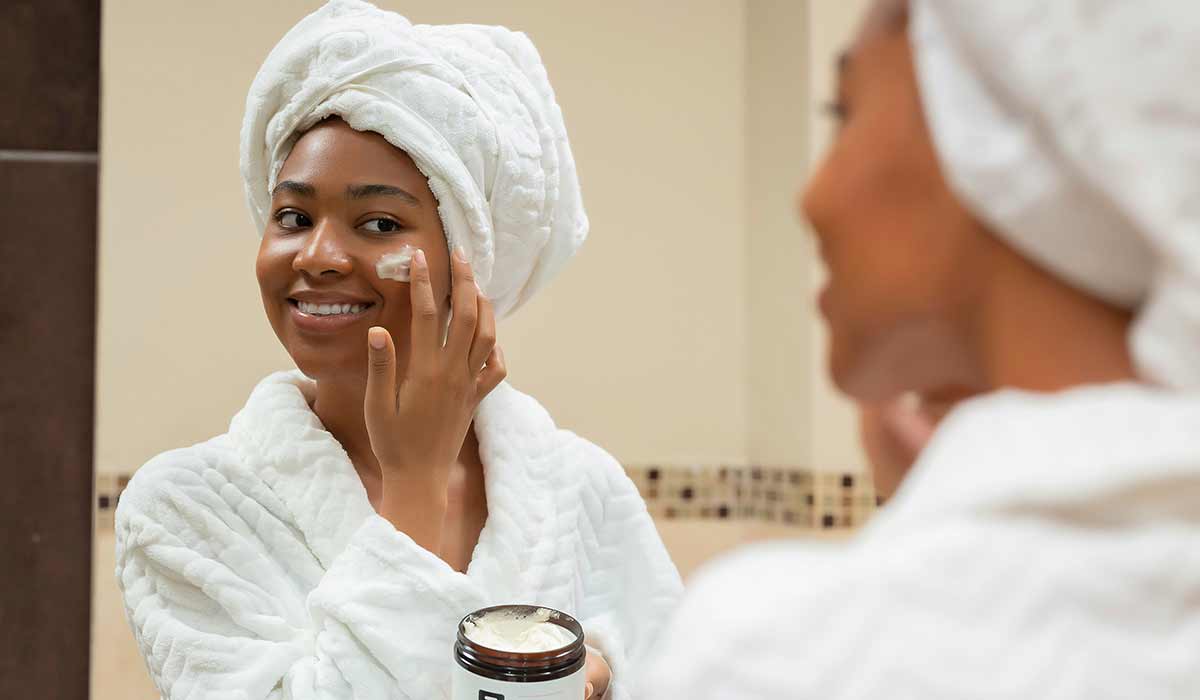
Collagen might be the most-used word in the beauty industry and the least explained. It is on creams, in supplements, and in every clinic's marketing - but rarely attached to an explanation.
This piece aims to provide an explanation. What collagen and elastin actually are, what they do in your skin, why they decline, and, the question underneath all the marketing - whether you can genuinely rebuild them.
The honest answer is more interesting than the hype: some things really do work, and several of the most heavily marketed ones do not.
The scaffolding and the springs
Think of your skin's deeper layer, the dermis, as a mattress.
Collagen is the scaffolding. It is the most abundant protein in your body, and in skin, it forms a dense network of fibres that gives skin its firmness, thickness, and structure. When people talk about skin feeling "plump" or "firm," they are describing collagen doing its job.
Elastin is the springs. It is a different protein, present in much smaller amounts, whose fibres let skin stretch and then snap back. Pinch the back of your hand and watch it return: that is elastin. It is the difference between skin that recoils and skin that stays creased.
The two work together. Collagen provides the structure, elastin provides the recoil, and a gel rich in the skin's own hyaluronic acid keeps the whole thing hydrated and cushioned. Young skin has all three in abundance. And then, gradually, it doesn't.
Why they decline
From roughly your mid-20s, collagen production begins to slow, by a small percentage each year, every year. At the same time, the enzymes that break down old collagen keep working, so the balance tips: you lose a little more than you make.
Over decades, the scaffolding thins, and skin gradually becomes less firm. This is the intrinsic ageing we describe in our guide to how your skin ages.
Elastin has a harsher story. The body produces very little new elastin after early adulthood, so the springs you have are essentially the springs you get, which is why lost elasticity is so much harder to restore than lost firmness.
Then the sun accelerates everything. UV exposure activates the collagen-destroying enzymes and directly damages elastin fibres, degrading them into a disorganised tangle. This is why sun-exposed skin ages visibly faster than protected skin, and why photoageing does most of the damage we attribute to time.
Smoking does something similar through different chemistry, and it is one of the strongest lifestyle accelerators of collagen loss.
So can you rebuild them?
Here is the honest hierarchy, from what definitely works to what definitely doesn't.
What protects (the unglamorous foundation)
You cannot out-treat ongoing destruction. Daily broad-spectrum SPF slows the enzyme activity and elastin damage that the sun drives, and not smoking removes the other major accelerator. Protection is not exciting, but every euro spent on rebuilding collagen while it is being actively destroyed is a euro working against the tide.
What genuinely stimulates collagen
Retinoids are the best-evidenced topical route. Used consistently over months, they increase collagen production and slow its breakdown. The effect is real but gradual and modest in scale: think steady improvement in firmness and fine lines, not transformation.
Vitamin C plays a supporting role, as collagen synthesis literally requires it and its antioxidant action defends against sun-driven breakdown. Our evidence-led guide to skincare ingredients covers both properly.
Collagen-stimulating treatments are where in-clinic work earns its place, because they reach the dermis in a way creams cannot. The principle behind most of them is controlled stimulus: give the skin a reason to repair, and it lays down new collagen in response.
That family includes medical microneedling, which creates micro-injuries that trigger the repair response; biostimulator injections, which are designed specifically to provoke gradual new collagen production over months; polynucleotides, which support the skin's own repair environment; and energy-based treatments such as radiofrequency microneedling and certain lasers, which use controlled heat to the same end.
Results from all of these build slowly, over weeks to months, because new collagen takes time to form. Anything promising instant collagen is describing swelling.
Skin boosters and Profhilo sit adjacent to this group: their primary job is deep hydration, with some evidence of a collagen-supporting effect, and we compare them honestly in our guide to Profhilo, skin boosters and polynucleotides.
What doesn't do what the label implies
Collagen creams cannot add collagen to your skin. Collagen is a large molecule that cannot pass through the skin's surface, so applied on top, it sits there as a pleasant moisturiser and nothing more. A cream can support the skin around your collagen; it cannot deliver any.
Collagen supplements are more debated. There is some evidence that certain hydrolysed collagen supplements modestly improve skin hydration and elasticity, but the field is muddied by industry-funded studies, and swallowing collagen does not send it to your face: it is digested into amino acids like any protein. A reasonable summary is "possibly a small benefit, firmly oversold."
Elastin, in any product, is the quiet disappointment of the category. Because the body barely makes new elastin in adulthood, no cream and no current treatment meaningfully rebuilds it.
Some energy-based treatments can improve the appearance of laxity, but genuinely restoring youthful elasticity is beyond what anything on the market can honestly claim. This is exactly why protecting the elastin you have, which mostly means sun protection, matters so much.
The realistic bottom line
Collagen declines slowly and can genuinely be rebuilt, gradually, through retinoids and well-chosen stimulating treatments. Elastin declines and largely cannot, which makes protection the smartest investment of all. And the word "collagen" on a jar tells you about the marketing, not the mechanism.
If firmness or skin quality is your concern and you are weighing up the treatment options, our treatment quiz can help you narrow down what suits you, and you can search register-verified clinics near you when you are ready to talk to someone qualified about it.
Medically reviewed by Dr Stephen Creedon. All SafeSkin editorial content is reviewed by a registered medical professional before publication.