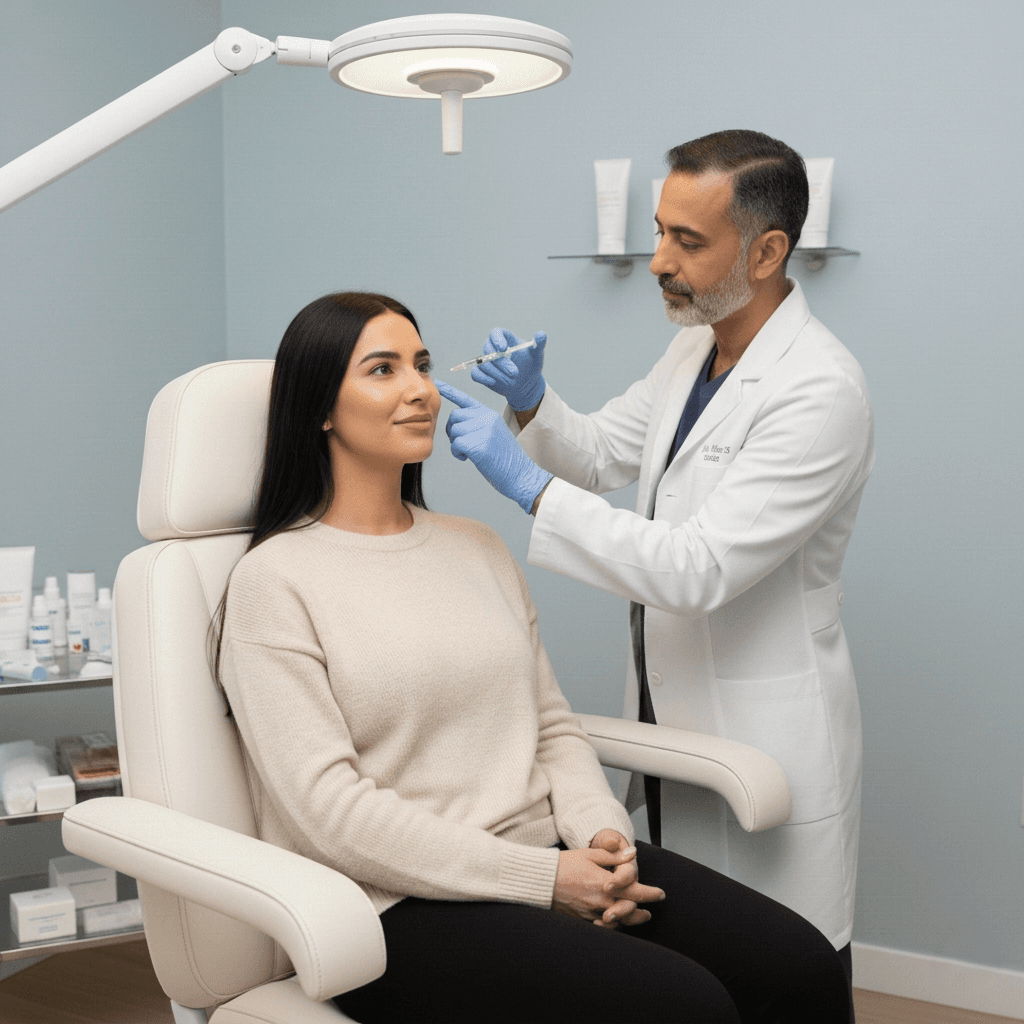
#What Are Collagen Stimulators?
Collagen stimulators, also known as biostimulators or bio-stimulating fillers, represent a fundamentally different approach to facial rejuvenation compared to traditional dermal fillers. Rather than simply filling in lines or adding volume with a gel that eventually breaks down, collagen stimulators trigger your body's own natural collagen production, rebuilding the structural framework of your skin from within.
From our mid-twenties, collagen production begins to decline gradually, then accelerates significantly in later years. This is particularly marked in women during and after menopause, who may lose up to 30% of their skin collagen within the first five years after menopause. The result is gradual volume loss, skin laxity, hollowing in the temples and cheeks, deepening folds, and an overall loss of structural support. Collagen stimulators address this root cause rather than merely masking the symptoms.
In Ireland, three primary collagen stimulators are available through qualified aesthetic clinics: Sculptra (poly-L-lactic acid), Ellanse (polycaprolactone), and Radiesse (calcium hydroxylapatite). Each uses a different biocompatible material to achieve a similar goal, triggering your fibroblasts to produce new collagen, but they differ in their onset, duration, and handling characteristics.
The popularity of collagen stimulators in Ireland has grown substantially in recent years. Clinics in Dublin, Cork, Galway, Limerick, and Waterford now routinely offer these treatments. Irish patients are increasingly drawn to the natural, gradual nature of the results, where the improvements reflect your body's own collagen production, a different approach to the immediate volumisation provided by hyaluronic acid fillers. For many. This approach feels more aligned with a philosophy of working with the body rather than against it.
What distinguishes collagen stimulators from treatments like Profhilo is their ability to restore genuine volume and structural support. While Profhilo and polynucleotides improve skin quality and hydration, collagen stimulators rebuild the deeper scaffold of collagen that gives the face its shape and definition.
#How Do Collagen Stimulators Work?
All collagen stimulators work on the principle of a controlled foreign body response. When a biocompatible material is injected into the dermis or subdermis, the body recognises it as a non-threatening foreign substance and responds by encapsulating it with new collagen fibres. This is a well-understood, intentional biological process, the same principle used safely in dissolvable sutures and other medical implants for decades. Over time, the stimulating material breaks down naturally, but the new collagen it has generated remains.
Sculptra (Poly-L-Lactic Acid / PLLA):
Sculptra contains microparticles of poly-L-lactic acid suspended in sterile water and carboxymethylcellulose. PLLA has been used in medicine for decades. It is the same material found in dissolvable sutures. When injected, the water carrier is absorbed within days, leaving the PLLA microparticles distributed within the tissue. These particles act as a scaffold around which fibroblasts lay down new type I and type III collagen over the following weeks and months. The PLLA particles are gradually broken down through hydrolysis and metabolised by the body over approximately 9 to 12 months, but the collagen they stimulate remains for 2 to 3 years or longer.
Sculptra is typically reconstituted 24 to 72 hours before treatment by adding sterile water and, usually, lidocaine for patient comfort. The reconstitution process and injection technique require specific training and experience, making practitioner expertise particularly important with this product.
Ellanse (Polycaprolactone / PCL):
Ellanse consists of polycaprolactone (PCL) microspheres suspended in a carboxymethylcellulose (CMC) gel carrier. This dual-action design provides an immediate volumising effect from the CMC gel while the PCL microspheres stimulate gradual collagen neogenesis. The CMC gel is absorbed over several weeks, but by that time new collagen has begun to replace it, maintaining and even enhancing the volumising effect.
Ellanse is available in four variants, S (approximately 1 year), M (approximately 2 years), L (approximately 3 years), and E (approximately 4 years), with the difference being the size of the PCL microspheres, which affects how long they take to break down. These durations refer to the longevity of the PCL microspheres; clinical results may vary. Ellanse M and L are the most commonly used in Irish clinics, balancing longevity with a more manageable duration.
Radiesse (Calcium Hydroxylapatite / CaHA):
Radiesse contains calcium hydroxylapatite microspheres, a mineral compound naturally found in human bones and teeth, suspended in an aqueous gel carrier. Like Ellanse. It provides both immediate volume correction and long-term collagen stimulation. The gel carrier provides instant lift, while the CaHA microspheres stimulate collagen production over the following months. The microspheres gradually break down into calcium and phosphate ions and are naturally metabolised. Results typically last 12 to 18 months.
Radiesse is also increasingly used in a diluted, or hyperdiluted, form (mixed with saline and lidocaine) for broader skin tightening and bio-stimulation across larger areas such as the neck, decolletage, arms, and hands. In this form, it acts more as a skin quality treatment than a volumiser.
#Important: Non-Reversibility
An important consideration with collagen stimulators is that they are not reversible. Unlike hyaluronic acid fillers, which can be dissolved with the enzyme hyaluronidase (often called “hylase”), there is no enzyme or agent that can remove Sculptra, Ellanse, or Radiesse once injected. The products gradually break down over months to years, but you cannot undo a treatment in days.
This is clinically significant in several scenarios:
- If a nodule forms. It may need to be managed with massage, steroid injections, or, rarely, minor surgical removal. There is no dissolving agent to fall back on.
- In the rare event of vascular occlusion (filler compressing or entering a blood vessel), which requires emergency treatment, the lack of a reversal agent makes prompt recognition and management by the practitioner critical.
- If you are not happy with the aesthetic result, correction options are limited to waiting for the product to resorb, adjusting the opposite side for symmetry, or working with what is there.
For these reasons, with collagen stimulators you should place particular weight on:
- Practitioner selection, choose someone with substantial product-specific experience and a documented complication management protocol.
- Conservative dosing. It is always possible to add more in a later session, but impossible to take away.
- Thorough consultation, take time to discuss goals, review before-and-after photos of the practitioner’s own patients, and ensure you understand the gradual development of results.
Some studies suggest that sodium thiosulphate may help accelerate the breakdown of Radiesse in certain situations, but this is not a reliable reversal and is not available for Sculptra or Ellanse.
#Common Treatment Areas
Collagen stimulators are versatile treatments used across a range of facial and body areas. The specific product chosen often depends on the treatment area and the desired outcome.
Facial areas:
- Temples: One of the earliest signs of ageing is temporal hollowing, where fat pads diminish and the temple area appears sunken. Collagen stimulators are particularly effective here, gradually restoring the convex temple shape of youth.
- Cheeks and mid-face: Volume loss in the mid-face leads to a flattened appearance, deepening nasolabial folds, and early jowl formation. Biostimulators rebuild the mid-face scaffold that supports the entire lower face.
- Pre-auricular area: The area in front of the ears often shows early volume loss and skin crepiness, responding well to collagen stimulation.
- Jawline: Loss of definition along the jaw is addressed by rebuilding collagen in the mandibular area, improving the jawline contour.
- Chin: A receding or weak chin can be enhanced, and marionette lines improved, through carefully placed collagen stimulator treatment.
- Nasolabial folds: Deep folds from the nose to the corners of the mouth respond to collagen rebuilding in the adjacent tissue.
Body areas:
- Neck: Skin laxity and crepiness of the neck is increasingly treated with hyperdiluted Radiesse or Sculptra.
- Decolletage: Wrinkles and skin thinning on the chest area, often caused by sun damage, respond well to biostimulation.
- Hands: Ageing hands with visible veins and tendons can be rejuvenated. Radiesse is CE marked for hand rejuvenation.
- Buttocks: The non-surgical BBL (Brazilian butt lift) using Sculptra has become popular for subtle gluteal enhancement and skin quality improvement. This is a fundamentally different procedure from a surgical fat-transfer BBL. The non-surgical BBL uses small amounts of product injected superficially and has a very different risk profile from surgery. It provides subtle collagen-based improvement rather than significant volume transfer.
- Arms and knees: Areas of skin laxity on the upper arms and above the knees can be improved with hyperdiluted biostimulators.
Areas to avoid:
Collagen stimulators should not be injected into the lips, under the eyes, or into very superficial skin layers. These areas require the precision and reversibility of hyaluronic acid dermal fillers. The lip area in particular carries a higher risk of nodule formation with biostimulators.
#During the Procedure
Understanding what happens during the treatment helps reduce anxiety and ensures you know what to expect.
Step-by-step process:
-
Cleansing: The treatment area is thoroughly cleansed with an antiseptic solution to minimise infection risk.
-
Numbing: A topical anaesthetic cream is applied 20 to 30 minutes before treatment. For Sculptra. The product itself is typically mixed with lidocaine. Radiesse is available in a lidocaine-containing formulation. Some practitioners may also use local anaesthetic nerve blocks for more sensitive areas.
-
Marking: Your practitioner will mark the injection points and areas to be treated, based on your personalised treatment plan. This mapping ensures symmetrical, balanced results.
-
Injection: The product is injected using needles or cannulas, depending on the treatment area and the practitioner's technique. Deep injections are placed at the level of the periosteum (the tissue covering the bone) or in the deep dermis and subcutaneous tissue. Superficial injection risks visible nodules, which is why depth of placement is critical.
- Sculptra is typically injected using a series of small depot injections in a grid pattern, with the product distributed across a broad area. Multiple injection points are used to ensure even distribution.
- Ellanse and Radiesse can be injected using techniques similar to hyaluronic acid fillers, including bolus injections, linear threading, and fanning techniques. They may also be injected with a cannula from a single entry point.
- Hyperdiluted Radiesse for skin tightening is injected in a superficial plane using a cannula, with the diluted product distributed evenly across the treatment area.
-
Moulding: After injection. The practitioner will mould and massage the product to ensure even distribution. This is particularly important for Sculptra, where proper post-injection massage helps prevent nodule formation.
-
Post-treatment check: Your practitioner will review the treated area, provide aftercare instructions, and apply a soothing product if needed.
Duration:
The procedure typically takes 30 to 60 minutes, depending on the product used, the number of areas treated, and whether numbing cream application time is included.
Comfort level:
Most patients describe the treatment as mildly to moderately uncomfortable. The combination of topical anaesthetic and lidocaine in the product keeps pain manageable. The injection phase itself usually takes only 15 to 20 minutes.
#Results Timeline
One of the most distinctive aspects of collagen stimulator treatment is the gradual development of results. Understanding this timeline helps manage expectations and prevents disappointment during the early weeks.
Immediate post-treatment (days 1–7):
You will notice initial swelling that may give the appearance of immediate improvement. With Sculptra. This is particularly noticeable but is due to the water carrier rather than collagen, it will subside within a few days, and you may feel the treated area looks unchanged from its pre-treatment state. This is often referred to as the "Sculptra dip" and is entirely normal. With Ellanse and Radiesse, there is genuine immediate volume from the gel carrier, though some of this initial fullness also settles.
Weeks 2–6:
Collagen synthesis begins. The injected material triggers an inflammatory cascade that signals fibroblasts to begin producing new collagen. You may start to notice very subtle improvements in skin firmness and texture, but significant visible change is not expected during this period.
Weeks 6–12:
New collagen fibres continue to develop and mature. This is when most patients first notice visible improvement, enhanced volume, improved facial contour, firmer skin, and a more refreshed appearance. If you are having a series of treatments, your second session typically occurs during this period.
Months 3–6:
Collagen maturation continues and results reach their peak. The full effect of the treatment is typically visible 3 to 6 months after the final session. As the collagen matures, the initial type III collagen is expected to remodel into more durable type I collagen, consistent with the body's normal collagen maturation process.
Months 6–24+ (maintenance phase):
Results are maintained as the mature collagen persists in the tissue. The stimulating material gradually breaks down, but the collagen it generated remains. Results fade very gradually, there is no sudden loss of effect as with hyaluronic acid fillers. The duration varies by product:
- Sculptra: 2 to 3 years, sometimes longer
- Ellanse M: Approximately 2 years
- Ellanse L: Approximately 3 years
- Radiesse: 12 to 18 months
Maintenance treatments:
Many practitioners recommend periodic maintenance sessions, perhaps once every 12 to 18 months, to sustain and build upon results. Some long-term patients report needing less product over time, though individual responses may vary.
Comparison with other treatments:
The gradual nature of collagen stimulator results contrasts with the immediate volumisation of hyaluronic acid dermal fillers. Many patients and practitioners consider this gradual approach preferable, it looks natural, others are less likely to notice a sudden change, and the results reflect your body's own collagen production, offering a different approach to the immediate volumisation of hyaluronic acid fillers.
#Choosing a Practitioner in Ireland
Selecting the right practitioner for collagen stimulator treatment is arguably more important than for many other aesthetic procedures. These products require specific training, deep anatomical knowledge, and significant experience to achieve excellent results while minimising risks.
Regulatory framework in Ireland:
Ireland's aesthetic industry is evolving in terms of regulation. Currently, injectable treatments including collagen stimulators should only be performed by registered medical professionals:
- Doctors registered with the Medical Council of Ireland
- Dentists registered with the Dental Council of Ireland
- Nurses registered with NMBI (Nursing and Midwifery Board of Ireland)
There is no specific license required to perform aesthetic injectables in Ireland, which means training and experience vary significantly between practitioners. This makes your own due diligence essential.
What to look for in a practitioner:
- Specific biostimulator training: Collagen stimulators require product-specific training beyond general injectable skills. Ask about training with the specific product being used (Sculptra, Ellanse, or Radiesse).
- Experience and volume: Ask how many collagen stimulator treatments the practitioner has performed. This is a specialised treatment where experience matters significantly.
- Before and after portfolio: Request to see before and after photographs of the practitioner's own patients (not stock images). Look for natural, balanced results.
- Comprehensive consultation: A thorough consultation that includes facial assessment, medical history review, discussion of alternatives, and informed consent is a hallmark of a professional clinic.
- Complication management: Ask about how the clinic handles complications. Experienced practitioners should be able to discuss potential issues openly and have protocols in place.
- Medical setting: Treatment should take place in a clean, clinical environment with appropriate emergency equipment available.
- Follow-up protocol: A good clinic will schedule a follow-up appointment and be available for post-treatment queries.
Red flags to watch for:
- No consultation before booking treatment
- Pressure to make immediate decisions or book additional treatments
- Significantly below-market pricing (this may indicate inferior products or inexperience)
- Reluctance to discuss qualifications, training, or complications
- Treatment performed in non-clinical settings
- No informed consent process
- Inability to clearly explain which product they use and why
Finding a verified clinic:
SafeSkin's directory allows you to find a verified clinic offering collagen stimulator treatments in Ireland. All listed practitioners are verified as holding appropriate professional registration, giving you confidence in your choice. You can filter by treatment type, location, and read about each clinic's qualifications and approach.