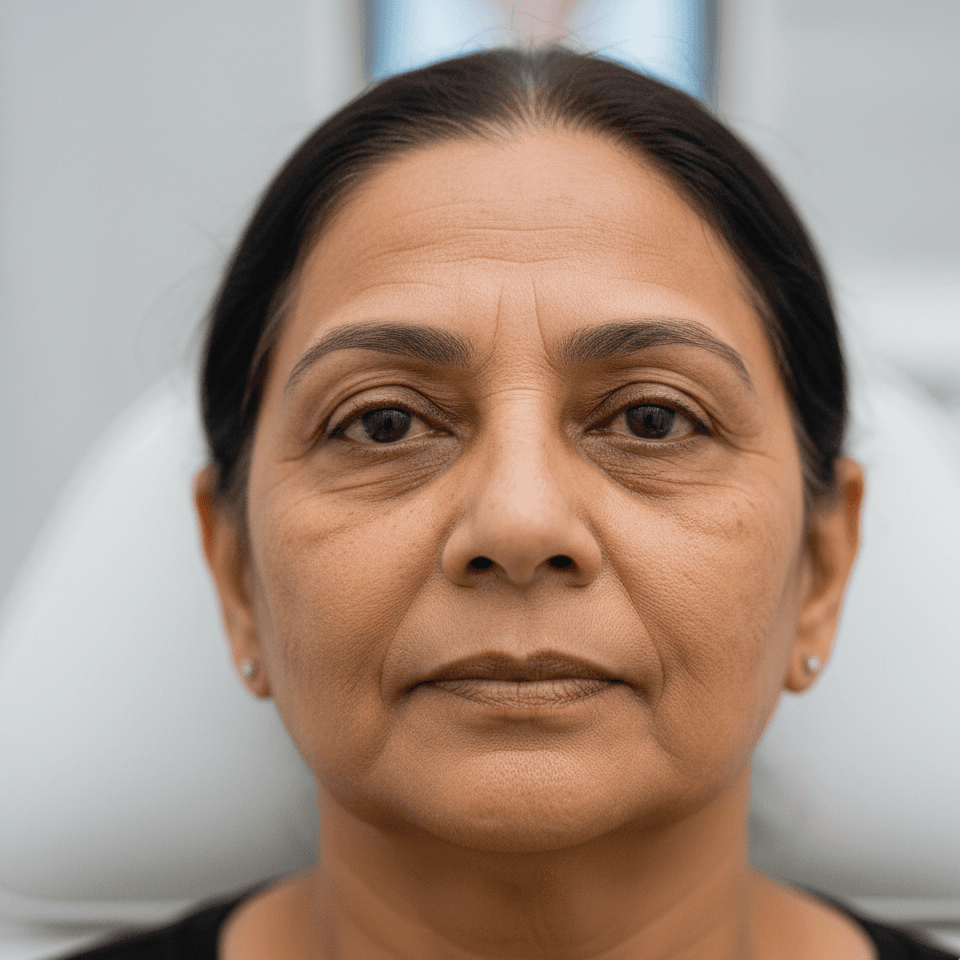
#Understanding Loss of Volume
Facial volume is one of the most fundamental determinants of a youthful, healthy appearance. The face of a young person is characterised by gentle, convex curves — full cheeks, smooth temples, defined but soft jawline, plump lips — all supported by a foundation of fat, muscle, and bone. As we age, this structural foundation gradually diminishes, and the resulting volume loss is one of the primary reasons people look older.
Loss of facial volume is not simply about looking thinner in the face. It triggers a cascade of visible changes: hollows develop in the temples and cheeks, the under-eye area becomes sunken, the nasolabial folds (nose-to-mouth lines) deepen as cheek support diminishes, the jawline loses its crisp definition, jowls form as unsupported tissue descends, and the overall facial shape shifts from the youthful inverted triangle (widest at the cheeks) to a more rectangular or even bottom-heavy shape.
In Ireland, awareness of volume-based ageing and the treatments available to address it has grown significantly in recent years. More people now understand that wrinkles and fine lines are only one dimension of facial ageing, and that restoring lost volume can produce more natural, comprehensive rejuvenation than treating surface lines alone.
The aesthetic medicine field has responded with increasingly sophisticated approaches to volume restoration. From hyaluronic acid dermal fillers that provide immediate, precise volumisation to biostimulatory treatments such as Profhilo and collagen stimulators that harness the body's own regenerative capacity, the options available through Irish clinics are more effective, more natural-looking, and safer than ever before.
Understanding what volume loss is, why it happens, and how it can be addressed is the first step toward a treatment approach that preserves and restores your natural appearance.
#What Causes Loss of Volume?
Facial volume loss is a multifactorial process involving changes at every structural level of the face — bone, fat, muscle, and skin.
Bone resorption is perhaps the most underappreciated contributor to facial ageing. The facial skeleton is not a static structure — it continues to change throughout life. From the mid-thirties onwards, there is a progressive loss of bone mass in key areas: the eye sockets enlarge (contributing to a sunken, hollow appearance), the midface (maxilla) retracts and loses projection, the angle of the jaw widens and shortens, and the chin recedes. These bony changes alter the foundational framework upon which all the soft tissues of the face rest, contributing significantly to the appearance of ageing.
Fat pad atrophy and descent are among the most visible causes of volume loss. The face contains numerous discrete fat compartments, both superficial and deep, that provide the fullness, contours, and smooth transitions of a youthful face. With ageing, these fat pads shrink (atrophy) and shift downward (descend) due to gravity and weakening of the fibrous connections that hold them in place. The malar (cheek) fat pad, the temple fat pad, and the periorbital fat pads are particularly affected.
Collagen and elastin degradation compounds the visible effects of deeper volume loss. As the structural proteins in the skin and connective tissues decline — at a rate of approximately 1 to 1.5 percent per year from the mid-twenties — the skin loses its firmness, elasticity, and ability to "drape" smoothly over the underlying structures. This contributes to both skin laxity and the visible appearance of volume depletion.
Muscle changes include both atrophy (thinning) of some facial muscles and hyperactivity of others. The combination can alter facial contours and accentuate volume loss in certain areas.
Lifestyle and environmental factors that accelerate volume loss include:
- Sun exposure — UV radiation degrades collagen and damages the structural matrix of the skin, compounding volume-related changes. Despite Ireland's temperate climate, cumulative UV exposure over a lifetime is significant
- Smoking — accelerates collagen breakdown, constricts blood vessels, and reduces oxygen delivery to tissues
- Dramatic weight loss — the face loses fat proportionally with the rest of the body, and rapid weight loss can produce a gaunt, hollowed facial appearance
- High-stress lifestyle — chronic stress elevates cortisol, which can accelerate collagen breakdown
- Genetics — the rate and pattern of facial ageing, including volume loss, is strongly influenced by inherited factors
Hormonal changes, particularly the decline in oestrogen during perimenopause and menopause, accelerate collagen loss, fat redistribution, and bone density reduction in the face. Women may notice a more rapid onset of volume-related changes during this life stage.
#Types and Severity Levels
Volume loss presents differently depending on the affected facial zones, and recognising the specific pattern helps guide treatment.
Temple hollowing is often one of the earliest signs of volume loss, creating a narrowed, concave appearance in the upper lateral face. It can give the forehead a bony, skeletonised look and make the zygomatic arch (cheekbone) appear unduly prominent. Temple hollowing is particularly noticeable in people with higher foreheads or those who wear their hair back.
Midface/cheek deflation involves loss of the full, rounded cheek contour that is characteristic of a youthful face. The cheeks flatten, the malar prominences become less defined, and the transition between the lower eyelid and cheek becomes less smooth. As midface volume drops, the nasolabial folds deepen and the lower face begins to look heavier relative to the upper face.
Periorbital volume loss creates sunken, hollow eyes with visible dark circles, a tired appearance, and a deepened tear trough. This is closely related to dark circles and under-eye hollowness. The interplay between orbital bone resorption and periorbital fat loss makes the eyes appear to recede.
Lip volume loss involves thinning of the lips, loss of the vermilion border (the defined lip edge), elongation of the upper lip, and flattening of the cupid's bow. Perioral lines (lipstick lines) often develop as lip support diminishes. This is closely related to lip definition concerns.
Jawline and chin volume loss results in a less defined jaw angle, loss of chin projection, the development of jowling as tissue descends past the jawline, and a less structured lower face overall.
Severity is typically described as:
- Early (35-45): Subtle flattening of the cheeks, early temple hollowing, mild loss of lip volume, slight nasolabial fold deepening
- Moderate (45-55): Noticeable cheek deflation, visible temple hollowing, clear nasolabial and marionette line deepening, early jowling, lip thinning
- Advanced (55+): Significant hollowing across multiple facial zones, pronounced jowling, marked lip thinning, skeletal prominences visible, substantial shift from the youthful facial triangle to a rectangular or bottom-heavy facial shape
#Treatment Options Available in Ireland
Irish clinics offer a comprehensive range of volume restoration treatments, from immediate volumising options to gradual collagen-stimulating approaches.
Hyaluronic acid (HA) dermal fillers are the most widely used and versatile tool for facial volume restoration. Dermal fillers are soft, biocompatible gels that are injected beneath the skin to restore volume precisely where it has been lost. Different consistencies are available for different facial zones — firmer, more cohesive products for structural areas like the cheeks and jawline, and softer products for delicate areas like the lips and tear troughs. HA fillers provide immediate results, can be precisely sculpted, and are reversible with hyaluronidase if needed. Results typically last 9 to 18 months depending on the product and area.
Biostimulatory fillers take a different approach by stimulating the body's own collagen production rather than providing immediate volume. Sculptra (poly-L-lactic acid) is injected in a dilute suspension that gradually stimulates new collagen formation over 2 to 3 months. Results appear gradually and naturally, and can last 2 years or more. Radiesse (calcium hydroxylapatite) provides both immediate structural support and long-term collagen stimulation. These products are particularly well-suited for broad-area volume restoration in the temples, cheeks, and jawline.
Profhilo and other bio-remodelling treatments provide a different form of volume support. Profhilo delivers high-concentration hyaluronic acid that spreads through the tissue, stimulating collagen, elastin, and adipocyte (fat cell) activity. While it does not provide the structural volumisation of dermal fillers, it improves skin quality, firmness, and hydration, creating a plumper, more supple appearance that complements filler treatments.
Polynucleotide treatments such as polynucleotides stimulate tissue regeneration, improve skin quality, and can contribute to a more volumised, healthy appearance, particularly in areas like the under-eyes and neck where skin quality is a primary concern.
Skin boosters deliver hydrating and collagen-stimulating ingredients into the skin to improve quality and luminosity. Skin boosters work well as adjunctive treatments alongside volume restoration, ensuring the skin over the restored volume looks its best.
Collagen-stimulating treatments such as medical microneedling, radiofrequency, and ultrasound skin tightening can support volume restoration by improving skin firmness and collagen density, helping the skin maintain its structure over the restored volume.
Thread lifts using absorbable PDO, PLLA, or PCL threads can provide mechanical lift and collagen stimulation. Thread lift treatments are sometimes used in combination with fillers for patients who need both volume restoration and tissue repositioning.
#Choosing the Right Treatment
A thoughtful, individualised approach to volume restoration produces the most natural and satisfying results.
Start with a comprehensive assessment. The best outcomes come from practitioners who assess the whole face rather than treating individual concerns in isolation. Volume loss rarely affects just one area — it is a facial-wide process, and addressing one zone without considering its relationship to the rest of the face can produce unbalanced results. Look for a practitioner who will assess your bone structure, fat distribution, skin quality, and the overall balance of your face before recommending a treatment plan.
Consider the MD Codes or similar systematic approaches. Many leading practitioners use structured facial assessment protocols (such as Dr Mauricio de Maio's MD Codes) that evaluate the face as an integrated unit and prioritise treatment areas based on where intervention will produce the most impactful, natural-looking improvement. This systematic approach avoids the common pitfall of overfilling isolated areas while neglecting the broader facial harmony.
Understand the difference between replacing volume and providing lift. In many cases, the appearance of volume loss is partly due to tissue descent rather than pure volume depletion. Simply adding filler to fill a hollow without addressing the displaced tissue above can add heaviness to the face. Skilled practitioners understand the interplay between volume replacement, tissue repositioning, and structural support.
Embrace a staged approach. The best volume restoration results are achieved gradually, across 2 to 3 sessions spaced several weeks apart. This allows the practitioner to assess the response to each treatment, make adjustments, and build the result incrementally. Starting conservatively and adding more if needed produces far more natural results than attempting to correct everything in a single session.
Ask about product selection. Different areas of the face benefit from different products. A practitioner who uses a range of fillers (varying in consistency, longevity, and properties) and potentially combines HA fillers with biostimulatory products can tailor the treatment more precisely to your needs. Be cautious of practitioners who use a single product for all areas and all concerns.
When selecting a practitioner, prioritise experience, training, and aesthetic judgement over price. Volume restoration is one of the most skill-dependent areas of aesthetic medicine — the difference between a natural, rejuvenated appearance and an overfilled, unnatural look lies almost entirely in the expertise of the injector. You can find a verified clinic near you through the SafeSkin directory.
#Prevention and Self-Care
While age-related volume loss cannot be entirely prevented, several strategies can slow its progression and support treatment outcomes.
Protect your skin from sun damage. UV radiation degrades collagen and accelerates every aspect of facial ageing, including the structural changes that contribute to volume loss. Wear SPF 30 to 50 daily, year-round. This single habit, maintained consistently over years, makes a measurable difference in how the face ages. In Ireland, do not underestimate UV exposure on cloudy days — UVA rays, which drive photoageing, penetrate clouds effectively.
Maintain a stable, healthy weight. Dramatic weight fluctuations accelerate facial volume loss. Repeated cycles of weight loss and gain can deplete facial fat pads that do not fully regenerate when weight is regained. If you are planning significant weight loss, discuss with your aesthetic practitioner how to manage the facial implications.
Do not smoke. Smoking is one of the most potent accelerators of facial ageing. It degrades collagen, impairs blood flow, reduces oxygen delivery to tissues, and produces free radicals that damage every structural component of the face. Stopping smoking at any age provides measurable skin benefits.
Invest in medical-grade skincare. While skincare cannot replace lost volume, maintaining optimal skin quality supports the structural integrity of the face. Medical-grade skincare containing retinoids (the gold standard for collagen support), vitamin C (antioxidant protection and collagen synthesis), peptides (cell signalling for collagen production), and SPF should form your daily routine.
Consider preventive treatments. Starting collagen-stimulating treatments (medical microneedling, skin boosters, Profhilo) before significant volume loss has occurred can help maintain facial fullness for longer. A proactive approach, beginning in the mid-thirties, can meaningfully slow the rate of visible ageing.
Support your health holistically. Adequate sleep, stress management, balanced nutrition (including sufficient protein for collagen synthesis, omega-3 fatty acids for skin health, and adequate hydration), and regular exercise all contribute to slower biological ageing and support better treatment outcomes.
For women approaching or in menopause, the accelerated collagen loss during this period makes proactive skin maintenance particularly important. Discuss the impact of hormonal changes on facial ageing with both your GP and your aesthetic practitioner — hormone replacement therapy (HRT) can help mitigate some of the collagen and bone loss that contributes to volume depletion.
#When to Seek Professional Help
Consider a professional consultation if you are noticing changes that you would like to address.
Book a consultation if you notice the following changes: your face appears more gaunt or hollow than it used to, your cheeks have flattened or lost their fullness, your temples appear sunken or concave, your nasolabial folds have deepened noticeably, your jawline has become less defined, jowls are beginning to form, your lips have thinned or lost definition, or you generally feel that your face looks older or more tired than it should.
Seek assessment sooner rather than later. Volume restoration tends to produce the most natural and satisfying results when started before changes have become severe. Restoring a modest amount of lost volume looks effortlessly natural, while attempting to correct years of accumulated loss in a single treatment can produce less natural results.
Consult a professional if you are concerned about ageing after significant weight loss. The facial consequences of weight loss can be addressed very effectively, but the treatment approach differs from typical age-related volume loss and benefits from specialist assessment.
See a practitioner if wrinkles, skin laxity, or facial asymmetry is worsening. These concerns often have a volume loss component, and addressing the underlying structural cause can produce better results than treating surface symptoms alone.
A consultation does not commit you to treatment. Many people benefit from an initial assessment that maps out their facial ageing process, explains the options, and provides a framework for decision-making — even if they choose to start treatment at a later date. Understanding what is happening structurally empowers you to make informed choices.
In Ireland, you can find a verified clinic near you through the SafeSkin directory to connect with experienced practitioners who specialise in facial volume restoration.
#What to Expect from Treatment
Understanding the treatment journey helps you prepare for the experience and set appropriate expectations.
During your consultation, an experienced practitioner will assess your face in detail — evaluating bone structure, fat distribution, skin quality, tissue positioning, and overall facial balance. They may take standardised photographs, ask about your aesthetic goals, and explain their analysis of what is contributing to the changes you see. They will then recommend a personalised treatment plan, including which products they recommend, how many sessions will likely be needed, the expected cost, and what results you can anticipate.
On your treatment day, the area will be cleansed, and topical anaesthetic cream or dental block may be applied for comfort (most modern fillers also contain built-in local anaesthetic). The practitioner will inject the chosen product using a needle or cannula, depending on the area and their technique preference. Treatment typically takes 30 to 60 minutes depending on the number of areas being addressed. You will see an immediate improvement, though the final result will refine over the following 2 to 4 weeks as any swelling settles and the product integrates with your tissues.
After treatment, expect some swelling, possible bruising, and mild tenderness in the treated areas for 3 to 14 days. Swelling is typically most pronounced on the morning after treatment and gradually subsides. Bruising, if it occurs, can be concealed with makeup after 24 hours. Your practitioner will provide specific aftercare instructions, which typically include avoiding intense exercise, alcohol, and extreme heat for 24 to 48 hours, and sleeping with your head slightly elevated for the first night or two.
Results develop in stages. Immediately after treatment, you will see volumisation plus swelling — the result will look somewhat fuller than the final outcome. Over 2 to 4 weeks, swelling resolves and the product settles into its final position. For biostimulatory products such as Sculptra, results develop gradually over 2 to 3 months as new collagen is produced — patience is rewarded with very natural-looking improvement.
Maintenance is part of the plan. HA fillers gradually metabolise over 9 to 18 months, and periodic top-up treatments maintain your results. Most people find that maintenance requires less product than the initial treatment, as the structural correction only needs refreshing rather than rebuilding. Biostimulatory treatments may need topping up after 18 to 24 months. Your practitioner will recommend a maintenance schedule tailored to your treatment and metabolism.
Natural-looking results are the goal. The best volume restoration should make you look refreshed, healthy, and like yourself — not obviously "done." If anyone notices, the comment should be that you look well or rested, not that you have had filler. Achieving this depends on the skill and aesthetic judgement of your practitioner. If you are ready to explore your options, find a verified clinic near you and book a consultation.