
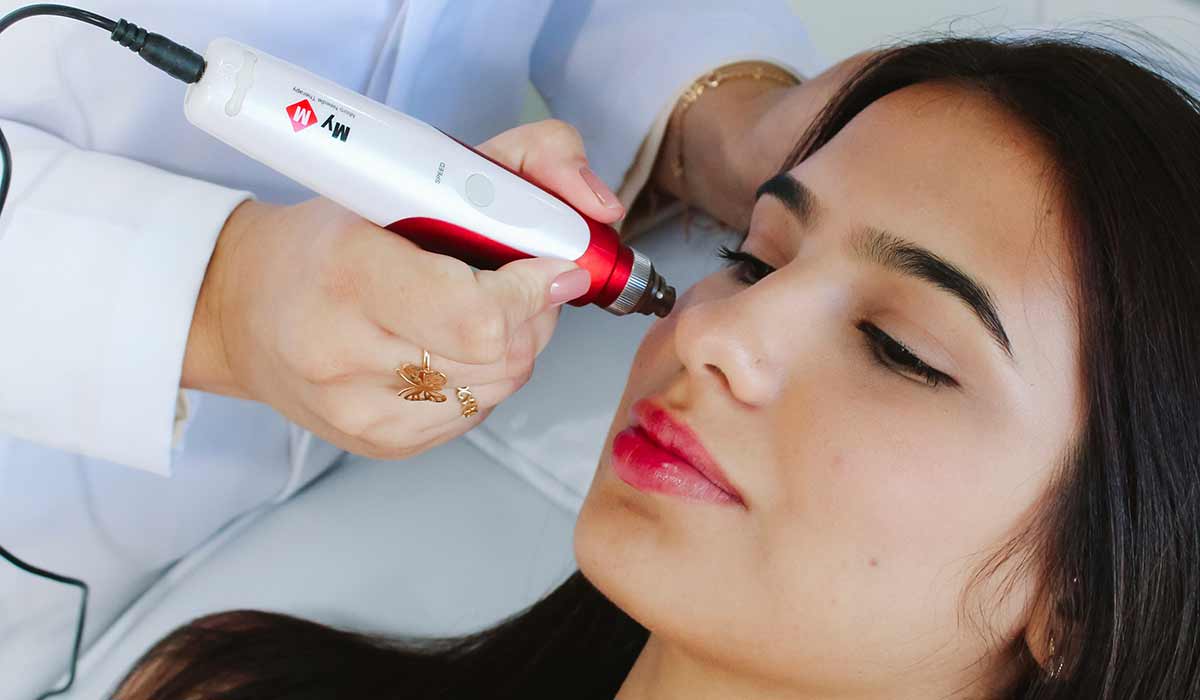
Microneedling has become one of the most requested skin treatments in Ireland, and it is easy to see why.
Microneedling addresses some of the most common concerns people have, from acne scarring to texture to fine lines, without injectables and without significant downtime.
It is also widely misunderstood, partly because the same word covers everything from a €40 beautician facial to a €500 medical treatment.
This guide explains what medical microneedling actually does, what it genuinely costs in Ireland, what RF (radiofrequency) microneedling adds, and how to choose well.
What microneedling actually does
Microneedling is refreshingly honest as a concept: a device with fine needles creates thousands of controlled micro-injuries in the skin, and the skin responds the way it should to injury - by repairing itself.
That repair process includes producing new collagen, which is why the treatment is formally called collagen induction therapy.
The new collagen improves the skin from within: texture becomes smoother, pores appear smaller, fine lines soften, and indented scarring gradually fills.
Because the mechanism is your own repair response, results build slowly over weeks and months rather than appearing overnight. We explain the underlying collagen story in our guide to collagen and elastin.
What it helps with, honestly
Microneedling has its best evidence for acne scarring, particularly rolling and boxcar scars, where a course of treatments produces gradual, genuine improvement. Our full guide to acne scarring treatments covers where it fits alongside the alternatives.
It is also well suited to overall texture and pores, fine lines, dull skin, and mild pigmentation irregularities. It is not the right tool for deep wrinkles caused by muscle movement, significant volume loss, or sagging, which are different problems with different solutions.
One honest limitation worth knowing: results depend on a course, usually three to six sessions spaced four to six weeks apart. A single session gives a short-lived glow; the structural improvement comes from the repeated stimulus.
Medical vs cosmetic microneedling: the depth difference
This is the distinction that explains the price range. Cosmetic needling, the kind offered in many salons, uses very short needles that barely reach beyond the surface. It can freshen the skin's appearance but does little for scarring or collagen.
Medical microneedling uses longer needles that reach the dermis, where collagen is made, and that is where the real results live.
Deeper needling is also a more invasive procedure: it draws pinpoint bleeding, requires proper technique and hygiene, and carries real risks in the wrong hands, including infection, scarring, and pigmentation problems, particularly on darker skin tones if performed incorrectly.
That is the practical reason the practitioner matters here. In Ireland, no law restricts who can perform microneedling, so the full spectrum exists, from doctors and nurses to entirely untrained providers, all using the same word.
RF microneedling: what the upgrade adds
Radiofrequency (RF) microneedling combines the needles with controlled heat delivered into the deeper skin, adding a skin-tightening stimulus to the collagen-inducing one.
It is the stronger option for skin laxity and more significant texture concerns, with a price to match. It is a genuine step up rather than a marketing flourish, though it also raises the stakes on practitioner skill, since energy plus needles leaves less room for error.
What microneedling costs in Ireland
As a current guide:
Standard medical microneedling: €150–€395 per session, with most clinics in the €200–€300 range.
RF microneedling: €250–€500 per session.
Courses: since three to six sessions are usually recommended, expect a realistic total of roughly €600–€1,500 for standard microneedling, and more for RF. Many clinics discount courses booked together.
Add-ons are increasingly common, from growth-factor serums to exosomes applied after needling, which use the micro-channels for deeper absorption.
Some add genuine value, some add mostly price, and our exosomes guide gives you the honest picture on the most hyped of them.
If a price seems dramatically below the ranges above, the depth, the device, or the practitioner is usually the reason, and none of those is a good place to economise.
What a treatment is actually like
A numbing cream goes on first, so the treatment itself is uncomfortable rather than painful - most people describe a scratching or prickling sensation.
A session takes 30 to 60 minutes. Afterwards, expect your skin to look sunburnt for a day or two, with possible light flaking as it heals.
Most people are back to normal within 48 hours, wearing SPF diligently, because freshly treated skin is particularly vulnerable to the sun, a point our guide to how your skin ages explains in full.
Microneedling is not suitable for everyone: active acne, active infection, certain skin conditions, and some medications rule it out, which is exactly the kind of screening a proper consultation exists to catch.
How to choose well
Three questions do most of the work. Who is performing the treatment and what are their qualifications? What needle depth and device will be used, and why, for your concern? And how will they manage your skin type, particularly if you have a darker skin tone, where technique matters most for avoiding pigmentation problems?
A qualified practitioner answers all three comfortably. And because microneedling sits in the same unregulated space as most Irish aesthetics, checking is your job, made easy: you can search register-verified clinics offering medical microneedling near you, and if you are still weighing microneedling against other options for your concern, our treatment quiz will point you in the right direction.
Medically reviewed by Dr Stephen CreedonAll SafeSkin editorial content is reviewed by a registered medical professional before publication.