
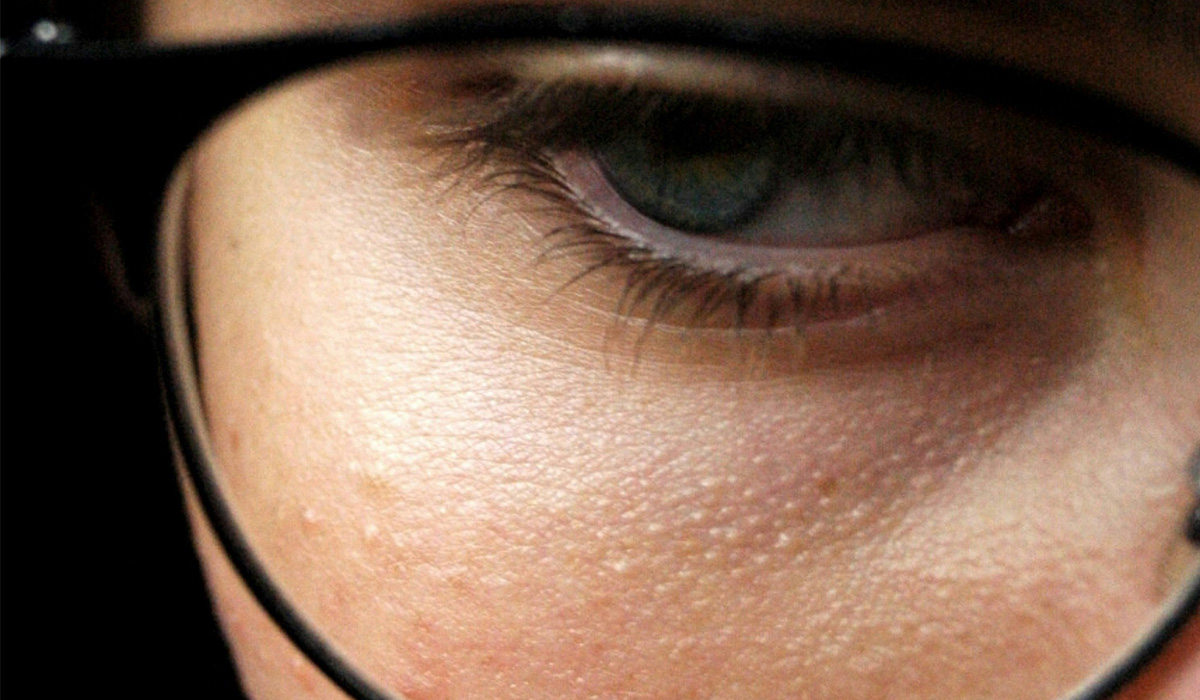
Acne scarring is one of the most common skin concerns that brings people to an aesthetic clinic for the first time. If you are living with acne scars, you already know the frustration: the acne itself may be long gone, but the marks it left behind can affect how you feel about your skin every single day.
The good news is that acne scarring can be significantly improved with the right treatment approach. The important word is "right", because acne scars come in different types, and what works for one type may be ineffective or even counterproductive for another. This guide explains the different types of acne scarring, the treatments available in Ireland, what they cost, and how to approach treatment in a way that sets realistic expectations.
Why acne leaves scars
Acne scarring occurs when the skin's healing process after a breakout produces either too much or too little collagen in the repair zone.
When a spot, cyst, or nodule forms, it creates inflammation deep within the skin. The body responds by sending collagen to repair the damaged tissue. If the body produces too little collagen, the repair falls short of the original skin surface, creating a depression or indentation. If it produces too much, the excess collagen forms a raised area above the skin surface.
The severity of scarring is influenced by several factors: the type and depth of the original acne (cystic and nodular acne cause the deepest scars), how long the acne was active before treatment, whether the spots were picked or squeezed (which increases inflammation and tissue damage), genetics (some people are simply more prone to scarring), and skin tone (darker skin tones are more susceptible to post-inflammatory hyperpigmentation, though all skin tones can scar).
Understanding this is important because it explains why treating acne scars is fundamentally about remodelling the skin's collagen structure, and why treatments that stimulate collagen production tend to be the most effective.
Types of acne scars
Acne scars fall into two broad categories, atrophic (depressed) and hypertrophic (raised), with several subtypes within each. Identifying your scar type is the first step toward choosing the right treatment.
Atrophic (depressed) scars
These are the most common type of acne scarring. They sit below the surface of the surrounding skin because the healing process did not produce enough collagen to fill the damaged area completely.
Ice pick scars are narrow, deep, V-shaped indentations that extend into the dermis. They look like the skin has been punctured with a sharp instrument. They are the most difficult acne scar type to treat because of their depth and narrow width.
Surface-level treatments cannot reach the bottom of the scar, so ice pick scars often respond best to TCA CROSS (a technique where trichloroacetic acid is applied directly into the base of the scar to stimulate collagen from within) or to punch excision, where the individual scar is surgically removed and the skin closed.
Boxcar scars are wider, rectangular depressions with sharply defined vertical edges, like a chickenpox scar. They can be shallow or deep. Shallow boxcar scars respond well to resurfacing treatments like chemical peels, microneedling, and fractional laser.
Deeper boxcar scars may require more intensive approaches such as subcision (where a needle is used beneath the scar to release the fibrous bands pulling the skin down) combined with filler or collagen-stimulating treatments.
Rolling scars are broad, shallow undulations in the skin that give it a wave-like appearance. They are caused by fibrous bands of tissue tethering the skin to deeper structures.
Rolling scars tend to respond well to subcision, microneedling, and fractional resurfacing, as the underlying tethering can be released and the surface gradually smoothed through collagen stimulation.
Hypertrophic and keloid scars
These are raised scars that form when the body produces too much collagen during healing. Hypertrophic scars stay within the boundaries of the original spot. Keloid scars extend beyond the original wound and can continue to grow over time. Both are more common on the jawline, chest, back, and shoulders, and are more prevalent in darker skin tones.
Treatment for raised scars is different from treatment for depressed scars. Options include steroid injections (to flatten the scar tissue), silicone sheets or gels (applied topically over time), and in some cases, laser treatment or surgical revision. These are typically managed by a dermatologist or plastic surgeon rather than an aesthetic clinic.
Post-inflammatory hyperpigmentation (PIH)
Strictly speaking, PIH is not a scar; it is a flat area of discolouration left behind after a spot has healed. It appears as a dark brown, reddish-brown, or purplish mark depending on your skin tone. PIH is extremely common, particularly in darker skin tones, and can persist for months or years if untreated.
The good news is that PIH is generally the easiest acne-related mark to treat. It responds well to topical treatments (vitamin C, retinoids, azelaic acid, niacinamide), chemical peels, and time. For more information on treating pigmentation, see our guide to pigmentation and sun damage.
Post-inflammatory erythema (PIE)
PIE appears as flat pink or red marks left by acne, most commonly on lighter skin tones. Unlike PIH, which involves excess melanin, PIE is caused by damaged or dilated blood vessels beneath the skin surface. It can be distinguished from PIH by pressing a glass against the skin. PIE will temporarily fade under pressure, while PIH will not.
PIE is notoriously slow to resolve on its own (often 12 months or more) but can be improved with vascular laser treatments, IPL, and treatments that promote skin healing such as polynucleotides.
Treatment options for acne scarring in Ireland
Effective acne scar treatment typically involves a combination of approaches rather than a single treatment. Your practitioner should assess your scar types (most people have a mix) and design a treatment plan that addresses each type appropriately.
Medical microneedling
Medical microneedling is one of the most widely used and evidence-supported treatments for acne scarring. It uses a device with fine needles to create controlled micro-injuries in the skin, triggering the body's wound-healing response and stimulating new collagen production. Over successive sessions, this collagen remodelling gradually fills and smooths depressed scars.
Microneedling is effective for rolling scars and shallow to moderate boxcar scars. It is less effective for deep ice pick scars, where the depth of the scar exceeds the reach of the needles. It is generally safe for all skin tones, which is an important consideration as some laser treatments carry a higher risk of post-inflammatory hyperpigmentation in darker skin.
RF (radiofrequency) microneedling combines the collagen-stimulating benefits of microneedling with radiofrequency energy delivered through the needle tips. This delivers heat deeper into the dermis, potentially producing more significant collagen remodelling than standard microneedling alone. It is increasingly popular for acne scarring in Ireland.
A typical course involves three to six sessions spaced four to six weeks apart. Costs in Ireland range from approximately €150 to €395 per session, with some clinics offering course packages (for example, three sessions for €395). RF microneedling tends to cost more - typically €250 to €500 per session.
Chemical peels
Chemical peels use acid solutions to remove the outermost layers of skin, stimulating cell turnover and collagen production. For acne scarring, the most commonly used peels include salicylic acid (particularly effective for acne-prone skin as it penetrates into pores), glycolic acid (an AHA that improves surface texture and mild scarring), TCA (trichloroacetic acid, a medium-depth peel for more significant scarring), and TCA CROSS (a targeted technique where high-concentration TCA is applied directly into individual ice pick or boxcar scars).
Chemical peels are best suited to shallow scarring, PIH, and overall skin texture improvement. They work well as part of a combination approach; for example, alternating chemical peels with microneedling sessions.
Costs in Ireland range from approximately €80 to €200 per session for standard peels. TCA CROSS is typically priced separately, often from €150 to €300, depending on the number of scars treated.
Fractional resurfacing
Fractional resurfacing uses laser or radiofrequency energy to create microscopic columns of treated skin surrounded by untreated skin. This triggers an intensive collagen remodelling response while allowing the surrounding untreated tissue to support rapid healing. The result is significant improvement in scar depth and skin texture with a manageable recovery period.
Fractional CO2 laser is the most intensive option and is effective for moderate to severe scarring. It typically requires three to five days of social downtime (redness, swelling, peeling) but can produce dramatic improvement in a single session. Non-ablative fractional lasers are gentler, with less downtime, but typically require more sessions.
Costs vary widely depending on the technology and treatment area. A single session of fractional CO2 treatment in Ireland typically costs between €300 and €800. Non-ablative fractional treatments range from €200 to €500 per session.
PRP and PRF
PRP (platelet-rich plasma) and PRF (platelet-rich fibrin) involve drawing a small amount of your own blood, processing it to concentrate the growth factors and platelets, and then injecting or applying it to the scarred areas. These growth factors support tissue repair and collagen production.
PRP and PRF are often used in combination with microneedling - applied to the skin immediately after the microneedling session so that the growth factors penetrate through the micro-channels created by the needles. This combination is sometimes called a "vampire facial."
As a standalone treatment, PRP/PRF is generally considered supportive rather than transformative for acne scarring. Its greatest value is in enhancing the results of other treatments.
Costs in Ireland typically range from €200 to €400 per session for PRP/PRF alone, or €350 to €600 when combined with microneedling.
Polynucleotides
Polynucleotides are an emerging treatment option for acne scarring. They work at a cellular level to stimulate fibroblast activity and tissue regeneration, which can help remodel scar tissue and improve skin quality in scarred areas. Their anti-inflammatory properties may also help calm the residual inflammation that contributes to ongoing redness in acne-scarred skin.
Polynucleotides are particularly interesting for acne scarring because they address the underlying cellular repair process rather than simply resurfacing the skin. They can be used as a standalone treatment or in combination with microneedling or fractional treatments.
For a detailed guide to polynucleotides, see our complete guide to polynucleotides in Ireland.
Dermal fillers for individual scars
In some cases, dermal fillers can be injected directly beneath individual depressed scars to physically lift them to the level of the surrounding skin. This produces an immediate visible improvement, though the results are temporary (typically 6 to 12 months depending on the filler used).
Filler is most appropriate for a small number of deep, well-defined scars rather than widespread scarring. It is often used in combination with collagen-stimulating treatments as the filler provides immediate improvement, while microneedling or laser work on longer-term remodelling.
Setting realistic expectations
This is important to address directly: acne scar treatment is not about achieving perfect, poreless skin. It is about significant improvement.
Most treatment plans achieve 50 to 70 percent improvement in scar appearance over a course of treatments. Some scars, particularly deep ice pick scars, may never be completely eliminated, but they can be meaningfully softened. The skin's texture, tone, and overall quality can be transformed, even if individual scars remain faintly visible on close inspection.
Treatment takes time. A full course of microneedling or peels involves three to six sessions over three to six months, with continued improvement for several months after the final session as collagen remodelling continues. If you are expecting dramatic results after a single treatment, you will likely be disappointed.
The best results come from a combination of treatments tailored to your specific scar types, a commitment to medical-grade skincare between sessions (particularly retinoids and SPF), patience with the process, and realistic expectations about the outcome.
A good practitioner will be honest with you about what is achievable. If someone promises to "erase" your acne scars completely, be sceptical.
A note on active acne
If you still have active acne (breakouts that are ongoing) most scar treatments should be delayed until the acne is under control. Treating scars while new ones are still forming is counterproductive and can worsen both the acne and the scarring. Your practitioner should assess whether your acne is sufficiently controlled before beginning a scar treatment plan. If it is not, managing the active acne should be the first priority.
Finding a verified practitioner
Acne scar treatment requires a practitioner who can accurately assess your scar types, design an appropriate combination treatment plan, select the right technologies for your skin tone, and manage your expectations realistically. This is not a treatment to choose based on price alone.
You can search for register-verified aesthetic practitioners across Ireland on SafeSkin, where every listed clinic has been independently checked against the Medical Council, Dental Council, or NMBI register. You can also use our cost calculator to estimate treatment costs, take our treatment quiz if you are unsure where to start, or read our guide on how to choose a qualified aesthetic practitioner.
Medically reviewed by Dr Stephen Creedon
All SafeSkin editorial content is reviewed by a registered medical professional before publication.